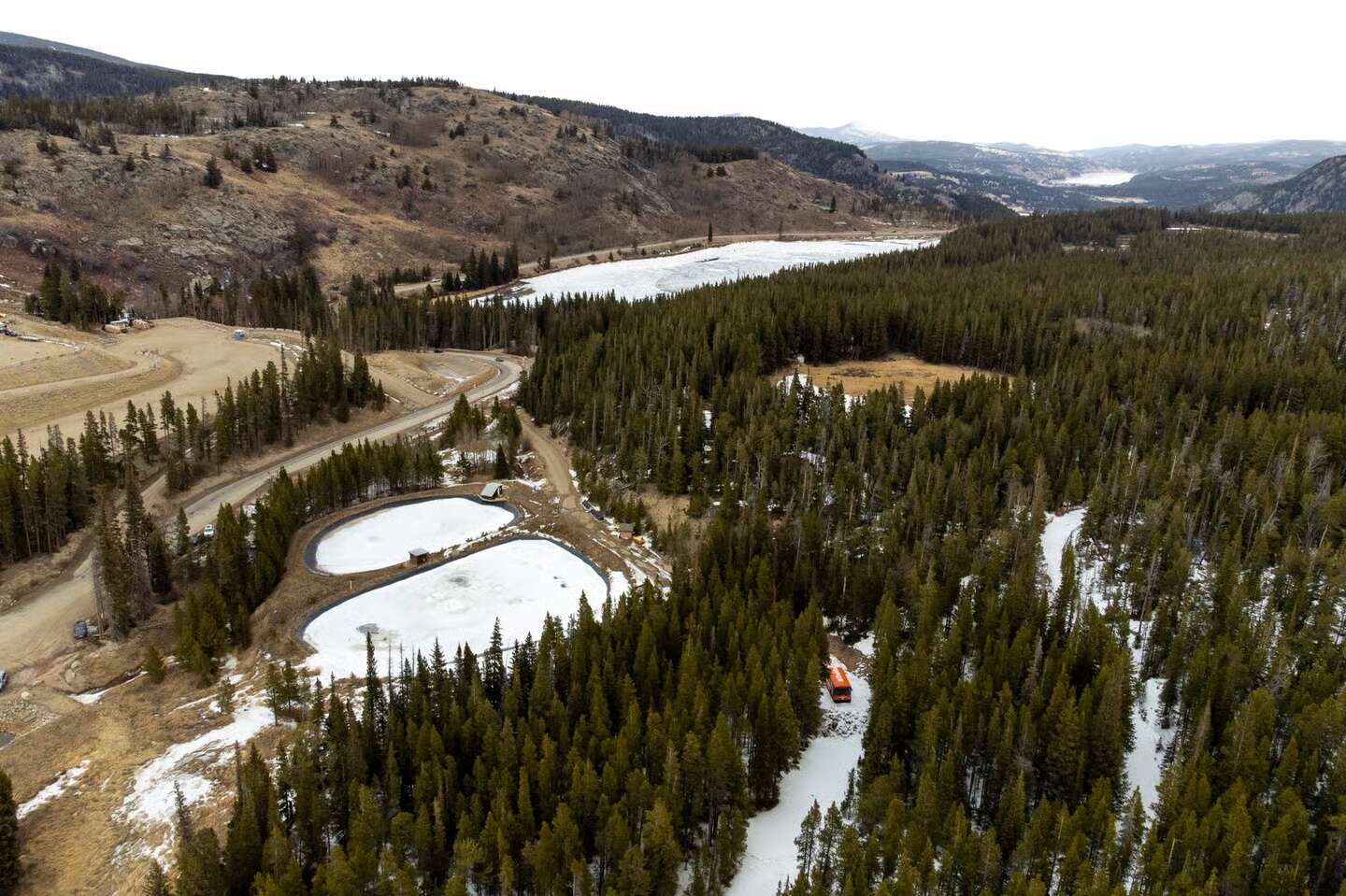
The ongoing snow drought in the Western United States is severely impacting cross-country ski areas, pushing many towards a breaking point. This year, the Eldora Nordic Center near Boulder, Colorado, which typically attracts a bustling crowd of skiers by late winter, has faced significant challenges due to an unprecedented lack of snowfall.
Under normal conditions, manager Aaron Sloan would expect a line out the door for day passes and rental equipment. This winter, however, access is limited to season or multiday pass holders, with skiers only able to explore a small fraction of the resort’s 24 miles of groomed trails. On a recent morning in February, skiers encountered a stark reality: a significant portion of the trails was bare earth, as staff members dedicated their time to shoveling snow from the woods onto exposed areas. “We didn’t do our snow dances with enough enthusiasm,” Sloan remarked, expressing disbelief over the amount of dirt visible instead of snow.
A recent analysis by the National Snow and Ice Data Center at the University of Colorado Boulder revealed that snow coverage across the Western U.S. peaked at just 38% of average in February, marking a record low since satellite tracking began 26 years ago. The data highlights how climate change is likely to exacerbate such conditions in the coming decades, posing a particularly tough challenge for cross-country ski areas compared to their downhill counterparts.
Cross-country skiing is not alone in facing an uncertain future, as climate change continues to elevate temperatures and alter precipitation patterns. A study indicates that the average U.S. ski season was about one week shorter from 2000 to 2019 compared to the period between 1960 and 1979. Projections suggest that by 2050, the ski season could shrink by an additional week or nearly two months, depending on the pace of global efforts to reduce fossil fuel dependency.
Many alpine ski resorts are taking proactive measures to adapt to these changes, such as opening new terrain at higher elevations or investing in advanced snowmaking technologies. In Colorado, some resorts are even exploring “cloud seeding,” a practice that involves dispersing substances like silver iodide into the atmosphere to stimulate snowfall. Despite these advancements, Reese Brown, executive director of the Cross Country Ski Areas Association, points out that many smaller cross-country areas lack the resources for such initiatives.
The geographic limitations of many cross-country ski areas further complicate their ability to adapt. “There’s no room for growth in terms of altitude,” Brown explained, highlighting the fixed nature of base areas and parking lots. In response, some Nordic resorts are implementing alternative strategies to cope with reduced snow coverage. Research conducted by the CCSAA and the Outdoor Industry Association found that approximately 27% of cross-country trail areas have invested in smaller snowmaking systems. Unfortunately, these systems are only effective when temperatures are sufficiently low, and many have struggled to operate this winter due to unseasonably warm weather.
One adaptive technique gaining traction is “snow farming,” which encompasses various methods to maximize the use of dwindling snow. At the Eldora Nordic Center, staff members have begun constructing snow fences to create drifts in strategic locations and removing obstacles to ensure trails remain skiable with minimal snow. A more advanced approach involves storing snow over the summer using high-tech insulation blankets.
While the current conditions present significant hurdles, some long-time enthusiasts remain hopeful. Jana Hlavaty, an 84-year-old former U.S. Olympic cross-country skier, continues to operate the Keystone Nordic Center in Colorado. She acknowledges the struggles of maintaining snow at her resort, which doubles as a golf course in warmer months. Despite plummeting ticket sales this winter, Hlavaty believes that conditions will improve in the future. “It’s going to come back,” she said. “Mother Nature is never going to have two years this bad.”
Yet, the severity of this season’s snow drought has brought some cross-country ski areas to a critical juncture. Ellen Miller-Goins, co-owner of the Enchanted Forest Cross Country Ski Area in Red River, New Mexico, faces the harsh reality of not being able to open the resort at all this year, a first since its establishment in 1985. Following the deaths of her parents in 2022, Miller-Goins took over operations, only to witness her family’s legacy at risk due to climate inaction. “It’s just wrapped up with the pain of them and our dream,” she expressed, revealing her frustration with political leaders who have ignored climate warnings for years.
As conditions continue to evolve, the future of cross-country skiing hangs in the balance, with many ski areas looking for innovative solutions to adapt to a changing climate. The resilience of skiers and operators alike will be tested as they navigate these unprecedented challenges.