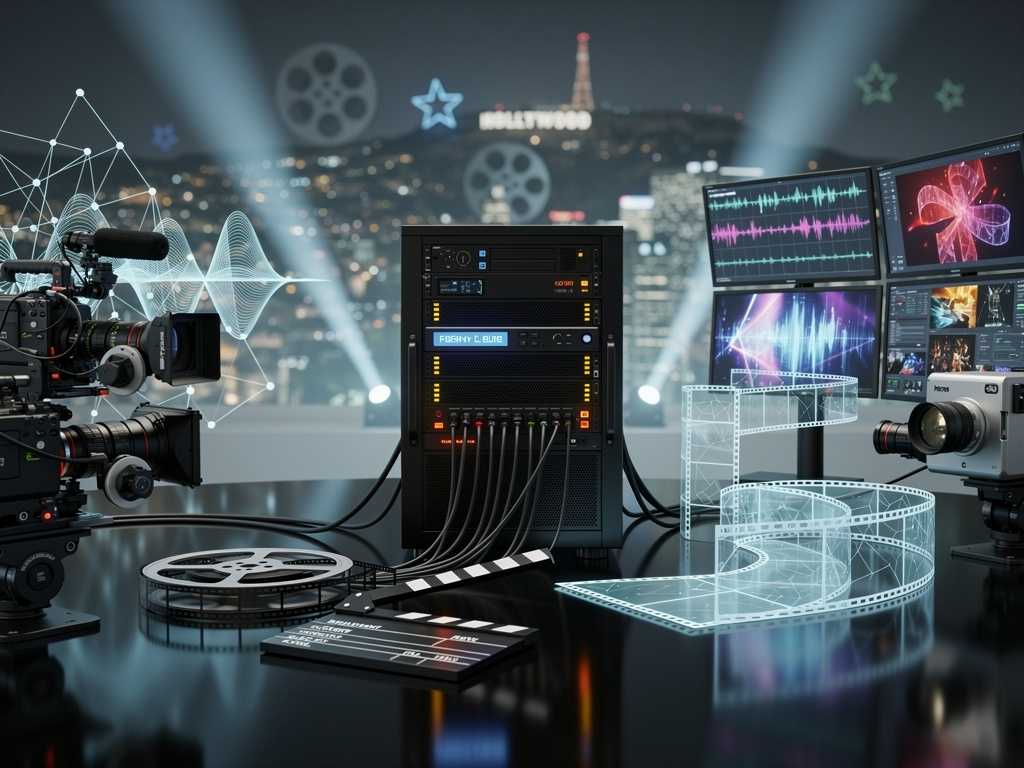
UPDATE: AI startups are transforming Hollywood, with an unprecedented $150 billion in funding secured in 2025, revolutionizing the entertainment industry in real-time. New reports reveal that these innovative companies are not just promising change; they are delivering tools that could reshape filmmaking, from scriptwriting to special effects.
With the calendar turning to 2026, the urgency to integrate artificial intelligence into Hollywood has never been more palpable. As audiences demand fresh content and studios grapple with rising production costs, investors are betting big on AI’s potential to disrupt the long-established norms of filmmaking. Recent analyses, including a Business Insider report, highlight that AI startups are now indispensable allies for studios looking to innovate.
One standout player, Wonder Studios based in London, secured significant backing by showcasing AI’s capabilities in visual effects and production efficiency. Their innovative pitch emphasized scalable solutions that can generate hyper-realistic scenes, drastically reducing the need for expensive on-location shoots. Other startups focused on automated dubbing and script analysis are capturing investor interest by proving that machine learning can streamline traditionally labor-intensive workflows.
The momentum behind AI in entertainment is underscored by a recent wave of funding rounds, with venture capital giants like Andreessen Horowitz and Sequoia Capital leading the charge. As the technology accelerates, industry observers on social media platforms like X indicate a developing gold rush, with studios negotiating for access to vast film catalogs and character rights.
AI’s potential extends beyond production; tools designed for personalized content recommendation are reshaping how films reach global audiences. Early 2026 discussions among entertainment executives predict that AI could take on up to 30% of content localization tasks, optimizing subtitles and cultural adaptations.
However, challenges loom large. Intellectual property rights are a significant concern, as AI trained on existing films raises questions of inspiration versus infringement. Startups are addressing these issues, proposing ethical frameworks for data usage and royalty models for original creators. The Creators Coalition on AI, launched in late 2025, represents over 500 artists advocating for self-governance amid fears of job displacement, particularly in voice acting and visual effects.
Despite these hurdles, investor sentiment remains optimistic. With Hollywood generating billions annually, the potential for AI to cut production costs by 20-40% is a tantalizing prospect. Recent reports indicate that AI companies are shifting focus toward practical applications, moving beyond earlier hype-driven models to more efficient, results-oriented approaches.
Strategic alliances are forming as industry giants navigate this landscape. Talks between Meta and studios like Disney signal a future where AI and immersive technologies blend for hybrid storytelling experiences. As AI’s presence expands, expert predictions suggest that 2026 could see AI-generated films competing at major festivals, redefining the concept of stardom with virtual actors.
The global reach of AI startups is also expanding, with pitches emphasizing dubbing technologies that preserve cultural nuances, potentially increasing revenues in emerging markets. Ethical innovations are gaining traction, as Hollywood’s proactive stance on AI governance could set a precedent for other industries.
As the industry moves forward, AI startups are diversifying their focus beyond Hollywood, looking into gaming and advertising to sustain their momentum. Recent funding records indicate resilience despite concerns of a bubble, with a practical turn in AI promising longevity.
The script for Hollywood’s future is being written in code, and investors are eager to capitalize on the unfolding transformation—making this an urgent moment for entertainment and technology alike. As the excitement builds, industry insiders are left to wonder: how will this AI revolution reshape the stories we tell and the way we experience them?