BREAKING: In a shocking escalation of mob violence, two Hindu men have been brutally killed in Bangladesh, raising urgent concerns over the safety of religious minorities in the nation. The fatal beating and lynching of Dipu Chandra Das, a 25-year-old garment worker, occurred on December 18, followed by the mob killing of Amrit Mondal, just days later.
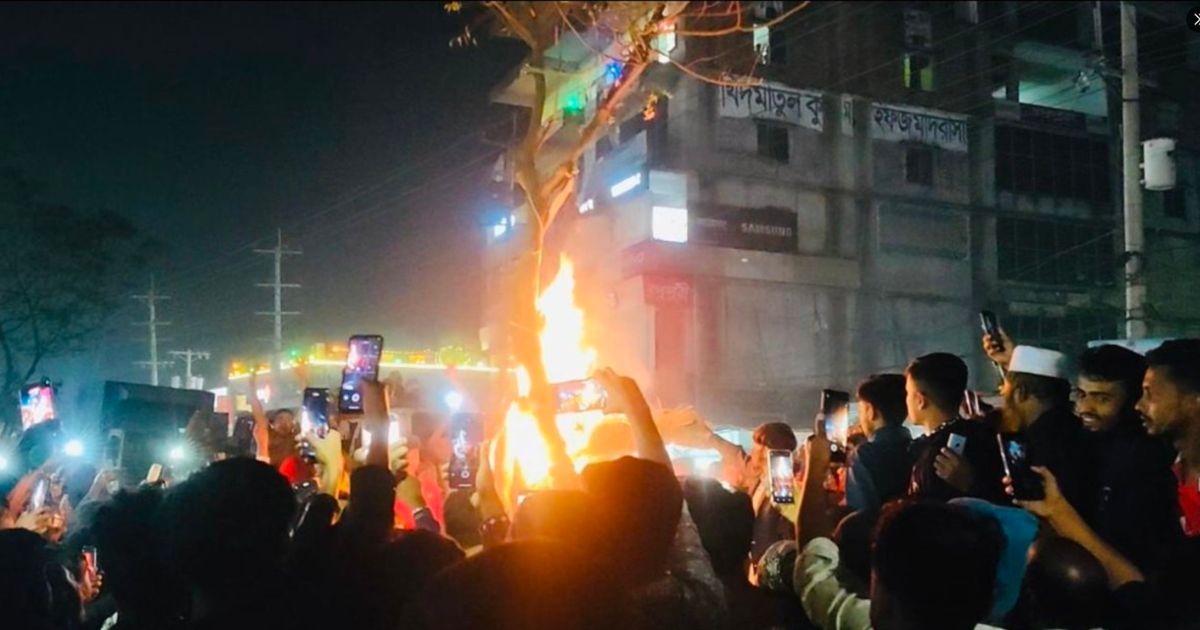
These incidents reflect a profound failure of the state to protect its citizens and have ignited fears of growing sectarian violence. Dipu, who was also a husband and father, was accused of blasphemy following an unverified rumor. Despite pleading for police protection, he was handed over to a mob, where he faced a horrific death on the Dhaka-Mymensingh highway. Eyewitnesses reported that he was beaten, stripped, tied to a tree, and set on fire in broad daylight.
The brutal killings of Dipu and Amrit signal alarming trends in Bangladesh, where mob justice is replacing legal processes. Authorities have attempted to downplay the communal motives behind these murders, but the pattern is evident—two Hindus killed by mobs in quick succession represents a serious threat to minority communities.
Historically, Bangladesh has faced such violence, with echoes of its traumatic past resurfacing. The recent return of Tarique Rahman of the Bangladesh Nationalist Party to the political scene raises concerns about the potential resurgence of extremist groups like Jamaat-e-Islami. As the country approaches elections, the risk of increased intimidation and violence looms large, with many fearing that the secular foundations of Bangladesh are at stake.
The United States State Department condemned the killings, urging the Bangladeshi government to uphold the rule of law and protect its religious minorities. This official statement highlights the international community’s growing concern over the deteriorating situation in Bangladesh, especially as it relates to regional stability.
As the government grapples with these crises, and with the legitimacy of its leadership questioned, the risk of further violence against vulnerable populations escalates. The message from these tragic events is clear: when the state fails to protect its citizens, it emboldens extremists and undermines democracy.
With elections approaching, the implications of these killings extend beyond Bangladesh’s borders. Neighboring India is acutely aware of the potential for instability, which could lead to an influx of refugees and increased radicalization in border regions. The developments in Bangladesh serve as a strategic warning, emphasizing the need for a stable, secular government.
The world is watching closely as the situation unfolds. The responsibility lies with both the Bangladeshi authorities and international partners to take decisive action to restore faith in the rule of law and protect the rights of all citizens, regardless of their faith.
As this story develops, the focus remains on the urgent need for justice for Dipu Chandra Das and Amrit Mondal, and the broader implications for democracy and human rights in Bangladesh.