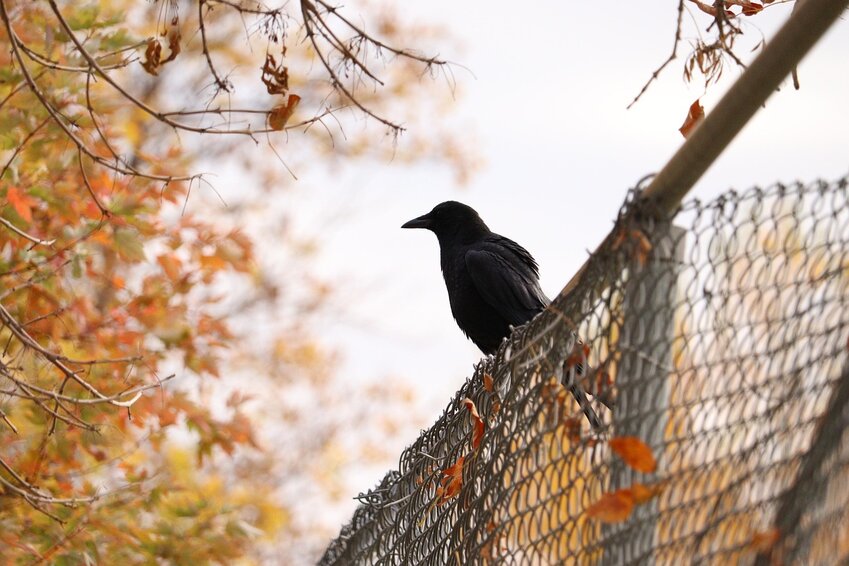
UPDATE: Homeowners in Washington State are facing urgent lawn destruction as crows dig up yards in search of damaging pests. Reports confirm that the culprits behind the chaos are not just the crows but the invasive European chafer beetle larvae, which have proliferated over the past decade.
Residents are witnessing their pristine lawns transformed into patches of dirt as crows forage for grubs. These grubs are the larvae of the European chafer, which feast on turf roots and have led to significant destruction. “(The crows are) killing the invasive pest that’s really destroying the lawn,” stated John Marzluff, emeritus professor of wildlife science at the University of Washington.
While crows are often blamed for the damage, they are actually engaging in natural pest control. Other nocturnal creatures, such as raccoons and skunks, are also after the grubs but may go unnoticed due to their nighttime activities. Marzluff emphasized that the presence of crows indicates an ecological imbalance that homeowners may not recognize.
For those struggling to maintain their lawns, experts suggest several immediate actions. Jim Kropf, director at Washington State University Pierce County Extension, advises homeowners to water their lawns to deter beetles, which typically mate and lay eggs in summer. “When the lawn is the most susceptible is also when the beetles are expanding their territory,” Kropf explained.
Timing is crucial for pest control. Registered insecticides should be applied at the right moment; treatment in fall or winter will not prove effective. Additionally, diversifying plant life can create a more resilient lawn. “Having a diverse ecosystem in your lawn reduces the chance of a pest invading and wiping out the entire area,” Marzluff noted.
Residents are encouraged to explore King County’s online guide for native plants that thrive in Western Washington. This resource can help homeowners cultivate a more varied landscape that is less susceptible to invasion.
As a final precaution, experts urge people to avoid feeding wildlife. Kropf warns that feeding raccoons can lead to aggressive behavior if feeding stops, further complicating the issue for homeowners.
This urgent situation highlights the interconnectedness of local wildlife and lawn health. Residents are urged to take immediate action to protect their properties from further damage. As the crows continue to seek out grubs, the message is clear: maintain vigilance and adapt to the challenges posed by these persistent invaders.