UPDATE: Eli Sharabi, who endured 491 days in Hamas captivity, celebrated Christmas in Wales last week, marking a poignant return to festive traditions. This heartwarming reunion with his brother-in-law, Steve Brisley, comes after a harrowing ordeal that began with his abduction on October 7, 2023.
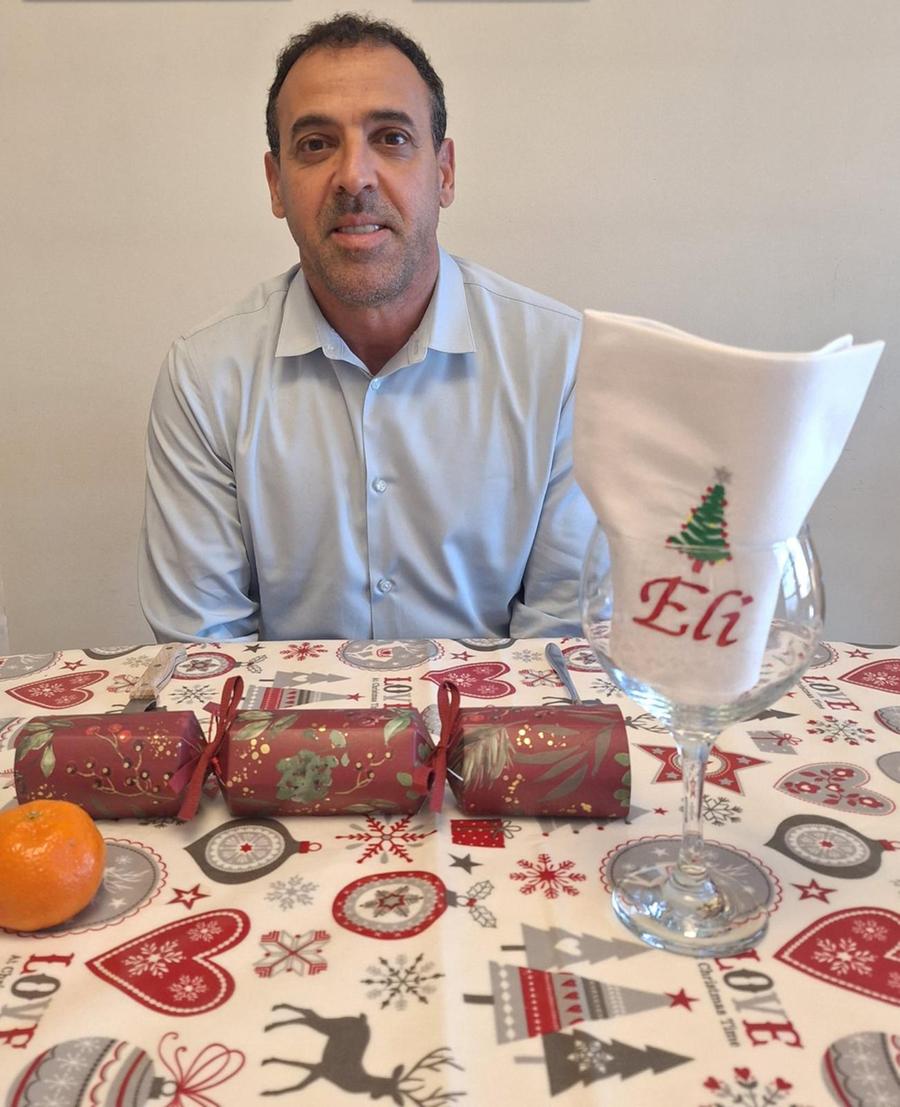
In a deeply emotional moment, Brisley set an empty place at the Christmas table for Sharabi during last year’s holiday, symbolizing hope for his return. This year, the once-empty chair was filled, as Sharabi joined Brisley and his family for the festive meal, a powerful testament to resilience and survival. Brisley, a prominent advocate for Sharabi’s release, had tirelessly campaigned for his return since the attack.
During a session at Limmud 2023, lawyers Adam Rose and Adam Wagner shared a photograph of Sharabi at the table, juxtaposing it with the image of the empty chair from the previous Christmas. “Last year, we showed the image of the empty Christmas table,” Rose stated. “This year, we celebrate Eli finally safe in his seat.”
The lawyers highlighted the stark reality that families of hostages still face challenges. Rose recalled advice from Richard Ratcliffe, who campaigned for his wife’s release from Iran, emphasizing that public pressure is crucial for government action. Following Brisley’s remarks about the British government’s inadequate support for hostages, David Cameron, the then Foreign Secretary, announced new measures for British families affected by this crisis, including the establishment of a dedicated support group within the Foreign Office.
“We managed to get the British government to take its responsibility seriously,” Rose said, noting that while progress has been made, the threat of future hostage situations remains. He added, “If it’s not Hamas and not Hezbollah, it will be some other group we’ve not yet heard of.”
Despite these advancements, the government has faced criticism for its handling of citizenship issues for hostages’ families. Wagner pointed out that while some nations have granted citizenship to foreign relatives of hostages, the UK has opted for a different approach. Instead, non-British hostages with links to the UK are treated “as if they were British.”
The emotional weight of this situation was felt by Sharone Lifschitz, whose parents were taken hostage on October 7, and whose father was killed in Gaza. Lifschitz praised the lawyers for their advocacy, stating, “You were always a few steps in front of us,” and commended their efforts in establishing a support system that is unparalleled compared to other European countries.
As the festive season unfolds, Sharabi’s story stands as a symbol of hope and resilience, reminding the world of the human impact of conflict and the ongoing need for advocacy and support for hostages and their families.
This story continues to develop, and all eyes are on the government’s next steps in addressing the plight of hostages abroad. As families await further updates, the call for action remains urgent and clear.