UPDATE: With just over one month until the March 17 primary election, the Democratic candidates for Illinois Senate’s 9th district, Patrick Hanley and Rachel Ruttenberg, are ramping up their campaigns by highlighting stark differences in their political experiences. This escalating tension comes as both candidates prepare for the crucial election that could shape the future of the district.
Ruttenberg has intensified her attacks, recently mailing flyers that label Hanley a “former management consultant” lacking “applicable experience” in healthcare policy. Hanley swiftly responded on Instagram, deeming the flyer a “goofy negative mailer” and asserting that his campaign is rooted in “optimism and positivity.”
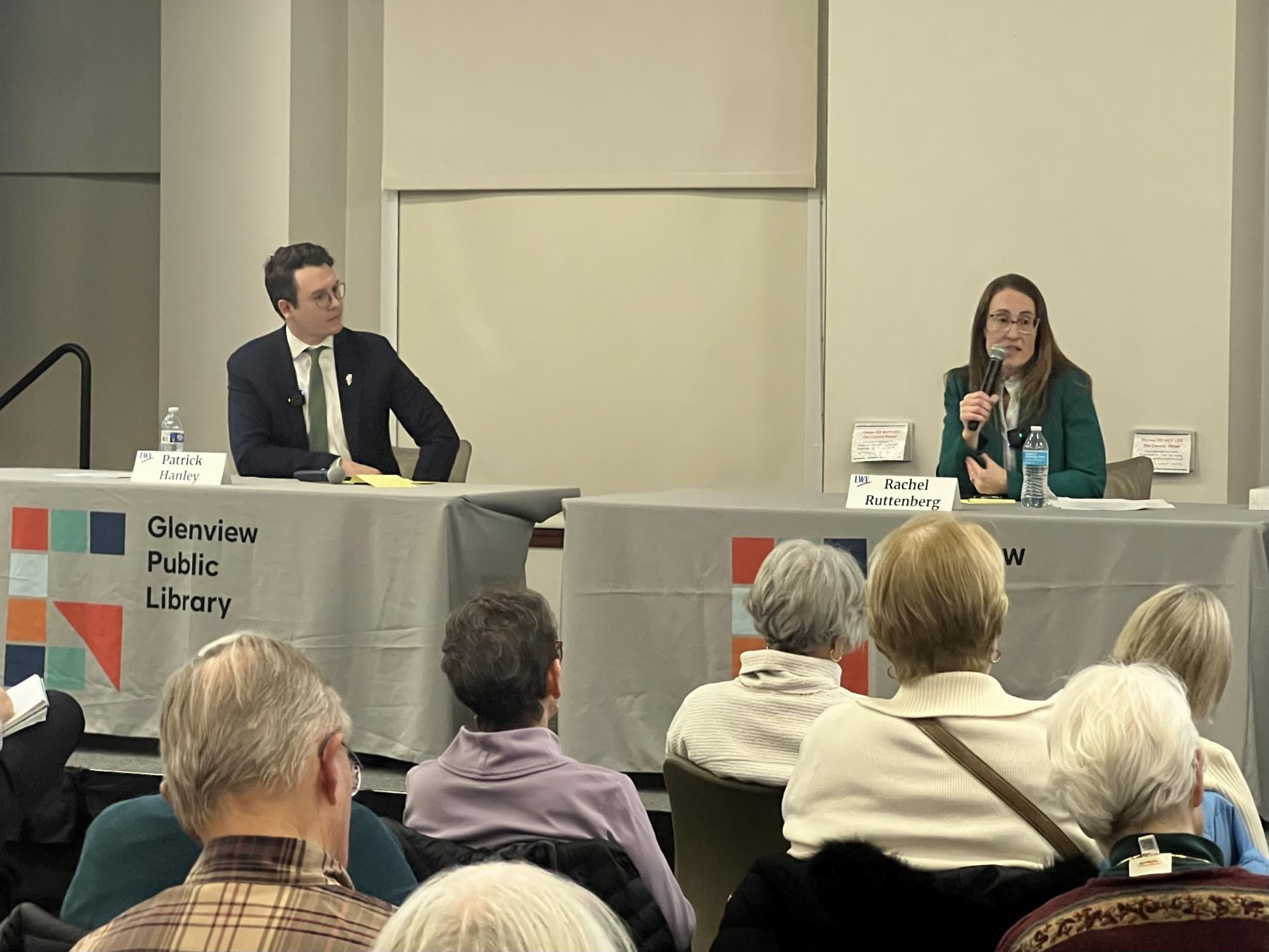
This public feud is not merely a battle of words; it underscores the candidates’ desire to resonate with voters who are keenly aware of the importance of relevant experience in legislative roles. Ruttenberg, who has served as deputy chief of staff for Toni Preckwinkle, points to her extensive work with Chicago Public Schools and various nonprofits to bolster her credentials. She emphasized her commitment to effective governance during a candidate forum hosted by the League of Women Voters at the Glenview Public Library, where approximately 100 attendees gathered.
“I’ve done the real work for more than 20 years,” Ruttenberg stated, referencing her previous roles to assert her readiness for office. Meanwhile, Hanley, who has co-founded the voting advocacy program Operation Swing State, argues that the position requires a candidate with a diverse array of experiences to engage effectively with the community.
The stakes are high as both candidates aim to connect with voters on pressing issues, such as a progressive income tax and affordable housing. Neither candidate took the opportunity to rebut during the forum, but the competition remained focused on policy rather than personal attacks.
Hanley expressed disappointment in Ruttenberg’s strategy, calling it a “disappointing mischaracterization” of his qualifications. He highlighted his collaboration with state agencies and local governments during the COVID-19 pandemic, asserting that this experience is crucial for addressing today’s challenges. “Politics can be better than that,” he remarked, calling for a more respectful campaign approach.
As the primary date approaches, both candidates are keenly aware of their need to make a lasting impression. DPOE President Kathy Hayes underscored the importance of choosing a candidate capable of navigating complex policy issues. “We need people that are primed and experienced in handling policy and intergovernmental affairs,” Hayes stressed, emphasizing the urgency for effective leadership.
While both candidates share similar views on many policy issues, their contrasting backgrounds and campaign strategies are becoming increasingly pronounced. This primary contest not only reflects their individual aspirations but also the broader implications for governance in Illinois.
With the election looming, watch for further developments as both candidates seek to solidify their positions and connect with voters who are eager for change. Expect more debates, public forums, and campaign materials that could sway undecided voters in the final stretch leading up to the primary.
As the race heats up, it remains to be seen who will emerge as the frontrunner in this critical Illinois Senate contest.