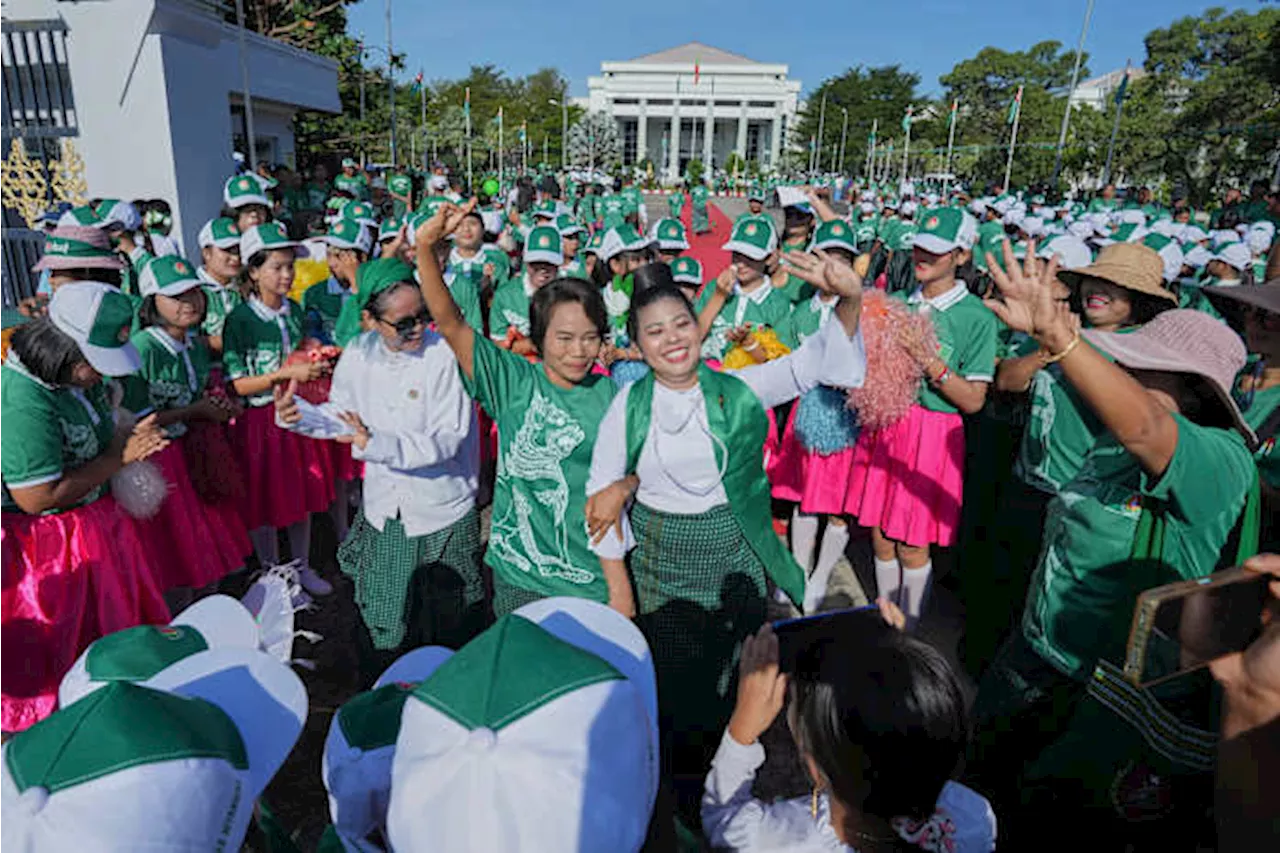
UPDATE: Myanmar has officially begun its elections, but widespread criticism labels the process as a mere facade of democracy. Voting commenced today in 102 of the nation’s 330 townships, with significant doubt cast on the legitimacy of the polls. The military regime, which seized control in February 2021, frames this electoral exercise as a step towards restoring multi-party democracy, while opposition groups and analysts warn it will do little to end the ongoing civil war or restore genuine democratic governance.
The military-backed government under Senior Gen. Min Aung Hlaing plans to conduct the elections in three phases, with the next voting rounds scheduled for January 11 and January 25. However, due to escalated conflicts in various regions, many areas will not participate—specifically 65 townships where ethnic guerrilla groups are active. Human rights organizations have denounced the elections, predicting they will be neither free nor fair, effectively ensuring that military power remains intact.
Analysts like Richard Horsey from the International Crisis Group have noted, “These elections are not credible at all,” emphasizing that they exclude political parties that previously dominated elections. The military’s strategy appears to favor the Union Solidarity and Development Party (USDP) to secure a landslide victory, transitioning from direct military rule to a government with a “civilian veneer” that maintains military authority.
The backdrop of these elections is grim, with over 22,000 political prisoners and more than 7,600 civilians reported killed by security forces since the coup. Furthermore, the civilian population has faced increasing violence, leading to over 3.6 million internally displaced individuals, creating a humanitarian crisis that continues to escalate.
As ballots are cast today, analysts express concern that the military’s control will harden, leading to intensified conflict as opposition forces resist the legitimacy of the elections. The United Nations Human Rights Office has emphasized the pervasive atmosphere of intimidation and violence surrounding the polls, stating, “Myanmar is witnessing intensified violence, repression, and intimidation ahead of military-controlled elections.”
The implications of this electoral process extend beyond the immediate voting. With the military’s continued grip on power, analysts predict that Myanmar will face increased instability as the population grapples with the ramifications of a sham election. As the world watches, the call for a boycott from opposition groups further highlights the lack of faith in the electoral system and the military’s authority.
In summary, Myanmar’s elections are unfolding against a backdrop of violence, repression, and skepticism. As many fear that the military’s facade of democracy will only entrench their power, the situation remains fluid and urgent, warranting close international attention.