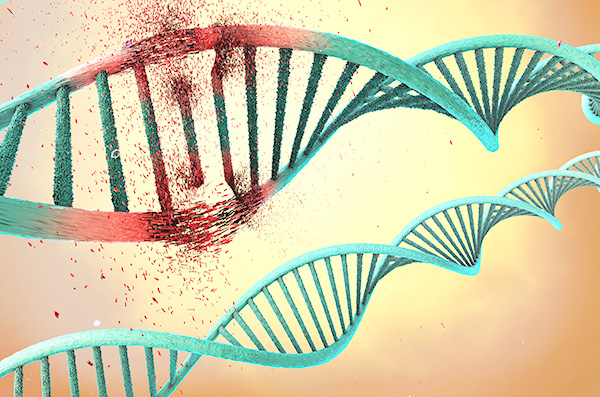
BREAKING: A groundbreaking new fluorescent sensor developed by scientists at Utrecht University is transforming our understanding of DNA repair processes, allowing researchers to observe cellular reactions in real time. Published in Nature Communications, this tool could revolutionize cancer research, drug safety testing, and our understanding of aging.
The innovative sensor, detailed in the paper titled “Engineered chromatin readers track damaged chromatin dynamics in live cells and animals,” harnesses the natural protein MCPH1. It attaches to the histone mark γH2AX, which signals DNA double-strand breaks. This development is crucial as our DNA faces relentless threats from sunlight, chemicals, and normal metabolic processes, often leading to serious health issues like cancer and neurodegeneration.
Until now, scientists struggled to monitor DNA repair directly. Traditional methods relied on antibodies that could only provide static snapshots after fixing and killing cells, which interfered with the repair process. With the new sensor, researchers can now visualize live cellular activity without disrupting the repair mechanisms.
“Our sensor is different,” explained lead researcher Tuncay Baubec, PhD. “It’s built from parts taken from a natural protein that the cell already uses. It goes on and off the damage site by itself, so what we see is the genuine behavior of the cell.” This dynamic binding allows scientists to track the kinetics of DNA repair, providing unprecedented insights.
In live-cell imaging experiments, the sensor revealed that damage foci form within minutes of exposure to genotoxic agents such as etoposide or ultraviolet light, with repair processes unfolding over hours. This capability provides a more detailed and realistic view of cellular responses to DNA damage.
Researcher Richard Cardoso Da Silva, PhD, who engineered the tool, shared a pivotal moment: “I was testing some drugs and saw the sensor lighting up exactly where commercial antibodies did. That was the moment I thought: this is going to work.” The sensor not only tracks when DNA damage occurs but also how quickly repair proteins arrive on the scene.
The team also demonstrated the sensor’s adaptability in the nematode C. elegans, revealing programmed DNA breaks during natural gametogenesis. This suggests the probe’s potential application across various living organisms, bolstering its significance in research.
Although the sensor itself is not a therapeutic tool, its implications for translational research are vast. Many cancer treatments rely on inducing DNA damage in tumor cells, making this sensor an invaluable asset for understanding treatment efficacy. The Utrecht team plans to make the probe widely available to accelerate discoveries across multiple fields.
With this groundbreaking innovation, researchers can now witness DNA repair processes live and in real time, opening a new frontier in biological research. This advancement highlights how technology can enhance our understanding of fundamental cellular processes, with the potential to influence future medical treatments and aging studies.
Stay tuned for more updates as this story develops.