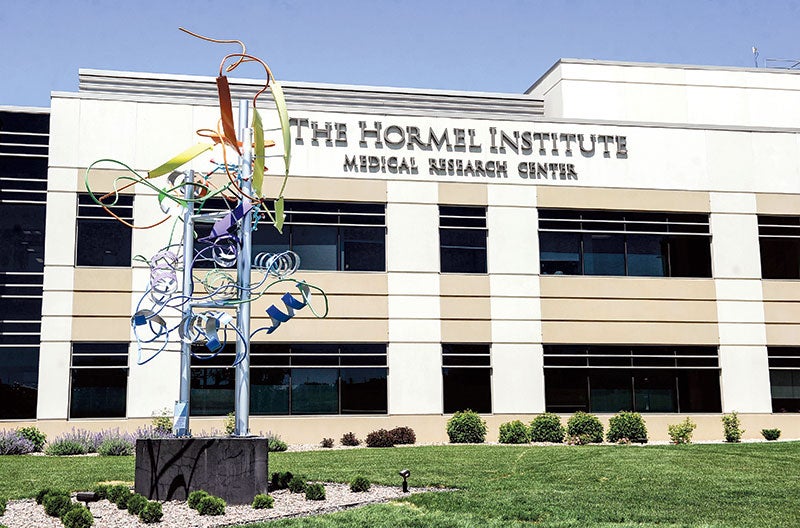
Researchers at the Hormel Institute affiliated with the University of Minnesota are investigating the effects of hydroxyurea, a widely used chemotherapy drug, on cancer cells. Their recent findings reveal how this treatment can enhance understanding of DNA replication processes, potentially leading to improved cancer therapies. The study, authored by Srinivasu Karri, PhD, and Chuanhe Yu, PhD, is published in the scientific journal DNA.
Cancer cells experience significant stress during treatments. According to Karri, “Understanding how therapies exploit this weakness can help design better, safer, and more precise treatments for patients.” The research team aims to delve deeper into the mechanisms of DNA replication, particularly focusing on how hydroxyurea impacts the replication fork—a structure that forms during DNA duplication.
Hydroxyurea is primarily used to treat cancers such as melanoma and chronic myelogenous leukemia, as well as blood disorders like sickle cell anemia. It serves as a crucial tool in studying DNA replication stress and genome instability.
Impact of Hydroxyurea on DNA Replication
During DNA replication, cells create identical copies of their DNA, essential for cell division. The process involves the unwinding of the DNA double helix into two strands, forming a Y-shaped “fork” structure. This replication fork is vital for ensuring each new cell receives a complete set of genetic instructions.
Karri and Yu’s team found that hydroxyurea has a more complex role than merely blocking DNA building blocks. It also heightens oxidative stress and interferes with metal-dependent proteins critical for DNA replication. These combined effects alter how cancer cells replicate their DNA and respond to treatment.
Key findings from the study include:
– Hydroxyurea initiates a multifaceted stress response, which includes oxidative damage and disruption of essential proteins needed for replication.
– The stress responses exhibit an asymmetry in the two DNA strands, challenging the conventional view that the replication fork operates symmetrically.
– Specific regulatory mechanisms for the leading and lagging strands during replication are linked to checkpoint signaling responses activated by hydroxyurea.
– Pathways that regulate replication checkpoints may alter the structure of replisomes—complexes that assist in DNA replication—allowing them to adapt to oxidative stress.
Karri stated, “These insights explain why hydroxyurea is effective against cancer cells and suggest new strategies to improve cancer therapies.” By focusing on oxidative stress, metal cofactor metabolism, and checkpoint signaling, future treatments could become more effective and targeted.
Future Directions in Cancer Research
The researchers express hope that their findings will encourage further investigation into the biology of metal cofactors, the remodeling of replisomes, and checkpoint regulation. Such studies may inspire innovative approaches to precision cancer therapy, ultimately leading to better outcomes for patients.
As the landscape of cancer treatment evolves, these insights into the role of hydroxyurea may play a pivotal role in shaping future therapies, potentially improving survival rates and quality of life for those affected by various forms of cancer.