UPDATE: Organized crime is reshaping the political landscape across Latin America, leading to a dramatic shift toward right-wing governments as violence surges. As of December 19, 2025, a new report reveals that the influence of 39 organized crime groups has intensified, prompting urgent security concerns in the region.
The Global Initiative Against Transnational Organized Crime reports that these criminal organizations have become increasingly sophisticated, coordinating operations across borders and diversifying their illicit activities. This alarming trend has resulted in escalating violence and significant migration flows, impacting social and political stability throughout Latin America.
Hugo Contreras, an expert in organized crime, states that groups have evolved beyond traditional drug trafficking to encompass extortion, contract killings, and human trafficking. “Organized crime has multiplied and diversified their sources of illicit income, as well as their territorial control and disputes,” Contreras emphasizes.
The report highlights the dire conditions in countries such as Mexico, Ecuador, Brazil, and Haiti, which rank among the world’s most dangerous. In Ecuador, gang violence has seen over 3,600 deaths due to escalating crime rates, while Mexico grapples with internal warfare linked to the Sinaloa cartel.
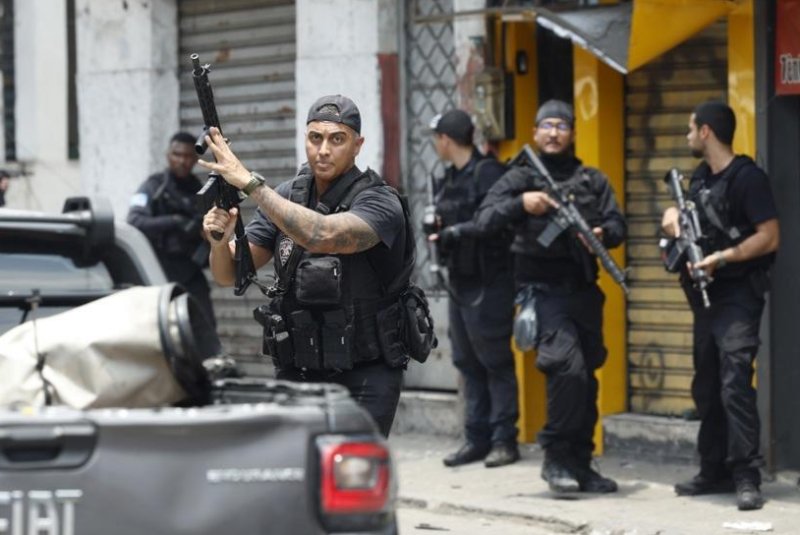
Furthermore, Brazil’s Rio de Janeiro has witnessed devastating confrontations, with a recent police operation against the Comando Vermelho resulting in 121 fatalities. The growing chaos has led to the election of right-wing governments in at least 10 countries during the 2024-2025 period, reflecting a shift toward more aggressive law enforcement strategies.
In the wake of these developments, Pablo Carvacho from the Center for Justice and Society warns that the increasing violence is a direct consequence of organized crime exploiting vulnerable migrant populations. “Migratory processes have created space for transnational illicit activities, particularly affecting vulnerable groups,” Carvacho explains.
The report suggests that governments must adopt comprehensive responses that go beyond traditional crime-control methods to effectively tackle organized crime. Contreras argues for the need for international cooperation, financial intelligence, and prison reform to dismantle these powerful networks.
This escalating crisis poses a significant threat to regional stability, forcing countries to rethink their approach in light of persistent violence and the rise of sophisticated criminal organizations. As Latin America navigates this turbulent landscape, the implications for security, governance, and social cohesion remain profound.
With violence continuing to escalate, the situation demands immediate attention and action from both national and international authorities. The path forward will require innovative strategies that address the root causes of organized crime, rather than merely treating its symptoms.
As the region confronts these challenges, the world watches closely to see how Latin American governments will respond. The urgency of the situation cannot be overstated; the stakes are high, and the time for action is now.