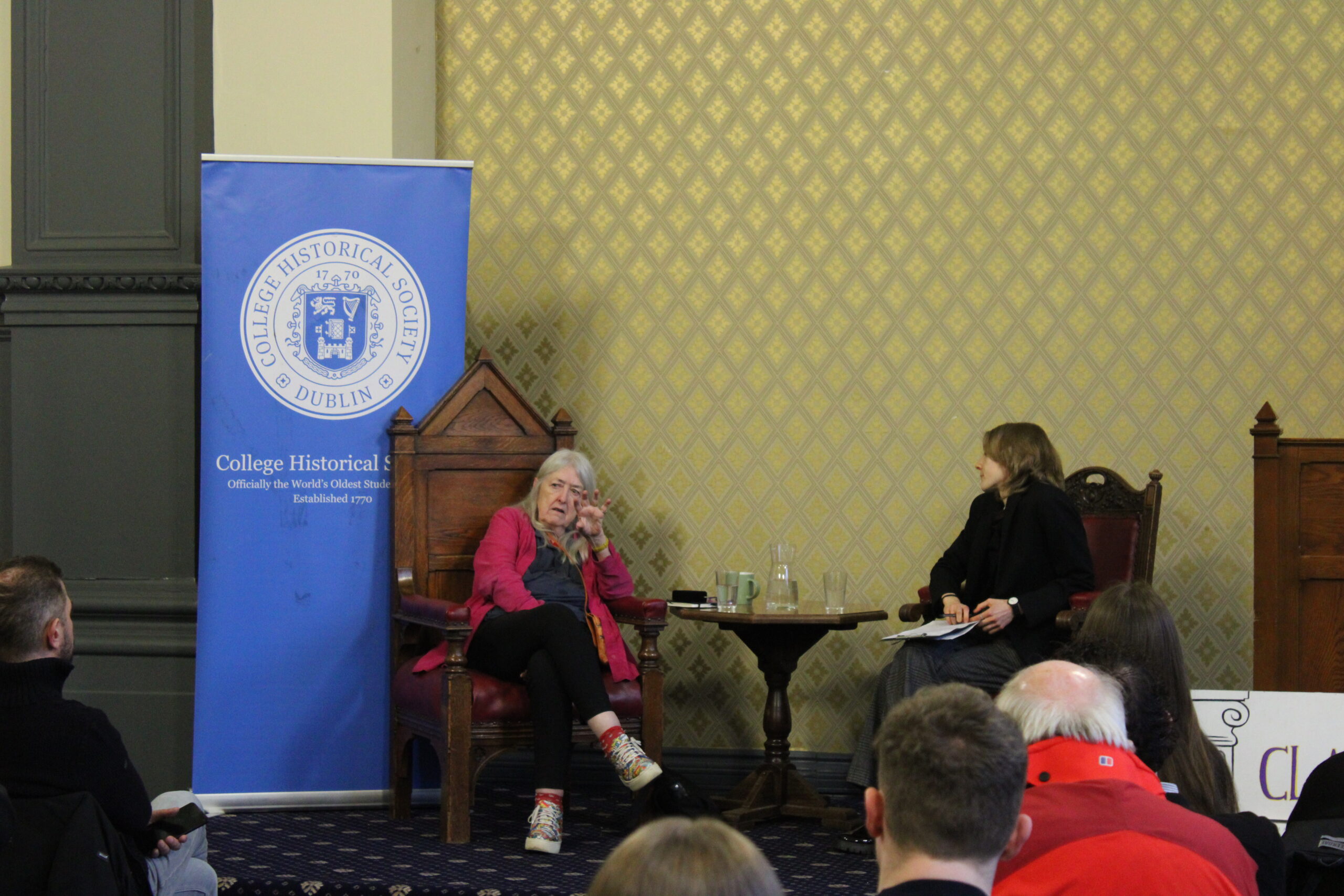
UPDATE: Renowned classicist Professor Mary Beard has been awarded the Gold Medal for Outstanding Contributions to Public Discourse by Trinity College Dublin’s College Historical Society on February 6, 2024. This prestigious recognition highlights her significant impact on academia and public understanding of history.
During a captivating discussion, Beard shared a poignant childhood memory from the 1960s that ignited her passion for history. At just five years old, she was taken by her mother to see the “Egyptian mummies” at the British Museum, recalling a remarkable encounter with a 4,000-year-old piece of bread. “I can’t tell you how amazing that was… I have never forgotten this little piece of bread,” she stated. This experience shaped her belief that academics must “share knowledge” and open “museum cases for other people.”
Beard emphasized the importance of humanities degrees, arguing that they are essential for fostering responsible citizenship. “The world of public debate is dominated by those who have never thought about what it would be like to think differently,” she noted. Her remarks come amid rising concerns that political leaders view the humanities as a luxury, a sentiment she firmly opposes.
As a Trustee of the British Museum, Beard expressed her views on conservation and curation, advocating for a hands-on approach with artifacts. “It’s a risk I’m prepared to take,” she asserted, emphasizing the transformative power of engaging young minds with history. This bold stance invites a reevaluation of how museums interact with the public, suggesting that physical touch can create profound educational experiences.
In discussing the portrayal of ancient cultures in cinema, Beard acknowledged the influence of films on public interest in historical narratives. Referring to Christopher Nolan’s upcoming adaptation of the Odyssey, she expressed optimism that even misconstrued representations can ignite curiosity. “You can go beyond the truth,” she stated, yet this approach can lead to increased readership of classic texts.
Beard, a self-identified “post-truth historian,” highlighted the subjective nature of history. “There is no objective explanation,” she declared, suggesting that the distortions in historical narratives often reveal societal values. Her engaging style of writing connects ancient history to contemporary issues, making her a sought-after voice in discussions about power dynamics and governance today.
When asked about parallels between ancient leaders and modern figures, Beard humorously responded to the question, “Which Roman Emperor is Donald Trump?” by identifying Elagabalus, a controversial figure known for his short reign and extravagant lifestyle. This comparison underscores her belief that historical trends can illuminate current political climates.
As Beard continues to inspire audiences with her insights, she urges both academics and the public to embrace curiosity and engage in meaningful dialogue about history. Her call to action resonates deeply, encouraging a collective exploration of what defines us as individuals and societies.
This award and her ongoing discussions emphasize the critical role of humanities in understanding our past and navigating our future. As Professor Beard eloquently puts it, “We need to speak the truth more often.” This sentiment remains urgent as society grapples with complex issues that demand a reflective and informed citizenry.