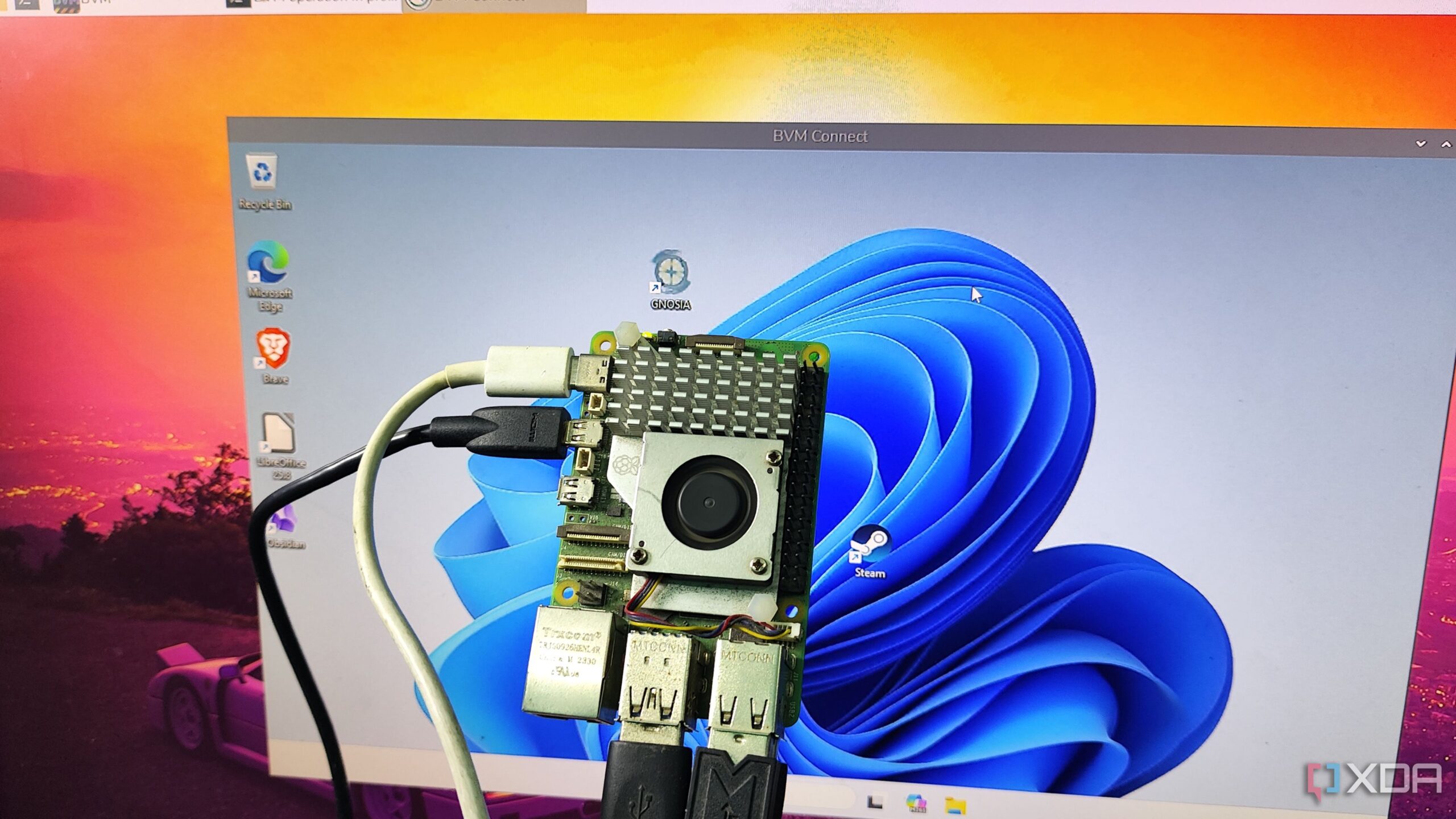
UPDATE: Innovative users are now successfully deploying both Windows 11 and Linux virtual machines (VMs) on Raspberry Pi devices, showcasing remarkable performance and flexibility. This exciting breakthrough is reshaping how tech enthusiasts utilize these compact computers for advanced tasks.
Recent tests confirm that Raspberry Pi’s latest models, especially the 8GB Raspberry Pi 5, can handle multiple VMs without significant slowdowns. This is especially relevant for developers and hobbyists eager to maximize the potential of their hardware. Just announced, the ability to run Windows 11 in a VM through the Botspot VM makes it easier than ever for users to leverage Microsoft’s flagship operating system on a Raspberry Pi.
While earlier attempts to run VMs on Raspberry Pi met with limited success due to compatibility issues with virtualization platforms like Proxmox, recent developments with Canonical’s MicroCloud have changed the game. Users can now run a lightweight version of Ubuntu Server to deploy VMs effectively, expanding the possibilities for DIY projects.
The process involves installing Canonical’s MicroCloud on Raspberry Pi OS, which has proven to be straightforward. Users have reported deploying two VMs and additional containers without experiencing performance issues. With careful resource management, the Raspberry Pi 5 can even handle up to four VMs simultaneously.
In a surprising twist, running a Windows 11 instance via a VM has emerged as a viable option. Although performance might dip on 4K displays, switching to a 1080p monitor delivers a responsive experience, enabling tasks like running PowerShell scripts and minor Visual Studio projects.
According to tech enthusiasts, the Botspot VM simplifies the installation process. Users can follow a checklist to configure their setup quickly. This accessibility opens doors for those less experienced with complex installations, making it a compelling choice for hobbyists.
While the results are impressive, experts still recommend using traditional x86 machines for heavy virtualization tasks. However, for those looking to experiment with lightweight solutions on a budget, Raspberry Pi’s new capabilities offer an attractive alternative.
Moreover, containers remain a preferred option for many users. Despite the benefits of VMs, technologies like Docker and Kubernetes are still favored for their efficiency and ability to run multiple instances on the Raspberry Pi. Developers appreciate the low overhead and rapid deployment these container solutions provide, making them ideal for experimentation.
The Raspberry Pi community is buzzing with excitement over these developments. As more users share their experiences and optimize their setups, the potential for innovation in this space continues to grow.
Stay tuned for further updates as we monitor the evolving landscape of Raspberry Pi applications and virtualization technology. The implications of these advancements could redefine how we think about compact computing in the future.