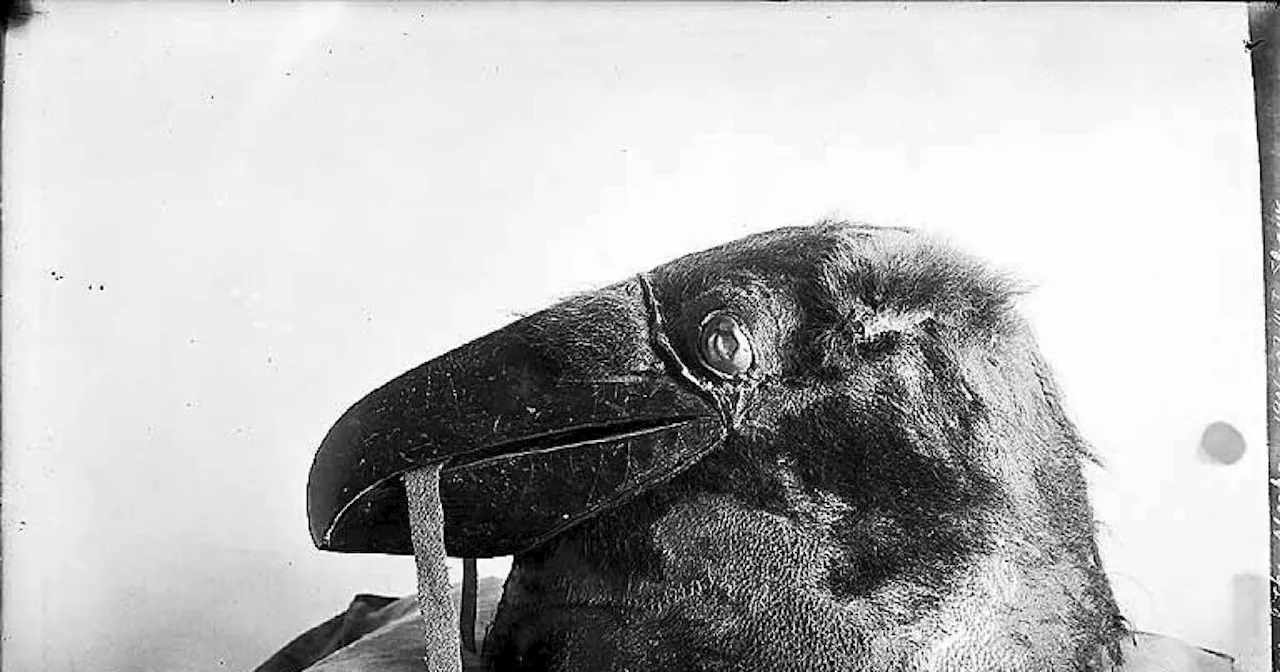
UPDATE: The historic Raven helmet, a sacred item of the Kiks.ádi clan, is set to return to its rightful owners after more than 100 years in state custody. This significant development comes as the Alaska State Museums has confirmed plans to initiate the repatriation process, finally acknowledging the Kiks.ádi’s claim to this important cultural artifact.
For decades, the Kiks.ádi have argued that the helmet, taken during a tumultuous period of colonial conflict, was never the property of the state. The helmet, worn by the Kiks.ádi warrior Ḵ’alyáan during the pivotal Battle of Sitka in 1804, is regarded as at.oow—a living, sacred clan item. “When we don’t have our items, we can’t use them,” said Aanyaanáxch Ray Wilson, Kiks.ádi clan leader, expressing the deep emotional significance of reclaiming their heritage.
The helmet has been on display at the Sheldon Jackson Museum since 1906, behind glass and away from the hands of the Kiks.ádi people. The return of this artifact symbolizes a broader movement towards reconciliation and the restoration of Indigenous rights. Wilson, now 92, recalls how colonial actions have fragmented Lingít history and culture. “These are really trying times, and we need the culture to come back to make our people stronger again,” he stated.
The journey to reclaim the helmet involved rigorous historical research. Clan member Lduteen Jerrick Hope-Lang has worked tirelessly, just as his grandmother did decades ago, to illuminate the circumstances under which the helmet changed hands. He noted, “If you’re asserting you have the right to anything, there must be proof.”
The records reveal that three Kiks.ádi men brought the helmet to the Alaska Territorial Governor John Brady, who co-founded the institution that would become the museum. However, Hope-Lang asserts that the transfer was unauthorized, lacking the proper protocols required for such sacred items. “The church never had the right of possession when it sold the helmet as part of the collection,” said Jermaine Ross-Allam, director of the Presbyterian Church’s Center for Repair of Historical Harms. His research confirms that the helmet’s ownership was never legitimately transferred.
Yeidikook’áa Brady-Howard, chairwoman of the Sitka Tribe of Alaska, emphasized the importance of this moment, stating, “This is just one story of many sacred items coming back to their people.” She highlighted that the return of the helmet comes at a critical time as relationships between Indigenous communities and institutions are evolving positively. “We cannot view the repatriation without considering the larger lens of colonialism and trauma, but also truth, reconciliation, and healing,” she added.
The Alaska State Museums is now in the process of submitting a notice to the Federal Registrar, a crucial step before the helmet can be officially returned. This decision marks a transformative moment not only for the Kiks.ádi but also for Indigenous rights across North America. The journey toward reclaiming their cultural heritage continues, and there is a palpable sense of hope among the community.
Both Wilson and Hope-Lang are optimistic about the future, envisioning a day when young clan members will have access to their cultural artifacts without the burden of historical trauma. “The exciting thing is for the young people who will become the caretakers, the future ancestors,” Hope-Lang shared. “This won’t be passed on to them.”
As the repatriation process unfolds, this story serves as a beacon of hope for Indigenous communities seeking to reclaim their histories and cultural identities from the shadows of colonial legacy. The return of the Raven helmet signifies more than just the retrieval of an artifact—it represents a vital step toward healing and empowerment for the Kiks.ádi and other Indigenous peoples.
Stay tuned for more updates as this story develops.