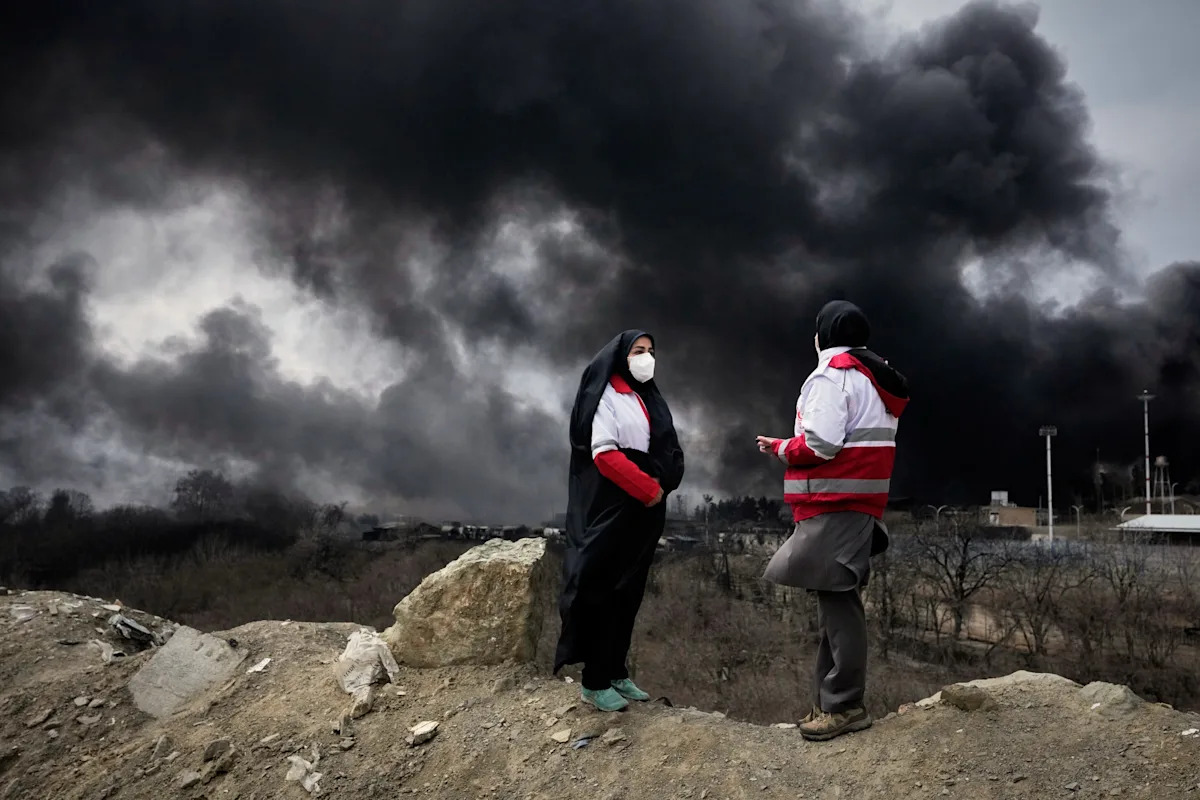
Clouds of toxic smoke released by recent U.S.-Israeli airstrikes on Iranian oil facilities have returned to the ground as “black rain,” raising alarms about public health risks in Iran. Residents in Tehran reported symptoms such as burning eyes and difficulty breathing following the precipitation of dark, oily rain, which fell after several fuel depots and a refinery were targeted. The fallout from these attacks has also produced plumes of dark smoke visible in various parts of the region over the past two weeks, as Iran responds with drone and missile strikes against oil and natural gas facilities in neighboring countries.
Health officials are sounding the alarm, warning that exposure to black rain poses serious health risks. This phenomenon occurs when soot, ash, and toxic chemicals combine with rainwater in the atmosphere before falling back to Earth. Such occurrences are not uncommon after oil refineries catch fire, but they can also result from wildfires, volcanic eruptions, or industrial pollution. According to experts, microscopic soot generated from the incomplete combustion of hydrocarbons in fuel oil is a significant concern.
Health Risks Associated with Toxic Rainfall
The health risks associated with exposure to black rain are substantial. Soot particles, which are approximately 40 times smaller than a human hair, can penetrate deep into the lungs and enter the bloodstream, potentially leading to respiratory and cardiovascular issues that may result in premature death. Additionally, exposure to polycyclic aromatic hydrocarbons (PAHs) found in burning oil can increase cancer risks.
In light of these dangers, the World Health Organization and Iranian health officials have advised residents to remain indoors and wear masks when outdoors. They cautioned that the acidic nature of the rain could cause skin burns and lung damage. “We can definitely expect acute health effects from an event like this,” said V. Faye McNeill, a professor of chemical engineering at Columbia University, who specializes in atmospheric chemistry. She noted that typical air pollution events can lead to health complications, particularly among vulnerable populations such as the elderly, children, and those with pre-existing health conditions.
Some residents of Iran have expressed concern that the contaminated rain, which may also contain heavy metals, could pollute drinking water supplies and waterways.
Duration of Chemical Presence in the Atmosphere
The duration that these hazardous chemicals remain in the atmosphere varies. It typically takes only hours for fuel tanks to burn out completely, but, as evidenced by the oil field fires in Kuwait during the Gulf War, some can persist for months. For fires that extinguish more quickly, most soot and chemicals are expected to disperse and wash out of the atmosphere within approximately three to seven days, according to Peter Adams, a civil and environmental engineering professor at Carnegie Mellon University.
He noted, “If we don’t create more problems, at least what’s in the atmosphere is going to go away,” although the long-term health implications remain uncertain. The potential for further military strikes complicates the situation, leaving many to worry about additional damage to oil facilities and reservoirs.
The unfolding situation underscores the serious health and environmental implications associated with the ongoing conflict in the region. As airstrikes continue and retaliatory measures escalate, the risk to public health from toxic fallout remains a pressing concern for both residents and health officials.