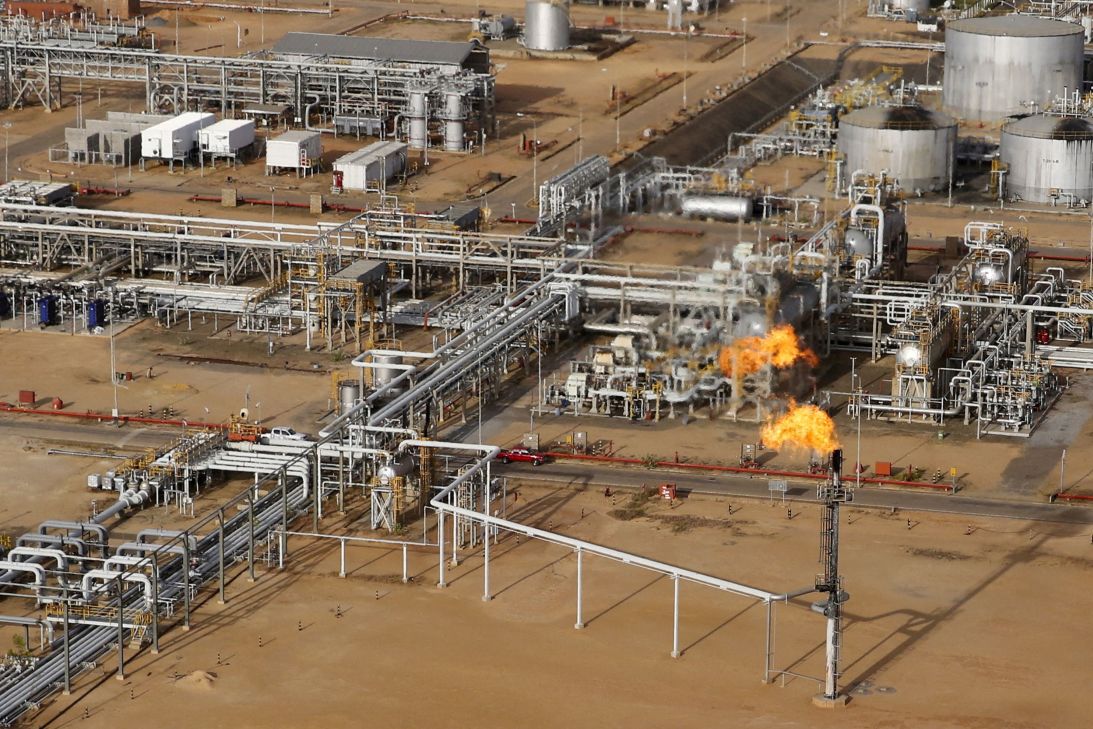
UPDATE: President Donald Trump has intensified his focus on Venezuela’s vast oil reserves, estimated at more than 300 billion barrels, following the reported capture of President Nicolás Maduro. This development raises immediate concerns among climate experts regarding the environmental impacts of exploiting one of the world’s dirtiest oil sources.
Venezuelan oil, particularly from the Orinoco Belt, is categorized as heavy sour crude, a type notorious for its high carbon emissions and difficult extraction process. Guy Prince, head of energy supply research at Carbon Tracker, notes, “Venezuela’s oil is considered ‘dirty’ not because of ideology, but because of physics and infrastructure.”
The extraction process for this thick, viscous oil requires significant energy, primarily derived from fossil fuels, which exacerbates climate pollution. Current practices in Venezuela are concerning; the country has a methane intensity from oil and gas operations that is six times the global average, according to the International Energy Agency. This is largely due to excessive flaring, where large quantities of methane are released as excess natural gas is burned off.
The environmental risks are compounded by Venezuela’s aging infrastructure, which increases the likelihood of spills. Reports from the Venezuelan Observatory of Environmental Human Rights revealed 199 spills between 2016 and 2021, although the true number is likely much higher.
“Whether in Canada or Venezuela, we should not be digging this stuff up,”
said Lorne Stockman, research co-director at Oil Change International.
Not only are the climate risks alarming, but the economic viability of ramping up Venezuelan oil production is questionable. Since 2016, production has plummeted from nearly 2 million barrels per day to less than 1 million barrels daily, largely due to U.S. sanctions and a lack of investment. Experts estimate that sustaining current production levels would require over $53 billion in investments over the next 15 years, while boosting production to its previous peak would necessitate an astonishing $183 billion.
With global oil prices low and demand peaking, Patrick King, head of emissions research at Rystad Energy, warns that “in today’s energy market, that simply doesn’t line up with reality.” The potential increase in carbon emissions from ramping up Venezuelan oil production poses a serious threat to global climate goals.
Future scenarios remain uncertain; while increased Venezuelan oil output could offset declines in other regions, the broader implications of such an intervention could detract from the urgent transition to clean energy. As Prince states, “The most significant climate impact of a Venezuelan intervention wouldn’t be releasing vast new carbon — it would be indirect: distracting from the clean energy transition.”
As the situation develops, the global community must watch closely. The consequences of Trump’s ambitions in Venezuela could resonate far beyond its borders, potentially stalling critical climate action at a time when swift measures are desperately needed.