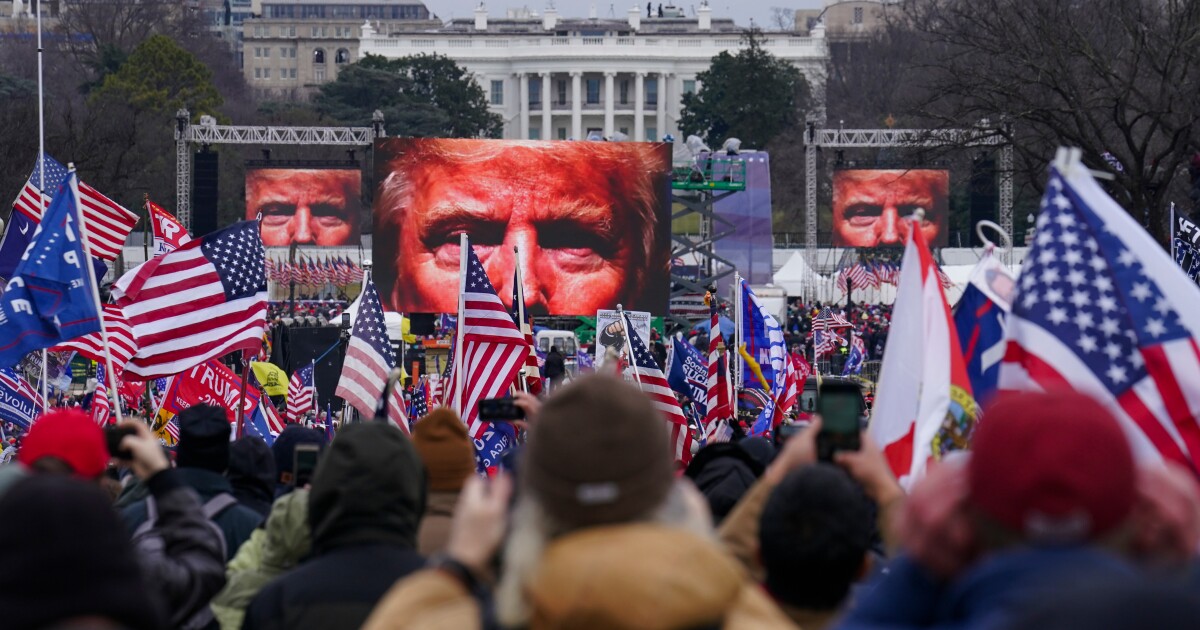
UPDATE: In a startling interview that aired Monday, former President Donald Trump urged the Republican Party to “take over the voting” processes in at least 15 states. Speaking to former FBI Deputy Director Dan Bongino, Trump reiterated his baseless claims from the 2020 election, asserting that he won in areas where official tallies show he lost, labeling those states as “crooked.”
“The Republicans should say, ‘We want to take over. We should take over the voting in at least — many, 15 places,’” Trump stated, suggesting that the GOP should push for national control over voting procedures. This controversial assertion raises significant legal and constitutional questions, as elections are managed at the state level in the United States.
His comments come amid ongoing scrutiny of voting practices. Just last week, the FBI executed a search warrant at an elections office in Fulton County, Georgia, as part of a broader investigation by the Justice Department into alleged voter fraud. This investigation includes inquiries into voter and election information from at least 19 states, according to reports.
Since the 2020 election, Trump has consistently challenged the legitimacy of results in states that expanded mail-in voting and relaxed voter identification requirements. Despite numerous audits and investigations revealing no evidence of widespread fraud, Trump continues to promote these unverified claims.
Many states, in response to the COVID-19 pandemic, had expanded voting access, including extended early voting periods and easier mail-in voting options. Trump’s renewed push for GOP control over voting could lead to increased tensions and further political divides as upcoming elections approach.
As this situation develops, all eyes will be on how Republican leaders respond to Trump’s call to action. Will they align with his directive, or will they seek to distance themselves from these controversial claims? The implications of this movement could significantly impact voter access and election integrity across the nation.
Stay tuned for more updates on this evolving story.