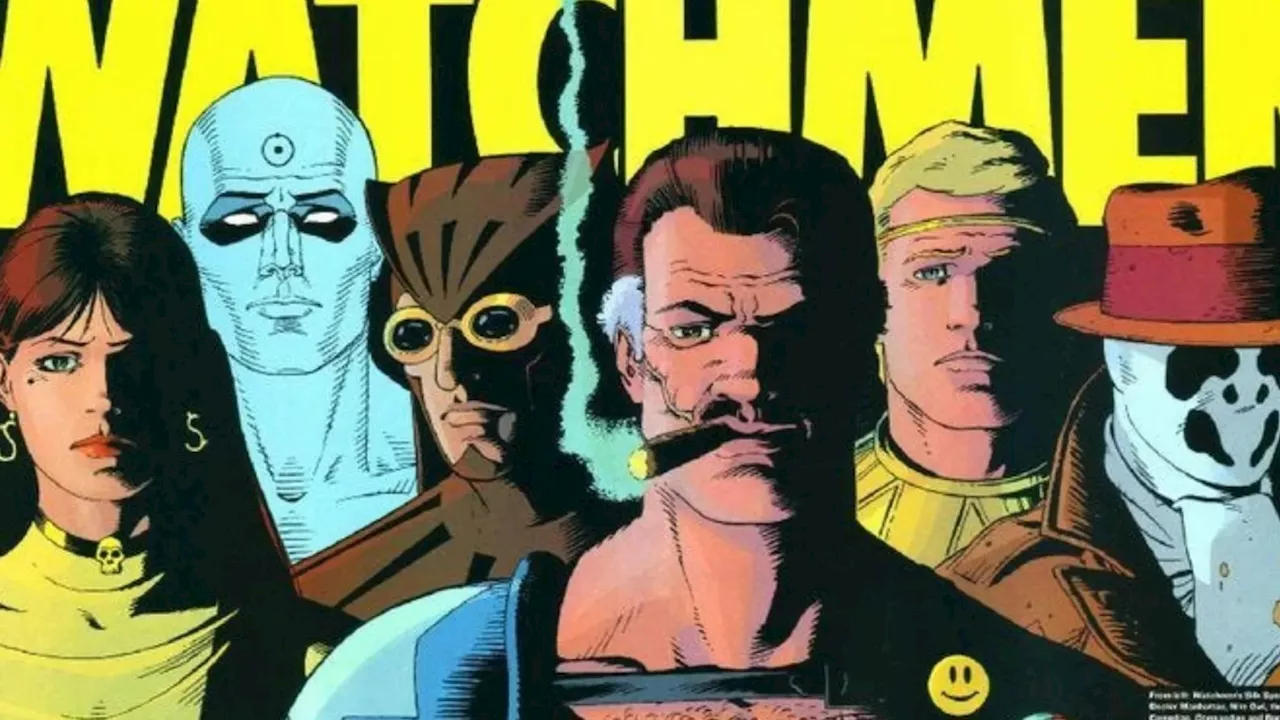
UPDATE: As the iconic comic Watchmen celebrates its 40th anniversary, new discussions emerge around its legacy and relevance in today’s cultural landscape. This critical analysis explores how the work of Alan Moore and Dave Gibbons has shaped the superhero genre, raising urgent questions about its interpretation in contemporary society.
Released in a serialized format between 1986 and 1987, Watchmen has long been hailed as a masterpiece that challenged the very fabric of superhero narratives. However, as we reflect on its impact, it becomes clear that the comic’s historical ties to the Cold War era and the socio-political turmoil of its time may be clouding its current significance.
The narrative, which offers a biting critique of superhero archetypes against a backdrop of nuclear paranoia and governmental distrust—exemplified by events like the Watergate scandal and the Vietnam War—has been celebrated for its innovative storytelling and artistic approach. Yet, critics argue that its dense, slow-paced narrative and problematic elements may render it more a time capsule than a timeless classic.
As society evolves, the question arises: is the continued elevation of Watchmen as the definitive superhero text detrimental to the genre’s progress? The comic’s profound influence has led to a proliferation of dark, gritty stories that often miss the nuanced critique originally intended. Many creators have emulated its shock value, leading to a saturation of morally ambiguous heroes and narratives that lack the depth of Moore and Gibbons’ work.
In today’s rapidly shifting cultural climate, the exploration of heroism and societal anxieties has transformed significantly. The 1990s brought about major social changes, and the conversation continues to evolve. The reliance on Watchmen’s framework risks stagnation, akin to clinging to outdated communication methods in a digital age.
Critics emphasize the importance of recognizing that while Watchmen’s achievements are monumental, they should not dictate the future of superhero storytelling. Acknowledging the shifts in societal values and expectations is crucial for creating relevant narratives that resonate with contemporary audiences.
The current discourse surrounding Watchmen invites fans and creators alike to reconsider what defines a superhero story today. As we commemorate four decades of this landmark comic, the time is ripe for a re-evaluation of its legacy and its role in shaping the future of the genre.
Stay tuned for ongoing discussions as more voices weigh in on this pivotal moment in comic history.