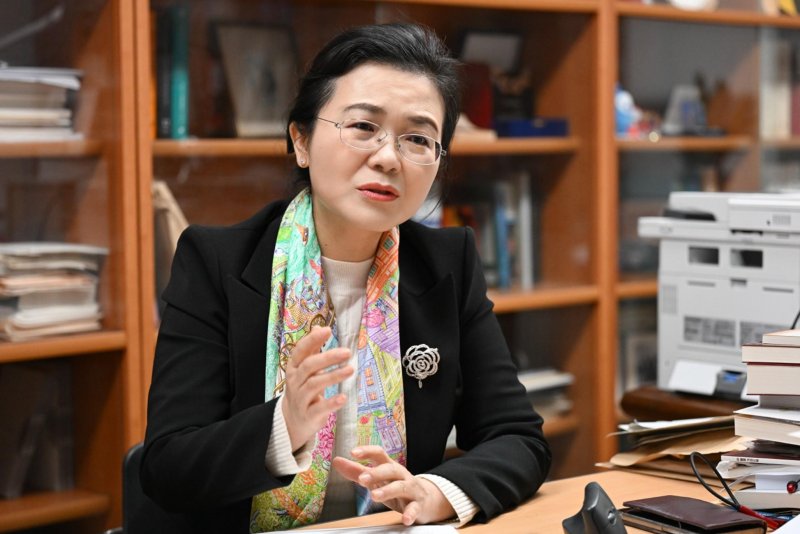
UPDATE: December 17, 2023 – A prominent law professor from Korea University has issued a dire warning that proposed judicial reforms backed by South Korea’s ruling party could dangerously undermine judicial independence and the separation of powers. Cha Jin-ah, a constitutional law expert and former advisor to the Constitutional Court, stated, “unchecked power leads to dictatorship,” emphasizing the critical need for public vigilance.
In her urgent remarks, Cha expressed conditional support for certain reforms, such as modest increases in the number of Supreme Court justices and the introduction of a court petition system. However, she raised significant concerns about the ruling party’s strategies to push through multiple bills simultaneously, which she views as politically motivated and potentially detrimental to democracy.
The proposed legislation includes several contentious measures: expanding the number of Supreme Court justices, creating a special court for treason, and abolishing the court administration office. These changes could centralize power and compromise the integrity of the judiciary, Cha warns.
In an interview conducted earlier today, Cha elaborated on her concerns. She stated, “Increasing the number of Supreme Court justices to an excessive number risks blatant political appointments. Adding just one division—four justices—seems appropriate, but doubling the full bench raises red flags.”
Cha also criticized the ruling party’s plans to introduce a court petition system, describing it as overly simplistic. “If every final judgment alleged to violate due process is open to constitutional review, how can the Constitutional Court manage that? This could overwhelm the court and turn into a tool for political ends,” she said.
Highlighting the potential for abuse, Cha pointed out that the proposed special court for treason could lead to biased trials directed by the ruling party. “A special court for treason is unconstitutional. The notion that it can be made constitutional is nonsensical. Fair trials risk becoming a façade, leading to predetermined outcomes.”
Additionally, she condemned the suggested crime of “distorting the law,” comparing it to archaic laws used to suppress dissent in totalitarian regimes. “This measure is barbaric and could be weaponized against judges and prosecutors, creating an environment of fear,” Cha warned.
The implications of these reforms extend beyond legal frameworks; they strike at the heart of democratic principles. Cha insists that only public outcry can prevent what she terms a “legislative rampage.” “Elections do not grant the ruling party carte blanche to impose its will. Democracy requires continuous public oversight,” she stated.
As the situation develops, Cha calls on the opposition to play a more robust role in countering these efforts. “The opposition must effectively challenge these proposals and present viable alternatives. Its failure to hold the ruling party accountable is equally alarming,” she concluded.
With South Korea’s democracy at a critical juncture, citizens and lawmakers must closely monitor the unfolding events surrounding these judicial reforms. The stakes are high, and the time to act is now.
Stay tuned for updates on this developing story as public discourse intensifies around the future of South Korea’s judicial system.