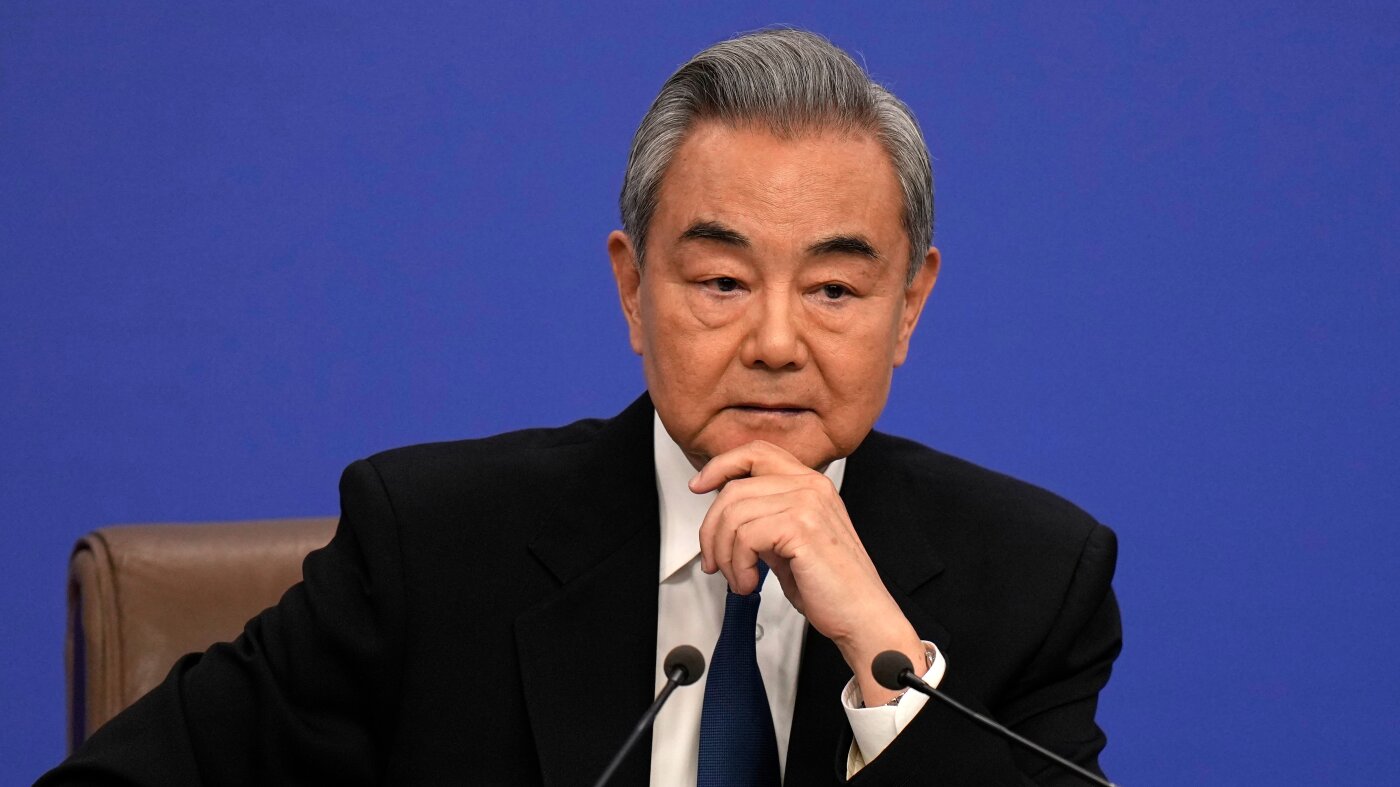
China’s Foreign Minister, Wang Yi, delivered significant remarks on Sunday regarding key international issues, emphasizing his country’s stance on the ongoing conflict involving the United States, Israel, and Iran. Speaking at an annual political meeting in Beijing, Wang stated that the conflict “should not have happened” and warned that it “does no one any good.” His comments come as speculation grows around a forthcoming meeting between President Donald Trump and Chinese leader Xi Jinping later this month, though no specific date was confirmed.
Wang stressed the importance of dialogue between the world’s two largest economies, indicating that conflict is not an option. He called for all parties involved in the Iran war to cease hostilities and return to negotiations. “Might doesn’t make right, and the world cannot revert to the law of the jungle,” Wang remarked, underscoring China’s position on respecting the sovereignty and territorial integrity of Iran and other nations in the Middle East. To further this aim, China plans to send an envoy to the region for mediation, although analysts note that China is strategically aligned with Iran, purchasing substantial amounts of oil from the country.
U.S.-China Relations and European Concerns
Wang articulated China’s desire for “peaceful coexistence” and “win-win cooperation” with the United States. He acknowledged that both nations are significant global powers and underscored the need for mutual respect in their interactions. “Neither side can remodel the other, but we can choose how we want to engage,” he stated, reflecting a sentiment often echoed by Chinese diplomats. Wang also sought to reassure European nations concerned about China’s ascent, arguing that they should view China as a “global partner” rather than a competitor. He expressed optimism regarding European nations engaging more with the Chinese market, encouraging them to abandon protectionist views.
In discussing trade, Wang indirectly criticized President Trump’s global trade tariffs, describing protectionism as “akin to locking oneself in a dark room.” He explained that while it may shield from external threats, it ultimately restricts opportunities. On a positive note, he announced that from May 1, China will eliminate tariffs on all imports from most African countries, aiming to facilitate greater access to the Chinese market for African nations.
Regional Tensions: Japan and Taiwan
Tensions between China and Japan were also addressed during Wang’s briefing. With Japanese Prime Minister Sanae Takaichi suggesting that Japan might intervene should China invade Taiwan, Wang firmly reiterated China’s claim over the territory. “Taiwan never was, is not, and will never be a country,” he asserted, emphasizing that Taiwan’s status is a matter of China’s internal affairs. He maintained that Japan has no right to interfere in this issue, highlighting the delicate nature of Sino-Japanese relations.
In the context of the ongoing violence in Gaza, Wang advocated for a two-state solution to the Israeli-Palestinian conflict. He stated, “Any other arrangements or new mechanisms must reinforce – rather than undermine – the two-state solution.” While he welcomed international efforts to achieve a ceasefire, he acknowledged that significant challenges remain ahead. Notably, China has been invited to participate in Trump’s Board of Peace but has yet to engage formally in this initiative.
Wang Yi’s statements reflect China’s strategic positioning on various global issues, as the nation navigates complex relationships with the United States, Iran, and its neighbors. As the world watches closely, the outcomes of these discussions could have far-reaching implications for international relations.