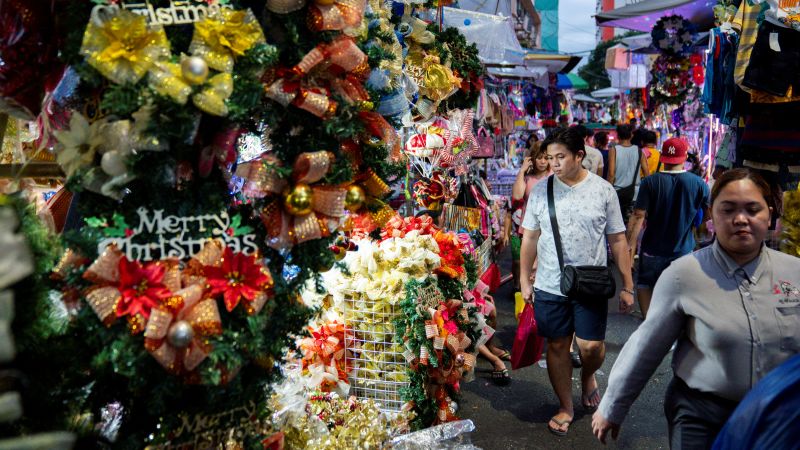
As the festive season approaches, the Philippines stands out for having the longest Christmas celebration in the world. Many Filipinos, including advertising professional Via Arboleda, have already started decorating their homes months in advance, with preparations beginning as early as September. According to Arboleda, the anticipation for Christmas is palpable, with decorations brightening up the rainy season.
The Philippines embraces a unique cultural phenomenon known as “Bongga,” which translates to flamboyant and spectacular. This term reflects the elaborate decorations and festive atmospheres that emerge in shopping malls and public spaces throughout the country. In the capital city of Manila, where December temperatures average around 28 degrees Celsius (82 degrees Fahrenheit), the holiday spirit thrives, unimpeded by the lack of snow.
As families prepare for their annual reunions, the excitement builds around communal gatherings. Almost 10 percent of the country’s workforce is employed abroad, driven by opportunities for higher pay and improved living conditions, as reported by the International Labour Organization. These overseas workers send remittances back home, contributing approximately 9 percent to the nation’s GDP. For many families, the Christmas celebration becomes a rare occasion to reunite, with some relatives returning home only once a decade.
Traditional Filipino dishes play a central role in these gatherings. Common offerings include caldereta, a rich goat stew, and a local take on spaghetti that features a sweet tomato sauce enhanced with banana ketchup. “Rice will definitely be on the table, and dessert is often fruit salad with condensed milk and cream,” Arboleda explained. To add to the festive atmosphere, families often hire karaoke machines for singalongs, with music echoing in homes and public spaces alike.
Iconic songs, such as Jose Mari Chan’s “Christmas in Our Hearts,” serve as a staple soundtrack to the season. By November, the upscale Bonifacio Global City (BGC) district in Manila hosts weekly fireworks displays, attracting families eager to witness the vibrant celebrations. Major brands contribute to the festivities with elaborate Christmas trees, from the elegant Tiffany Blue conifer to a lively pink tree created by Surf washing detergent.
The celebrations often focus on themes that resonate with the public, such as this year’s theatrical display at the SM Mall of Asia, which draws inspiration from the popular musical Wicked: For Good. The mall features a stunning Emerald City-inspired Christmas tree alongside vibrant decorations.
For many Filipinos, Christmas traditions are deeply rooted in their daily lives. Michelle Neri, a tech analyst based in California, shared her experiences of growing up in Manila. Her family has a tradition of keeping their Christmas tree up year-round. “Christmas can’t compare anywhere else,” Neri noted, recalling her mission to visit every mall adorned in festive decorations during her recent trip home.
Religious observances are integral to the celebration. With nearly 80 percent of the population identifying as Roman Catholic, Christmas in the Philippines honors the birth of Jesus Christ. The 2020 census indicated that over 85 million people in the country are followers of this faith.
The culmination of the Christmas season occurs on December 24 with the Holy Mass, a significant moment that follows the Simbang Gabi tradition of nine pre-dawn masses beginning on December 16. After the mass, families enjoy traditional delicacies like bibingka rice cakes and puto bumbong.
Both Arboleda and Neri embrace the dual aspects of the Christmas season: the spiritual and the joyous celebration of life. “Filipinos want to celebrate everything,” Neri stated, encapsulating the essence of a culture that cherishes togetherness, joy, and the festive spirit. As the Philippines continues to prepare for its elaborate Christmas festivities, the warmth and excitement of the season are sure to unite families near and far.