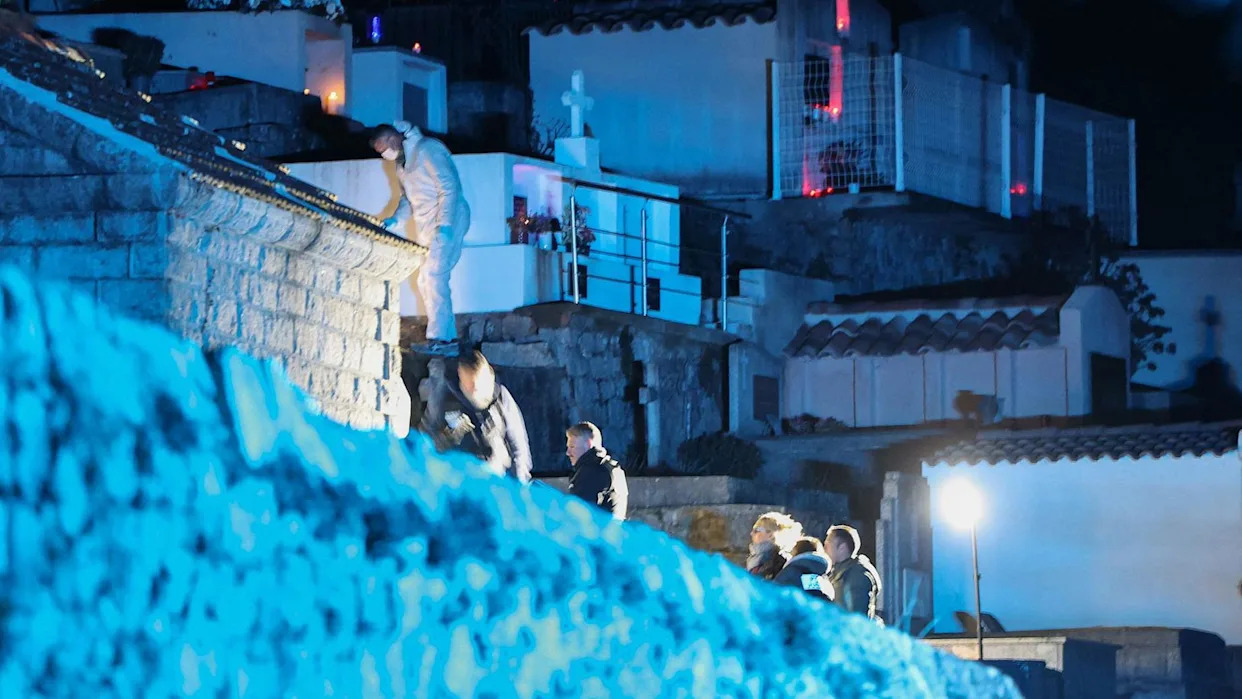
The small village of Vero in Corsica was shaken by violence during a funeral, resulting in the immediate death of former nationalist leader Alain Orsoni. The 71-year-old was attending his mother’s burial when he was shot from nearby scrubland. This incident marks a disturbing continuation of violence on the Mediterranean island, which has seen thirty-five murders in the past three years, contributing to one of France’s highest homicide rates.
Orsoni, who had returned from exile in Nicaragua for the ceremony, was a prominent figure in Corsican nationalism. His death during such a significant event has left locals in disbelief. Close friend Jo Peraldi expressed his shock, stating, “Never have I witnessed seeing someone murdered while accompanying their mother to their final resting place.”
The aftermath of the shooting saw heavy police presence at Orsoni’s funeral in Ajaccio, where mourners gathered to pay their respects. The atmosphere was heavy with emotion, yet the violence cast a dark shadow over the ceremony. For Christian Leca, Orsoni’s cousin, the incident represents a “tipping point in the horror,” emphasizing that “people don’t kill in cemeteries; it’s intolerable.”
Changing Nature of Corsican Violence
The current wave of violence in Corsica has evolved from its historical roots in nationalism. According to Thierry Dominici, a Corsican nationalism expert at the University of Bordeaux, militant groups previously focused on autonomy have shifted to organized crime. “Once armed groups gave up their violent campaign for autonomy or independence, they kept their weapons and turned to organized crime instead,” he stated. He suggests that the French government’s focus on separatists allowed these criminal enterprises to flourish unchecked.
Unlike the mafia structures seen in southern Italy, Corsican crime clans operate on opportunism rather than familial loyalty. This shift has led to a surge in criminal activities, including extortion, drug trafficking, and violence, as former nationalists seek financial gain from state contracts.
Investigations into Orsoni’s murder are underway, with judges specializing in organized crime collaborating with the regional prosecutor’s office in Marseille. Gilles Simeoni, president of Corsica’s regional authority, noted that this murder intensifies the mafia’s grip on Corsican society. Orsoni was not only a key player in the nationalist movement but also deeply entrenched in the island’s criminal landscape.
A Legacy of Violence and Nationalism
The Orsoni family holds a notorious reputation on the island, intertwined with both political and criminal histories. Alain Orsoni’s past includes imprisonment for bombings aimed at pressuring the French state for greater autonomy for Corsica. His family has faced significant violence over the years, with his brother, Guy, murdered in 1983.
Orsoni’s life was marked by a series of near-fatal encounters and a shift towards legitimate business interests, including a role as president of AC Ajaccio, a local football club. His connections to influential figures, including former French President Nicolas Sarkozy, further complicated his legacy. Despite his attempts to distance himself from violence, his reputation as a powerful figure persisted.
The circumstances surrounding Orsoni’s death have raised concerns about future retaliatory violence. Alain Bauer, a criminology professor, stated that the assassination was not unexpected and warned of potential revenge killings. “In the end, the main victims are the Corsicans themselves,” he remarked.
In a call for peace, Cardinal François Bustillo, a prominent religious leader in Corsica, urged the community to reject the cycle of violence. “We cannot allow Corsica to drift towards its demons; we have to change mentalities,” he said. Whether this plea resonates with the island’s residents remains to be seen, but the echoes of Orsoni’s murder will likely reverberate through Corsican society for years to come.