In Iran, a wave of protests has erupted across the nation, leading to the deadliest government crackdown since the 1979 Islamic Revolution. Authorities have restricted internet access, isolating the country from the outside world. Streets in cities and towns are filled with the aftermath of violence, with damage to mosques, government offices, and banks reaching an estimated $125 million, according to the Associated Press based on reports from the state-run IRNA news agency.
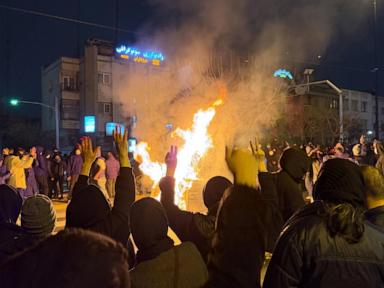
As the protests expand, the toll on human life continues to rise. Activists report an alarming number of demonstrator fatalities, underscoring a systematic response from the Iranian government characterized by excessive force. Protesters have faced gunfire from rooftops, while motorcycle-riding members of the Revolutionary Guard have reportedly engaged in beatings and detentions. “The vast majority of protesters were peaceful. The video footage shows crowds of people — including children and families — chanting, dancing around bonfires,” said Raha Bahreini from Amnesty International. “The authorities have opened fire unlawfully.”
The situation escalated dramatically on January 8, 2024, when demonstrations, initially sparked by the collapse of the Iranian currency, the rial, were encouraged by exiled crown prince Reza Pahlavi. Witnesses reported tens of thousands of demonstrators filling the streets of Tehran before the government cut off communication channels. Gunfire soon echoed throughout the city, indicating a severe crackdown was underway.
Ali Akbar Pourjamshidian, a deputy interior minister, acknowledged on state television that violence intensified on January 8. He claimed that over 400 cities were involved in the demonstrations. Revolutionary Guard General Hossein Yekta warned families to keep their children indoors, indicating the government’s intent to suppress the protests with force.
Experts believe the Iranian regime perceives the protests as an existential threat. “The regime viewed it as this was a moment of existential threat and that they could either allow it to play out… or they could turn out the lights, kill as many people as necessary,” stated Afshon Ostovar, a professor at the Naval Postgraduate School in California, reflecting on the authorities’ violent response.
The Basij, a volunteer arm of the Revolutionary Guard, plays a critical role in enforcing government control. Many of its bases are located within mosques, a fact that complicates the narrative surrounding the protests and the resulting violence. Videos have surfaced showing members of the Basij armed with various weapons, while anti-riot police are seen deploying shotguns against demonstrators. Eyewitness accounts suggest that security forces have targeted crowds indiscriminately, contributing to a rising number of serious injuries, particularly eye wounds from birdshot.
Casualty figures remain contested. The Iranian government has reported 3,117 deaths from the unrest, including 2,427 civilians. In stark contrast, the Human Rights Activists News Agency, based in the United States, claims the death toll has reached 5,137, with a significant number of those being peaceful demonstrators. This discrepancy highlights the challenges in obtaining accurate information amidst ongoing repression.
The Iranian government’s acknowledgment of casualties marks a significant moment in its history of dealing with dissent, as it has typically manipulated such figures for political reasons. Nevertheless, the numbers released indicate the scale of violence and provide a rationale for ongoing mass detentions and internet shutdowns. Reports suggest that authorities detain dozens to hundreds of individuals daily.
As the international community watches closely, uncertainty lingers regarding potential military actions from the United States. President Donald Trump has indicated that the killing of peaceful protesters could push him to consider military options. An American aircraft carrier and warships are reportedly approaching the region, heightening tensions.
The potential for renewed protests looms as Iranians traditionally hold memorials for deceased loved ones approximately 40 days after their passing. With significant numbers buried at Behesht-e Zahra cemetery on the outskirts of Tehran, online videos reveal mourners chanting against the government, suggesting that further unrest may develop around February 17, 2024.
In a chilling statement, journalist Elaheh Mohammadi from the pro-reform newspaper Ham Mihan, which has faced censorship, remarked, “The city smells of death.” The current climate in Iran reflects a nation grappling with profound grief and unrest as it navigates a volatile political landscape.