Israel announced on Saturday that it has killed a senior Hamas commander, Raed Saad, during an airstrike in Gaza. This operation followed an incident in which an explosive device detonated, injuring two Israeli soldiers in the southern region of the territory. The Israeli military described Saad as a key figure in Hamas, claiming he was involved in orchestrating the attack on October 7, 2023, which initiated the ongoing conflict.
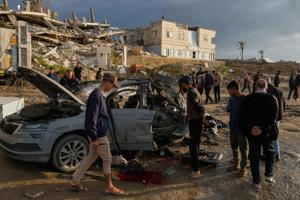
In a statement, Hamas did not confirm Saad’s death. Instead, the group condemned the airstrike, stating that it targeted a civilian vehicle near Gaza City, arguing that this action violated the ceasefire established on October 10. The Israeli strike reportedly resulted in the deaths of four individuals, with an Associated Press journalist witnessing their bodies being transported to Shifa Hospital. Al-Awda hospital reported an additional three people injured in the attack.
Conflicts between Israel and Hamas have persisted, with both sides accusing each other of breaching the ceasefire. According to Palestinian health officials, Israeli airstrikes and related military actions in Gaza have led to the deaths of at least 386 Palestinians since the ceasefire began. Israel asserts that its recent military responses are retaliation against militant attacks on Israeli forces. The country has also indicated that soldiers have fired upon Palestinians approaching the “Yellow Line,” a boundary separating Israeli-controlled areas from the rest of Gaza.
Israel has made clear demands regarding negotiations for a prolonged ceasefire, including the return of the remains of the last hostage, Ran Gvili, as a prerequisite for moving into the next phase of negotiations. This phase envisions an end to Hamas’ governance and the reconstruction of a demilitarized Gaza under international oversight.
The initial attack led by Hamas on October 7 claimed approximately 1,200 lives in southern Israel and resulted in the abduction of 251 individuals. Most hostages or their remains have been returned through various ceasefires and agreements. The ongoing military campaign by Israel has resulted in the deaths of over 70,650 Palestinians, with reports indicating that around half of these casualties are women and children. This data comes from Gaza’s Health Ministry, which operates under Hamas and is recognized for maintaining comprehensive medical records, deemed reliable by international observers.
The situation in Gaza remains dire, with significant destruction across the territory and over 2 million residents displaced. Humanitarian aid continues to fall short of the levels outlined in the ceasefire agreement. Many Palestinians, especially those who have lost limbs due to the conflict, are facing critical shortages of prosthetic limbs and delays in medical evacuations.
As the conflict persists, the humanitarian crisis deepens, and the prospects for peace remain uncertain. Further developments are anticipated as both sides navigate the complexities of a fragile ceasefire and the ongoing conflict.