In a significant response to escalating tensions surrounding federal immigration operations, the Minnesota Chamber of Commerce has issued an open letter urging immediate de-escalation. The call comes in the wake of the tragic death of Alex Pretti, a 37-year-old Veterans Administration nurse and U.S. citizen, who was killed by federal agents in Minneapolis on January 13, 2024. The letter, which was published on January 14, 2024, is signed by 64 businesses and organizations, marking a rare public stance from corporate leaders on the contentious issue of immigration enforcement.
The business leaders emphasized the urgent need for collaboration among state, local, and federal officials to address the challenges posed by the aggressive enforcement actions. “With yesterday’s tragic news, we are calling for an immediate de-escalation of tensions and for state, local, and federal officials to work together to find real solutions,” the letter stated.
Political Reactions and Community Impact
The reaction to Pretti’s death has been swift among political leaders, including Minnesota Governor Tim Walz, U.S. Senators Amy Klobuchar and Tina Smith, and Minneapolis Mayor Jacob Frey. They have urged President Donald Trump and Kristi Noem, the Secretary of the Department of Homeland Security, to withdraw the approximately 3,000 federal agents deployed in Minnesota. This surge in enforcement personnel, part of Operation Metro Surge, has disrupted daily life in various neighborhoods and commercial districts across the state.
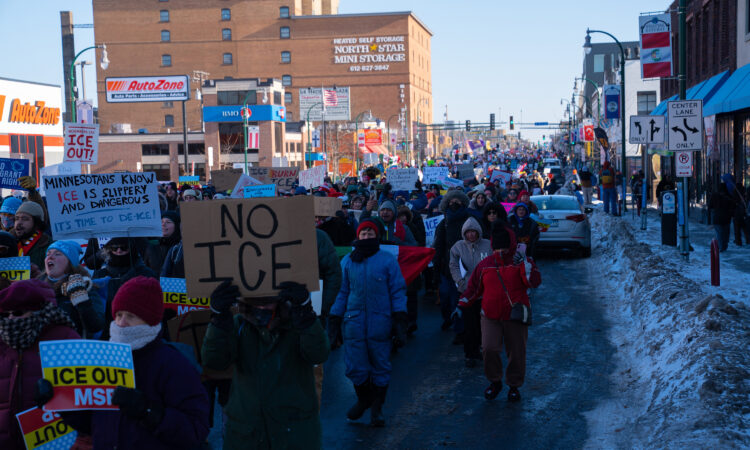
Since the operation began, there have been multiple instances of violence involving federal agents, with three individuals shot in Minneapolis since January 7, 2024. Notably, an immigrant from Venezuela was injured during an enforcement action, and a mother named Renee Good was killed. The community’s anxiety has been palpable, leading to protests where thousands of Minnesotans marched in freezing temperatures against the tactics employed by masked agents from ICE and Customs and Border Protection (CBP).
On January 12, Pretti filmed federal agents in action and attempted to assist a bystander when he was shot by agents within seconds. The incident has intensified scrutiny of federal enforcement strategies and raised concerns about community safety.
Business Community’s Middle Ground Approach
In the wake of these events, business leaders have sought to position themselves as mediators between opposing political factions. Doug Loon, president and CEO of the Minnesota Chamber of Commerce, highlighted the importance of engaging public officials to restore order and support the local economy. Following a meeting with Vice President JD Vance, Loon expressed a commitment to fostering dialogue among stakeholders.
“Our goal is clear: to help engage federal and Minnesota public officials [to] de-escalate the current situation and put our communities and economy back on track,” Loon stated.
In their open letter, Chamber members acknowledged the “widespread disruption and tragic loss of life” while asserting that they have been working behind the scenes with officials to devise effective solutions. They called for “peace and focused cooperation among local, state, and federal leaders” to restore stability.
Former Minnesota Governor Arne Carlson proposed that non-political leaders take the initiative to mediate and build consensus. He suggested that figures like former Chief Justice Kathleen Blatz and Jeff Ettinger, interim CEO of Hormel, could lead efforts to find common ground and de-escalate tensions.
Amid these discussions, former Treasury Secretary Robert Rubin has raised concerns about the silence of business leaders regarding the implications of federal actions. In a recent commentary, he urged leaders to reflect on whether current policies cross a “red line” and what steps they would take if that line is crossed.
The responses from Minnesota’s business sector reveal a complex landscape of interests and opinions, as leaders navigate the ramifications of federal immigration policies. The open letter serves as a pivotal moment in the ongoing dialogue about immigration enforcement, community safety, and economic stability in Minnesota.
As the situation continues to evolve, the focus remains on achieving a resolution that prioritizes the well-being of families and businesses throughout the state.