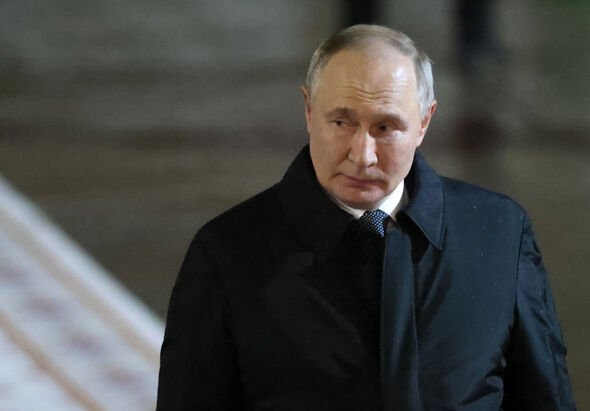
Vladimir Putin has dismissed warnings from the United Kingdom regarding the potential for a third world war, labeling them as “hysteria.” His comments came in a speech delivered in Moscow, where he emphasized the need for “mutual cooperation” between Russia, the United States, and Europe, despite the heightened tensions in international relations.
In his address, Putin stated, “There’s a level of hysteria in [Western] Europe right now. I’ve said this many times: it’s nonsense. Complete nonsense.” He criticized the ongoing discussions about an imaginary Russian threat to European countries, asserting that these narratives are being deliberately propagated. According to Putin, “The reality is that Russia, even in the toughest situations, has always tried… to resolve disputes and conflicts through diplomacy.”
The Russian leader expressed that the responsibility for missed opportunities for dialogue lies with those who believe they can confront Russia through military force. He further advocated for the establishment of a fair and mutually beneficial security framework across Eurasia, emphasizing the importance of diplomatic engagement.
UK Military Chief Highlights Growing Threat
The remarks from Putin coincided with a stark warning from the UK’s top military officer, Air Chief Marshal Sir Richard Knighton. He highlighted the increasing dangers posed by Russia, stating, “The situation is more dangerous than I have known during my career, and the price of peace is rising.” This statement reflects the UK’s heightened military readiness amid escalating global tensions.
Knighton called for transparency with the public regarding the challenges posed by Russia, stressing that the response must extend beyond merely strengthening military forces. He said, “Our response needs to go beyond simply strengthening our armed forces. It needs a whole of nation response that builds our defence industrial capacity, grows the skills we need, harnesses the power of the institutions we will need in wartime, and ensures and increases the resilience of society and the infrastructure that supports it.”
Addressing the potential involvement of citizens, Knighton noted, “Sons and daughters. Colleagues. Veterans… will all have a role to play. To build. To serve. And if necessary, to fight.” His remarks underline the seriousness with which the UK is approaching the current geopolitical climate, as the military prepares for a possible increase in hostilities.
As tensions between Russia and the West continue to rise, Putin’s call for diplomacy and cooperation contrasts sharply with the UK’s military stance. This divergence highlights the complexities of international relations in a time marked by uncertainty and fear of conflict.