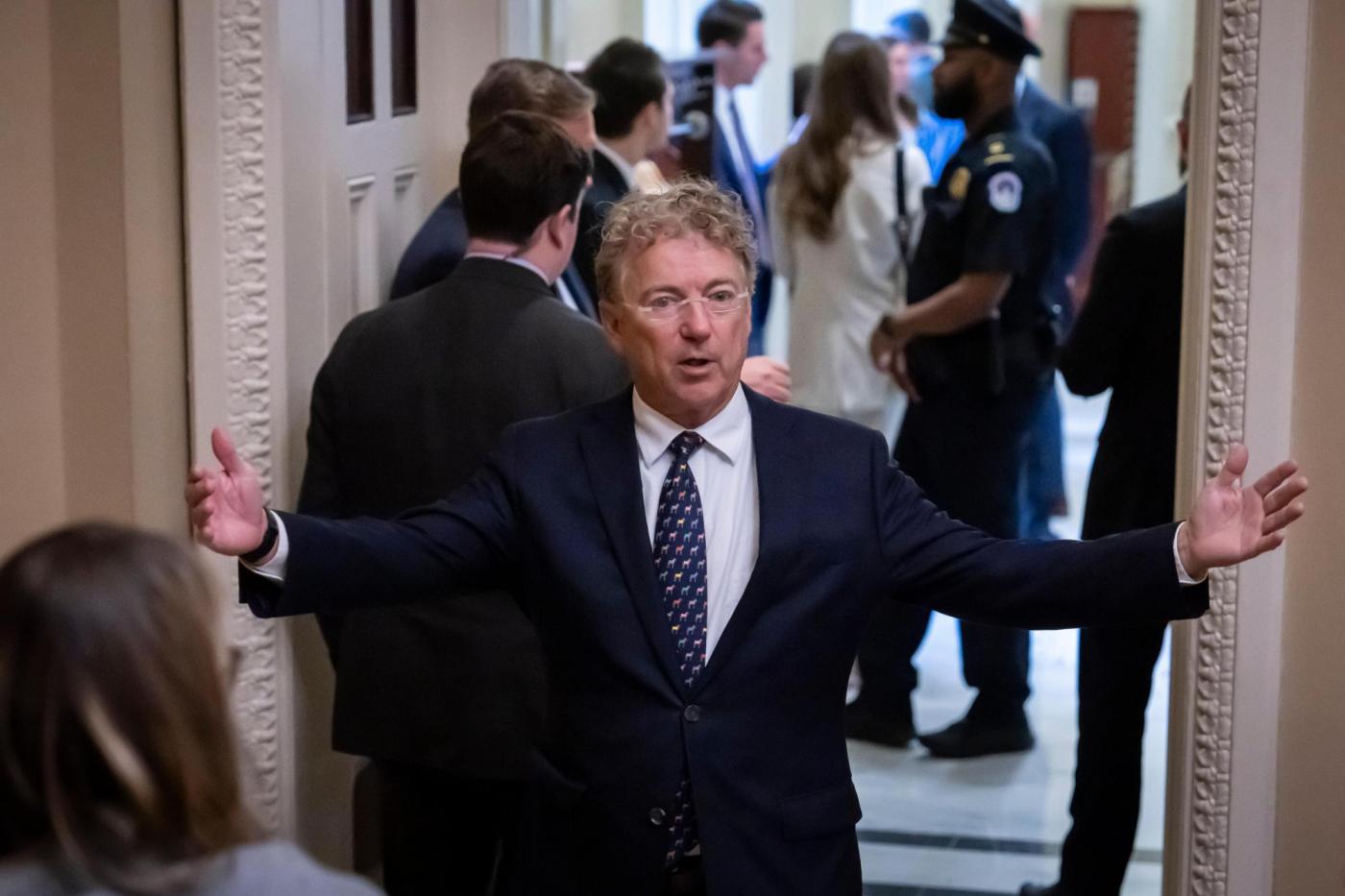
Senator Rand Paul of Kentucky has expressed his support for the United States’ withdrawal from numerous international organizations, aligning with President Donald Trump‘s recent executive order. While the senator has had differences with Trump in the past, he emphasized a shared commitment to defunding what he describes as “left-wing, globalist groups.”
In a social media statement, Paul remarked, “While the president and I have our occasional differences, we agree far more than we disagree.” His endorsement underscores a significant shift in U.S. foreign policy as Trump directed a withdrawal from a total of 66 organizations, including 31 United Nations agencies. The impact of these decisions on U.S. financial support and international relations remains a topic of discussion.
United Nations Secretary-General António Guterres expressed disappointment regarding the U.S. withdrawal but indicated that the organization would continue its operations. A spokesperson for Guterres noted, “All United Nations entities will go on with the implementation of their mandates as given to us by member states.” The spokesperson also reminded that approved funding for the UN is legally binding, suggesting that the U.S. may still have financial obligations despite the withdrawal.
Trump’s administration has defended its stance by claiming that many UN organizations do not serve American interests. The president has previously criticized some UN agencies for attacking U.S. allies and promoting antisemitism. In a statement from February 2023, Trump reiterated that the United States played a crucial role in founding the UN to foster global peace but believes that certain bodies have strayed from this mission.
While Trump’s actions have received backing from Paul, they have also drawn criticism from Democratic lawmakers. Senator Elissa Slotkin from Michigan articulated concerns that the withdrawal could allow U.S. rivals to gain influence on the global stage. “Donald Trump’s actions suggest that, in his heart, he doesn’t believe we are an exceptional nation,” Slotkin argued. She added that she would prefer American leadership over alternatives like China or Russia.
As the Trump administration prioritizes what it describes as American interests, it has simultaneously distanced itself from several traditional foreign allies. This pivot raises questions about the long-term consequences for U.S. diplomacy and international cooperation. The developments indicate a significant reorientation in U.S. foreign policy, one that may redefine its role on the global stage for years to come.