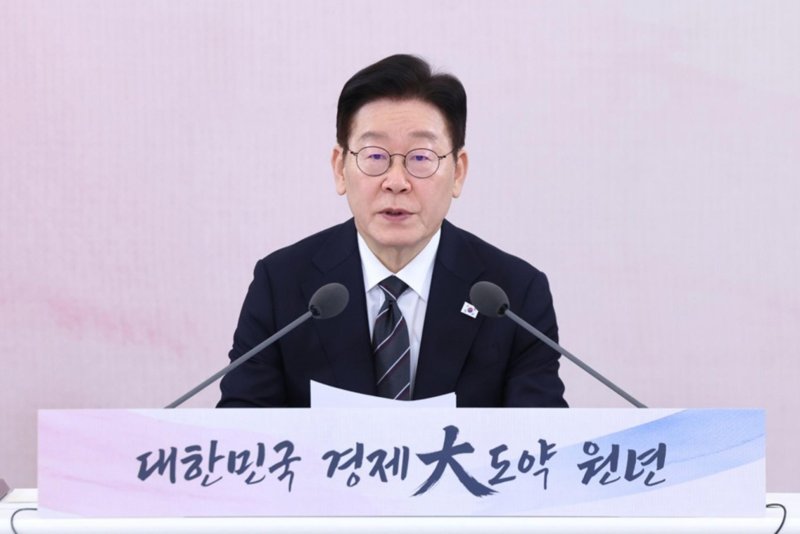
South Korean President Lee Jae-myung has emphasized the urgent need for “extraordinary measures” to combat a jobs crisis affecting the nation’s youth. Speaking on January 9 during the “2026 Economic Growth Strategy National Briefing” at the presidential office, Lee highlighted the phenomenon of “K-shaped growth,” which describes an economic recovery that disproportionately benefits certain sectors while leaving others behind.
Economic Disparities and Youth Impact
Lee asserted that South Korea is experiencing a troubling form of recovery where the advantages are not widely distributed, particularly impacting younger generations. He stated that the structure of this growth creates a heavier burden on young people, posing risks not only to employment opportunities but also to the nation’s long-term economic potential. “If national growth and corporate profits do not translate into job opportunities for young people, it is difficult to call that society healthy,” he remarked.
According to Lee, more than 400,000 young individuals have been pushed out of the labor market, facing the paradox of employers demanding prior work experience while offering few avenues for entry-level positions. He criticized the lack of accountability in providing opportunities for these young job seekers.
Proposed Solutions and Economic Management
To address these challenges, Lee urged government officials to devise effective strategies that transcend existing policy frameworks. He underscored a commitment to ensuring that the benefits of economic growth are equitably shared among all citizens. He described the current year as pivotal, marking the first time his administration will assume full responsibility for economic management.
In his address, Lee pointed to initiatives aimed at “normalizing” the economy, including targeted support for the semiconductor industry, as critical pathways to reinforcing growth momentum. Nevertheless, he cautioned that even with improvements in external economic indicators compared to the previous year, many citizens may not perceive any tangible benefits.
Lee concluded by framing the issue of growth polarization as a structural challenge rather than a temporary cycle, calling for concerted efforts to ensure that the fruits of growth are accessible to all sectors of society. The president’s remarks reflect a growing recognition of the need for comprehensive solutions to safeguard the future of South Korea’s youth in an evolving economic landscape.