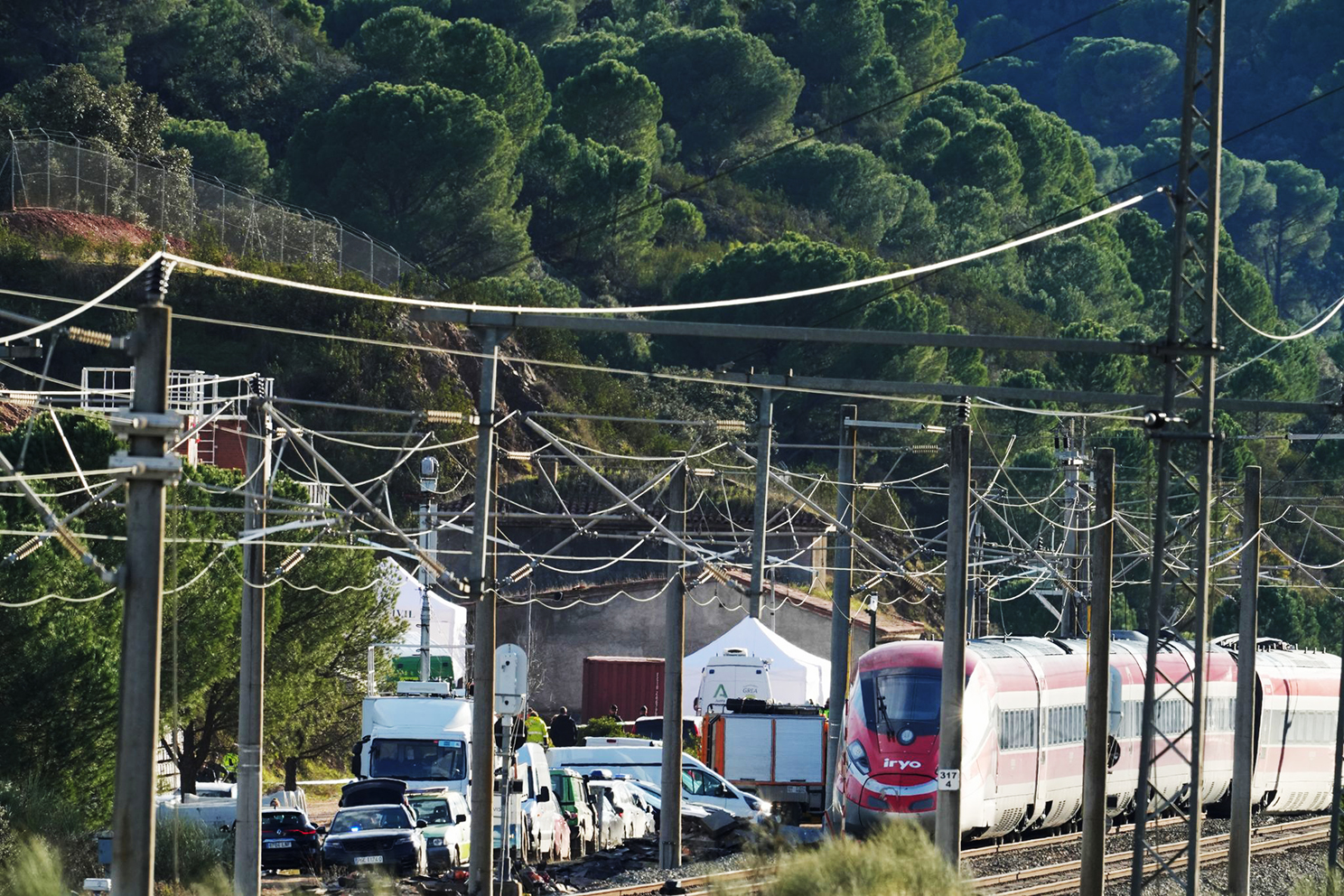
A tragic train crash in southern Spain has resulted in at least 40 confirmed deaths, with authorities warning that this number may rise. The incident occurred on the night of March 24, 2024, when the tail end of a high-speed train derailed, causing a collision with another train traveling in the opposite direction. This catastrophic event has shaken a nation renowned for its advanced high-speed rail system.
The collision took place around 19:45 local time near Adamuz, a village in the province of Córdoba. According to regional officials, the train carrying 289 passengers was en route from Málaga to Madrid when the rear carriages went off the tracks, colliding with a second train coming from Madrid to Huelva, which had nearly 200 passengers. The impact was devastating, with both trains suffering severe damage, particularly the lead carriages of the second train.
Emergency Response and Recovery Efforts
Regional President Juanma Moreno confirmed the rising death toll during a press conference, stating that emergency services are still recovering bodies from the wreckage. The impact caused some carriages to tumble down a 13-foot slope, with reports indicating that some bodies were found scattered hundreds of feet from the crash site. “We are dealing with a mass of twisted metal,” Moreno remarked, highlighting the severity of the situation.
Authorities are also focused on assisting the families of victims, many of whom are distraught and seeking information about their loved ones. DNA samples are being collected to aid in victim identification. As emergency services continue their work, survivors are being treated at nearby facilities, with 41 individuals reported hospitalized, including 12 in intensive care.
The national response has included the declaration of three days of mourning by Spanish Prime Minister Pedro Sánchez, who visited the crash site. “Today is a day of pain for all of Spain,” he stated, acknowledging the profound impact of the tragedy on the nation.
Investigation into the Cause of the Crash
Transport Minister Óscar Puente described the incident as “truly strange,” noting that it occurred on a flat section of track that had undergone renovations just months prior. Both trains involved were also reported to have been operating within speed limits, with one traveling at 127 mph and the other at 130 mph at the time of the crash.
The train that derailed was operated by Iryo, a private rail company, while the second train belonged to the public operator Renfe. An investigation into the circumstances surrounding the crash is expected to take around a month, with authorities looking into both the equipment and infrastructure involved.
The Spanish Union of Railway Drivers had previously raised concerns regarding safety on high-speed lines, suggesting speed reductions until proper inspections could be completed. This incident marks the first fatal accident on Spain’s high-speed rail network since its inception in 1992, raising questions about safety protocols.
As the investigation continues, the Civil Guard has established offices in Córdoba, Madrid, Málaga, Huelva, and Seville for the families of victims. Local resources, including a sports center in Adamuz, have been repurposed to assist those affected.
The Spanish high-speed rail system, known for its efficiency and safety, has been a source of national pride. This devastating accident serves as a stark reminder of the potential dangers associated with high-speed travel and the importance of rigorous safety measures.