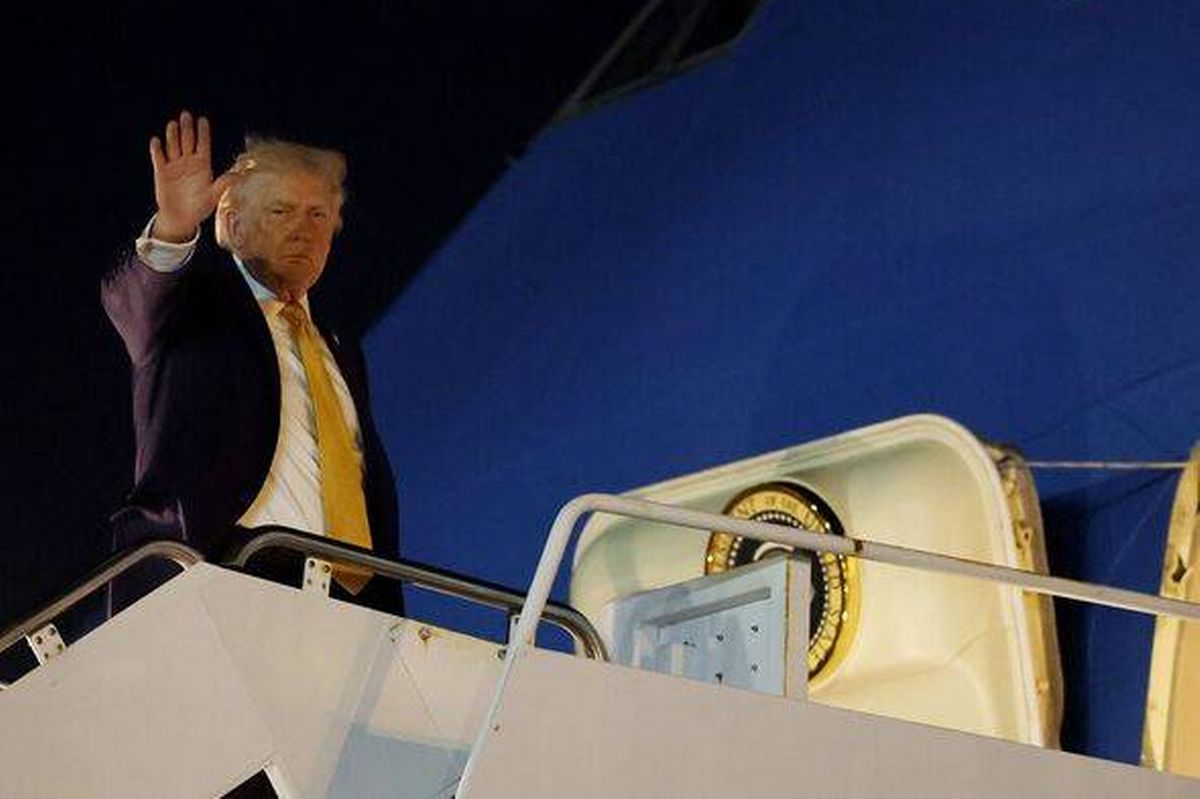
Following the dramatic capture of Venezuelan leader Nicolás Maduro on drug trafficking charges, President Donald Trump has reignited discussions regarding Greenland, expressing intentions that have provoked strong reactions from Denmark. On March 15, 2024, while departing from Palm Beach, Florida, Trump remarked on the U.S. strategy in Venezuela, emphasizing the significance of maintaining control over oil resources and underscoring his administration’s interests in the Arctic territory.
During his flight back to Washington, D.C., Trump addressed reporters aboard Air Force One. He indicated that the U.S. would reassess its approach to Greenland, stating, “We’ll worry about Greenland in two months. Let’s talk about Greenland in…20 days.” This comment has raised concerns regarding U.S. intentions towards the strategically important island.
In a related social media post, Katie Miller, spouse of Trump’s Deputy Chief of Staff, shared an image of Greenland with the U.S. flag, captioned simply, “SOON.” This provocative statement triggered backlash from both Greenlanders and Danes, who are keen to protect their territory and national sovereignty. The Danish ambassador to the U.S., Jesper Moller Sorensen, responded decisively, reminding the public of the established defense partnership between the U.S. and Denmark. He stated, “Greenland is already part of NATO,” urging respect for Denmark’s territorial integrity.
Denmark Strengthens Military in Response
In the wake of Trump’s comments, Danish Prime Minister Mette Frederiksen condemned the threats and announced that Denmark is enhancing its military capabilities. In her New Year’s address, she remarked on the pressure faced from the U.S., asserting that Denmark will “stand firm on what is right and wrong.” Frederiksen emphasized the importance of maintaining national integrity, stating, “Wanting to take over another country, other people. As if it were something you could buy and own, it doesn’t belong anywhere.”
Frederiksen articulated Denmark’s commitment to strengthening its military, indicating that the country has never increased its defense capabilities as rapidly as it is doing now. “We are in full swing, strengthening Danish defense and preparedness,” she stated. As the situation develops, Denmark is investing significantly in Arctic security, with an allocation of $13.7 billion for Arctic and North Atlantic operations planned for 2025.
U.S. Operations in Venezuela and its Implications
The timing of these events coincides with the U.S. military operation that led to Maduro’s arrest. Reports indicate that approximately 40 civilians and military personnel lost their lives during the strike in Caracas, raising concerns about humanitarian implications and the effectiveness of U.S. intervention. No U.S. casualties have been reported, but there were injuries among American troops, all of whom are in stable condition.
During the operation, Trump accused Venezuela of flooding the U.S. with drugs and gang members, highlighting the administration’s strategic focus on the region. The arrest of Maduro and his wife, Cilia Flores, who were subsequently flown to New York, marks a significant moment in U.S.-Venezuela relations, potentially impacting diplomatic engagements in the future.
The unfolding scenario reflects a complex web of international relations, where military operations and territorial claims intersect. As the U.S. navigates its position in both Venezuela and Greenland, the responses from Denmark underline the potential for escalating tensions in the Arctic and beyond. The international community is closely monitoring these developments, assessing their implications for global security and diplomatic relations.