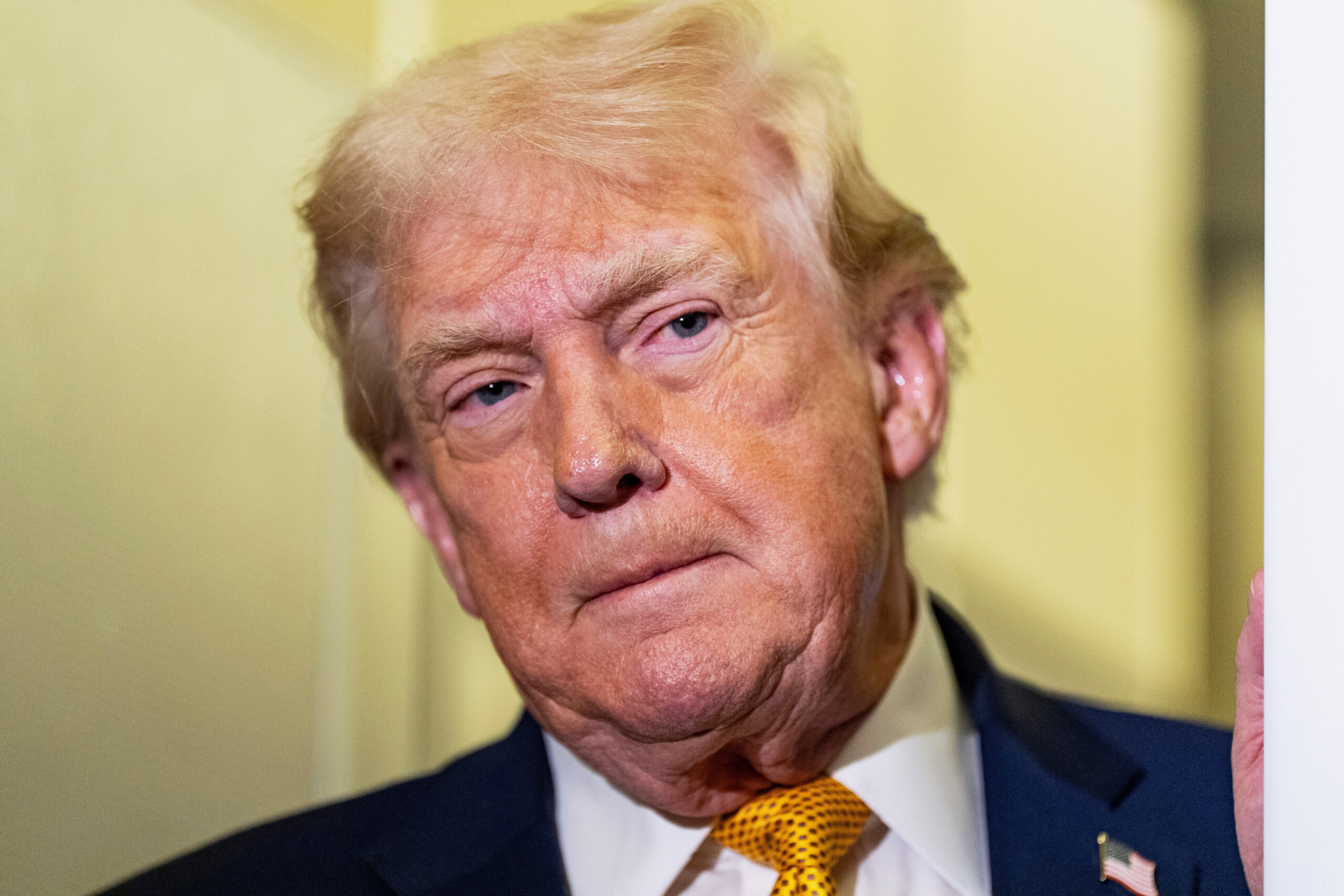
The recent capture of Venezuelan leader Nicolás Maduro has prompted a bold response from President Donald Trump, who declared that “American dominance in the Western Hemisphere will never be questioned again.” This military operation to apprehend Maduro and transport him to the United States to face federal drug trafficking charges marks a significant shift in U.S. foreign policy. Trump’s assertive statements highlight a renewed focus on American preeminence in the region, reminiscent of historical imperialistic rhetoric.
In the wake of the operation, Trump’s administration has reinforced the message that neighboring countries should align with U.S. interests or face potential repercussions. Edward Frantz, a historian at the University of Indianapolis, noted that Trump’s approach diverges from previous U.S. military interventions, which often framed their actions within the context of promoting democracy. Instead, Trump’s language harks back to the late 19th and early 20th centuries, a period characterized by direct military interventions for territorial expansion and resource acquisition.
Trump’s rhetoric has extended beyond Venezuela. He has made renewed claims regarding Greenland, suggesting the U.S. should acquire the Danish territory for national security purposes. Furthermore, he has criticized Mexico for its handling of drug cartels, insisting that it must “get their act together.” The president has also warned that Cuba, which has relied on discounted oil from Venezuela, faces dire consequences following Maduro’s removal.
The situation has escalated tensions with Colombia, a country central to global cocaine production. Trump stated that a military operation in Colombia “sounds good to me,” raising alarms about U.S. intervention in the region. His administration’s stance has drawn both support and condemnation across Latin America, highlighting deep divisions among regional leaders.
Danish Prime Minister Mette Frederiksen cautioned that Trump’s ambitions could unravel the transatlantic military alliance, NATO. She emphasized the critical nature of maintaining cooperation among member states, warning that any aggressive actions toward NATO allies would have grave consequences.
Historically, the Monroe Doctrine has served as a cornerstone of U.S. foreign policy regarding Latin America, opposing European intervention. Trump’s invocation of this doctrine to justify actions in Venezuela signals a return to a more interventionist stance. Marco Rubio, Secretary of State, reinforced this sentiment, stating, “This is where we live — and we’re not going to allow the Western Hemisphere to be a base of operation for adversaries.”
The ongoing developments have raised concerns about the implications for global diplomacy, particularly in relation to adversarial leaders such as Vladimir Putin of Russia and Xi Jinping of China. Critics argue that Trump’s aggressive approach may embolden these leaders to pursue their territorial ambitions. Senator Angus King from Maine remarked that Trump’s actions have effectively granted a “hall pass” to adversaries looking to expand their influence.
As discussions unfold in international forums, including a recent emergency meeting of the U.N. Security Council, Colombian Ambassador Leonor Zalabata Torres condemned the raid in Venezuela as reminiscent of past U.S. interventions that undermined regional sovereignty. She asserted that “democracy cannot be defended or promoted through violence and coercion.”
In the coming months, the implications of Trump’s foreign policy decisions will likely resonate throughout the hemisphere and beyond. The dynamics of U.S.-Latin America relations are poised for significant transformation, as leaders assess the potential consequences of Trump’s bold declarations and military strategies.