The National Transportation Safety Board (NTSB) has confirmed that a United Airlines Boeing 737 collided with a commercial weather balloon at an altitude of 36,000 feet over Utah last month, resulting in significant damage to the aircraft’s cockpit. The incident occurred on October 16, 2025, during United Flight 1093, which was traveling from Denver to Los Angeles. Following the collision, the flight safely diverted to Salt Lake City, where the captain sustained lacerations to his right arm from shattered glass.
The flight was cruising near Moab, Utah, when the captain observed an object in the distance. Before he could alert the first officer, the aircraft struck the object, which was later identified as a high-altitude global sounding balloon (GSB) launched by WindBorne Systems from Spokane, Washington, a day earlier. The NTSB report details that the balloon had traveled south through Oregon and Nevada before crossing into Utah.
Potential Consequences of the Collision
NTSB Chair Jennifer Homendy remarked that the midair collision could have had devastating consequences for both the aircraft and its occupants. Although only the captain suffered injuries, the potential for greater damage was present. Fortunately, cabin pressurization remained stable after the impact, though the first officer’s window overheat light activated momentarily.
WindBorne Systems, the company responsible for the weather balloon, stated that its GSBs are engineered to minimize damage during collisions. The materials used in the balloon envelope and ballast container are made of thin plastic film and silica, eliminating large metal components that could exacerbate impacts. The company has announced plans to enhance air traffic alerts and reduce the time its balloons spend in commercial airspace to prevent future incidents.
Aircraft windshields, including the one on the United 737 MAX involved in this incident, are designed to endure significant impacts. These windshields are certified to withstand the force of a four-pound bird without penetration and feature non-splintering internal panes. The windshield on this aircraft, manufactured by PPG Aerospace, includes several layers designed for durability and safety.
Aircraft Status and Investigation Updates
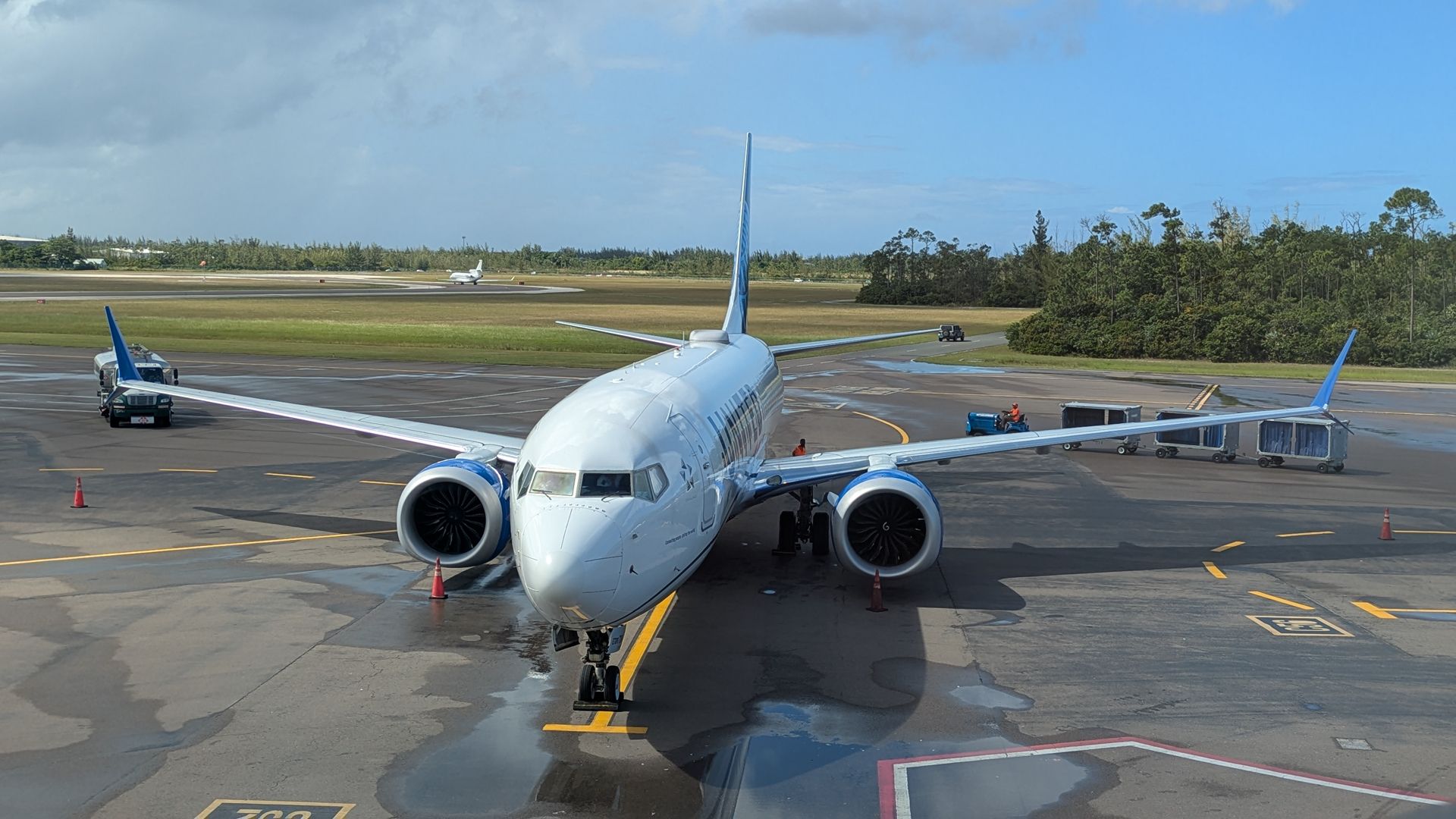
As of today, the aircraft involved in the collision, a two-year-old United 737 MAX 8 (registration: N17327), remains grounded. Data from Flightradar24 indicates that it has not returned to service more than a month after the incident. After diverting to Salt Lake City, the aircraft conducted a brief flight to Chicago Rockford (RFD) on October 19 but has not flown since.
The damaged windshield was removed and sent to the NTSB Materials Lab in Washington, D.C., for further examination. Simple Flying has reached out to United Airlines for a statement regarding the incident and will provide updates as more information becomes available.