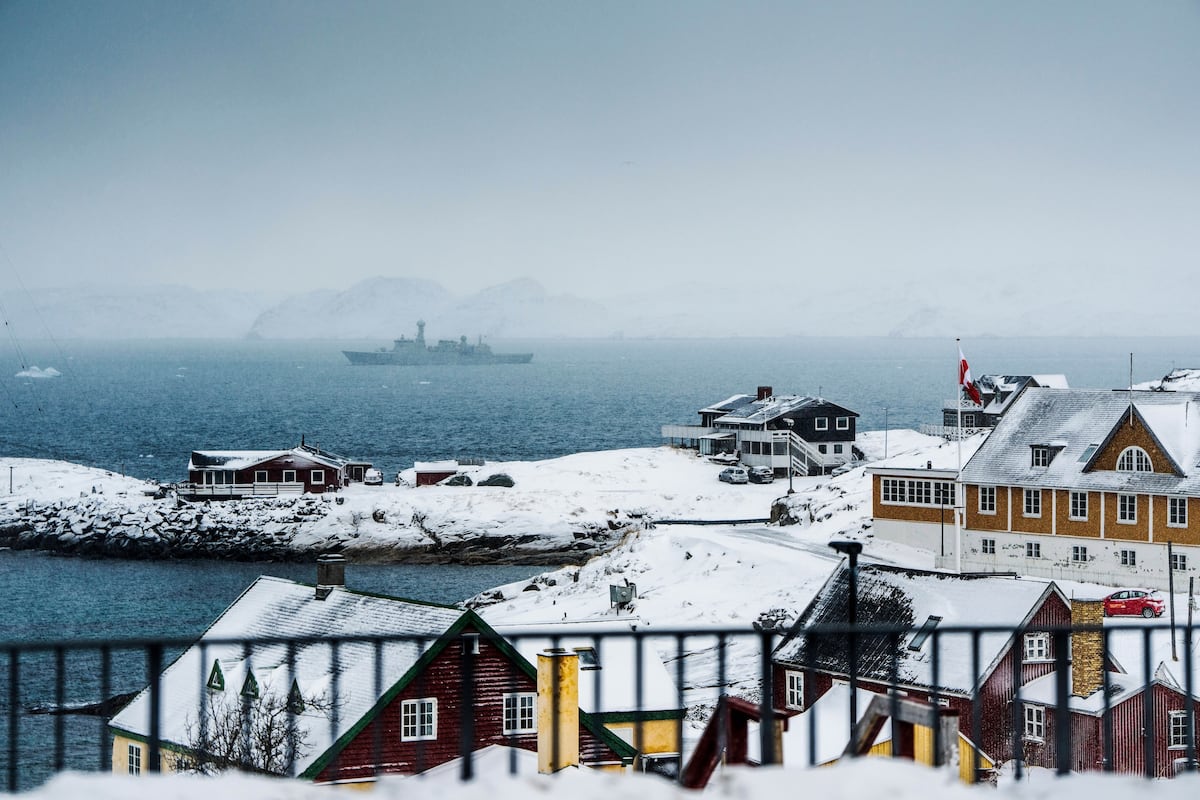
Unmanned vehicles that can endure the harsh Arctic environment are essential for maintaining NATO’s strategic strength in the region, according to experts from the Center for European Policy Analysis (CEPA). During a briefing on January 22, 2024, analysts emphasized that as the Arctic faces increasing activity from Russian and Chinese vessels, these unmanned systems will play a pivotal role in addressing emerging threats.
The Arctic has become a focal point of international tension, with reports of heightened incursions by foreign vessels contributing to NATO’s challenges. Lance K. Landrum, a senior fellow at CEPA who moderated the discussion, articulated the dual nature of the threats. He stated, “We could look at it from the sense of, ‘This is a major force-on-force war’ with amphibious assaults and all-domain force-on-force warfare — or we can look at it in the sense of hybrid malign influence and a slow burn of just leaning on the alliance and creating a new norm.”
While concerns about ground threats persist, the primary focus remains on maritime security. Jan Kallberg, another senior fellow at CEPA, suggested that the extreme conditions in the Arctic make traditional military deployments challenging. “I don’t think there is an imminent ground threat unless they use some of the regular ground forces further up north,” he explained. “I see it mainly as a naval threat. They are seeking to destroy cables.” Kallberg referenced previous instances of sabotage, such as the attacks on underwater cables in the Baltic Sea, highlighting the need for advanced protection systems like unmanned underwater vehicles (UUVs).
Strategic Importance of Uncrewed Systems
The rugged Arctic conditions will test the capabilities of autonomous systems, but their endurance makes them particularly valuable in this environment, according to Maj. Gen. Gordon Davis. He noted, “Uncrewed systems matter in the High North not because they’re revolutionary but because they enable persistence where continuous human presence is really impractical.” This capability is crucial for maintaining a vigilant watch over the region.
Kallberg further emphasized the tactical advantages of maritime drones, stating, “With drones, what I find really important in a tactical application, is the drones themselves would create a lot of benefits when it comes to intelligence, getting data, answering questions, directing where to strike.” The ability to gather real-time intelligence in an area characterized by extreme weather and vast uninhabited territories is vital for NATO’s operational success.
As competition in the Arctic intensifies, military officials have expressed concerns about the potential for conflict. Danish military analysts have speculated that the High North could see open hostilities in the future. The situation escalated last summer when incursions by Chinese ships prompted a response from the U.S. Coast Guard. In addition, the U.S. Air Force conducted a significant joint exercise with Norwegian armed forces, simulating a strike by a B-2 stealth bomber on a surface vessel within the region.
The development of unmanned systems represents a strategic shift in how NATO approaches its defense posture in the Arctic. As nations increasingly recognize the region’s geopolitical significance, the role of technology will undoubtedly expand in efforts to ensure security and stability. Continued investment in these systems may ultimately define NATO’s capability to respond effectively to the evolving challenges in the High North.