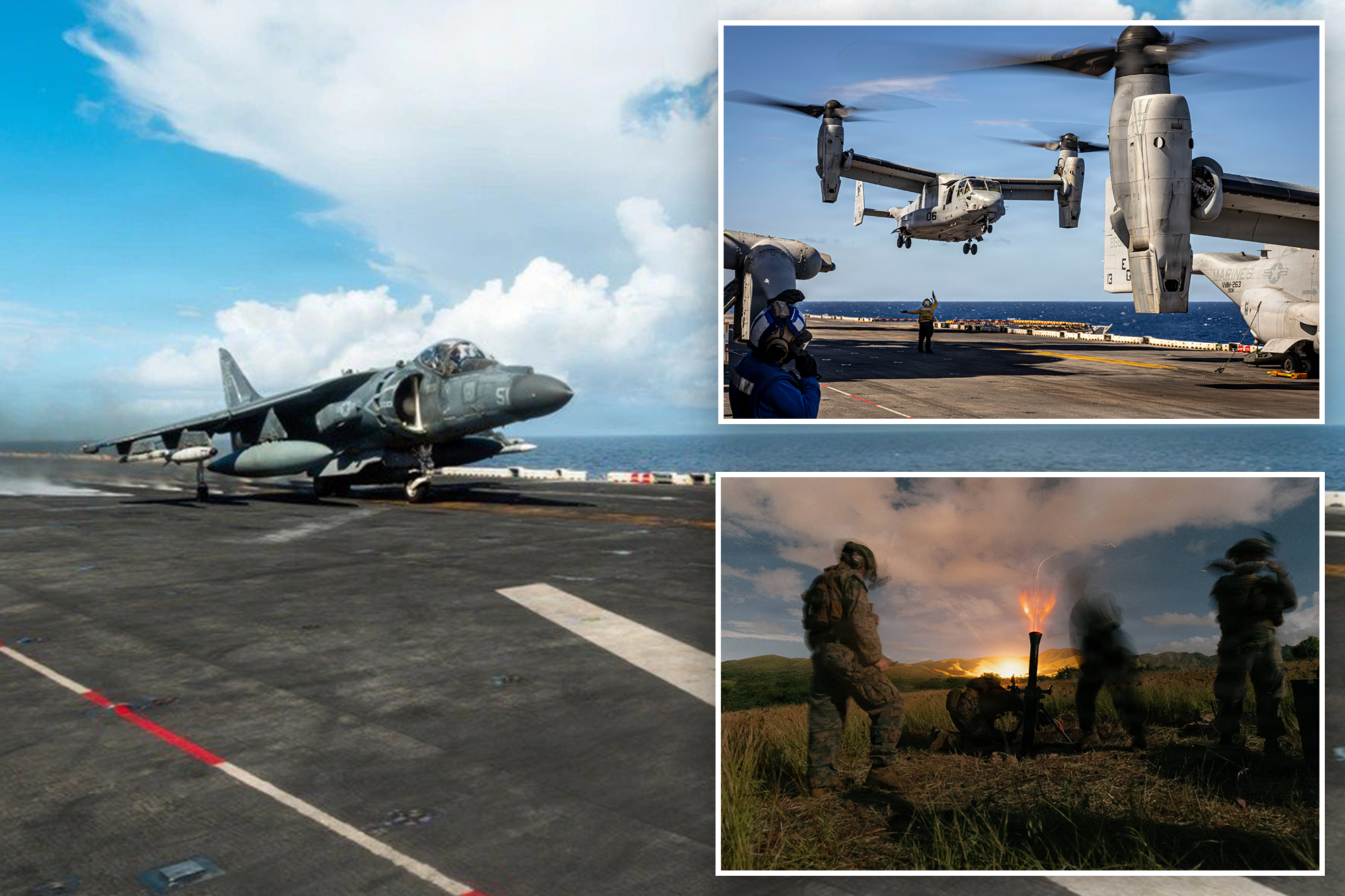
The US Southern Command recently highlighted the capabilities of approximately 2,200 Marines training in the Caribbean, coinciding with escalating tensions regarding the political situation in Venezuela. As part of the 22nd Marine Expeditionary Force, these troops participated in live-fire drills and drone training exercises, showcasing a combat-ready posture in a series of photographs released on Monday.
Military Exercises and Strategic Messaging
Images captured between November 20 and December 16, 2023, depict Marines conducting operations aboard the amphibious assault ship USS Iwo Jima and engaging in mortar system exercises during reconnaissance maneuvers. This display of military strength comes as the Trump administration increases pressure on the regime of Venezuelan leader Nicolas Maduro, described by officials as a significant threat to stability in the region.
According to Alex Plitsas, a senior fellow at the Atlantic Council and a former US intelligence officer, the military exercises are intended to illustrate both capability and capacity. He noted that such displays can also send strategic signals to adversaries. “It’s more pressure to try to get him to step down,” Plitsas commented, adding that the current troop levels are insufficient for a ground invasion of Venezuela.
Plitsas emphasized that around 100,000 troops would be necessary for a successful invasion and subsequent stabilization of the country. He indicated that the US appears to be seeking a voluntary resignation from Maduro rather than pursuing direct military action.
Rising Concerns Over Regional Security
The military maneuvers come in the wake of remarks from Marco Rubio, US Secretary of State, who recently characterized Maduro’s regime as the primary threat to American security interests in the Western Hemisphere. During a press conference, Rubio stated, “The status quo with the Venezuelan regime is intolerable for the United States,” reinforcing the administration’s commitment to seeking Maduro’s ouster.
Rubio highlighted that the Venezuelan government not only engages in narcoterrorism but also harbors terrorist groups such as Hezbollah. He asserted that the regime allows several Colombian terrorist organizations, including ELN and FARC dissidents, to operate freely within its borders.
In a related development, the US Coast Guard has been actively pursuing an oil tanker off the coast of Venezuela, accused of being involved in illicit oil shipments linked to Maduro’s government. The vessel, believed to be sailing under a false flag, is subject to a US judicial seizure order and has been tracked in international waters of the Caribbean Sea.
If successfully seized, this operation would mark the third such incident involving American military assets in less than two weeks. The White House maintains that these actions are part of a broader strategy aimed at disrupting revenue sources for Maduro, who is alleged to use oil sales to finance drug trafficking and other criminal activities.
Officials describe these tankers as part of a “shadow fleet” that undermines sanctions and global energy regulations. As tensions continue to rise, the situation in Venezuela remains precarious, with the US military poised to respond to further developments in the region.