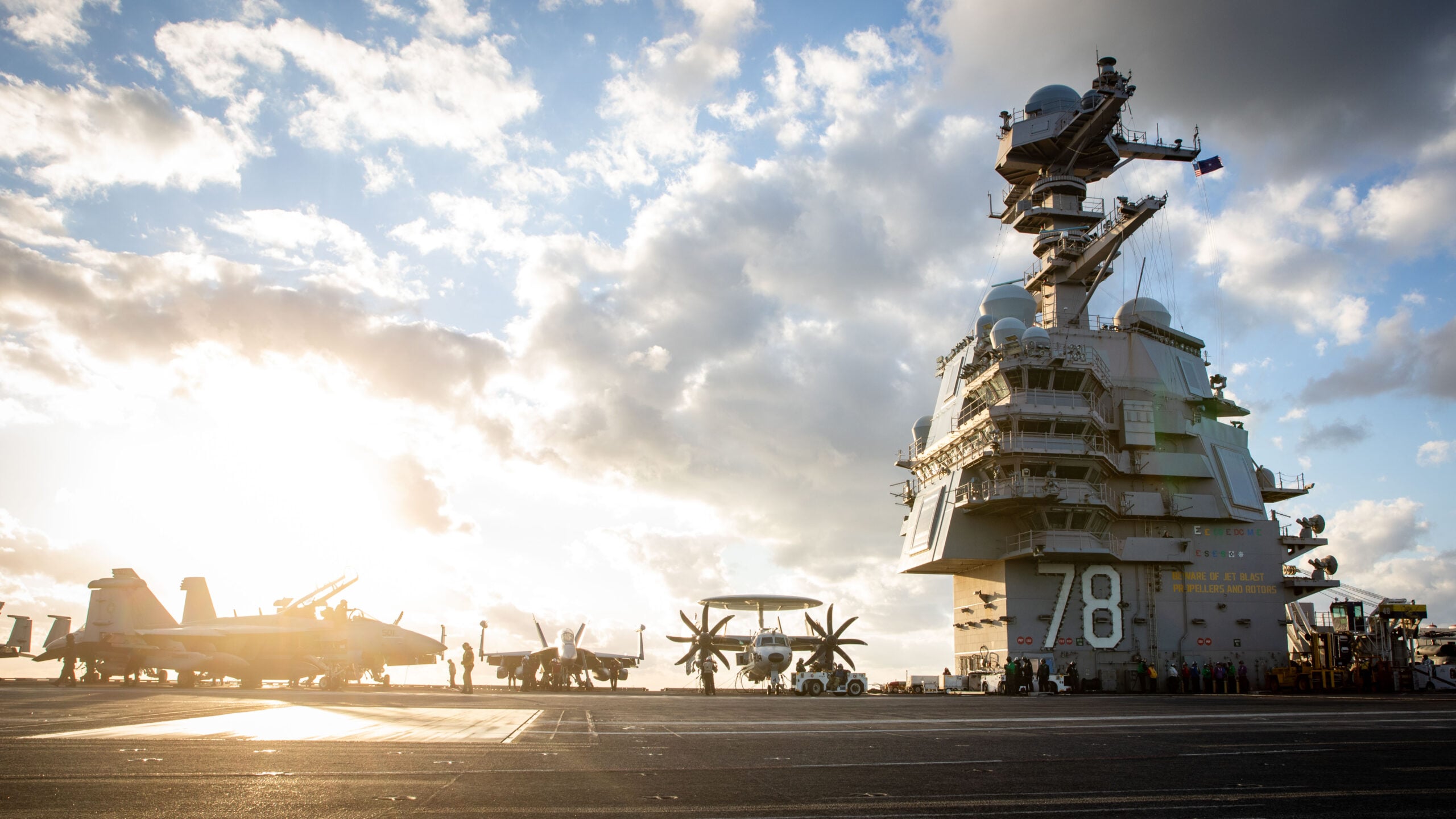
The aircraft carrier USS Gerald R. Ford (CVN-78) is set to shift its operations from the Caribbean Sea to the Middle East in a move that could establish a new record for U.S. Navy deployments. The carrier, along with its escorts and Carrier Air Wing 8, has been redirected to bolster a U.S. naval presence in the region, primarily in response to escalating tensions involving Iran and ongoing nuclear negotiations.
According to a U.S. official, this deployment comes amid a crackdown by the Iranian government on protestors and ongoing geopolitical challenges. The New York Times first reported that the USS Ford may remain in the region until as late as May 2025, which would extend its operational period significantly.
Deployment History and Strategic Significance
The USS Ford began its deployment in June 2025, initially operating in the Mediterranean before being reassigned to the Caribbean in October. The carrier has been active in the Southern Command area since mid-November and played a crucial role in operations earlier this year, including support during the U.S. raid that captured former Venezuelan President Nicolás Maduro.
The recent trend of extending deployments for East Coast carrier strike groups beyond the Navy’s planned seven-month timeframe has become increasingly common. As of December 2021, Carrier Strike Groups (CSGs) have averaged deployments of nearly nine months. Originally, these deployments focused largely on the Mediterranean; however, following the October 7, 2023, Hamas attacks in Southern Israel and subsequent Houthi aggressions in the Red Sea, the focus has shifted towards the Middle East.
If the USS Ford remains deployed past April 15, 2025, it will surpass the previous record of 294 days for post-Vietnam War carrier deployments, set by the USS Abraham Lincoln (CVN-72) in 2020. Should the carrier stay in active service until early May, it could approach the lengthy deployments of U.S. carriers to the Gulf of Tonkin, which have exceeded 300 days.
Future Deployments and Fleet Management
The upcoming deployments will see the USS George H.W. Bush (CVN-77) departing from Norfolk, Virginia, and the USS Theodore Roosevelt (CVN-71) from San Diego, California. The USS Bush has recently commenced its final graduation exercise, a critical step for certification in national tasking. The Navy has the capability to expedite this process to meet operational demands.
This latest mission for the USS Ford highlights the Navy’s ongoing efforts to manage its carrier deployments effectively, particularly as the service aims to modernize its surface and carrier fleets. With the increasing operational demands placed on the U.S. Navy, maintaining a robust and flexible carrier presence in key regions is essential for national security.
As the USS Gerald R. Ford prepares for its new assignment, its role in the Middle East underscores the importance of naval readiness in addressing global challenges and maintaining peace in volatile regions.