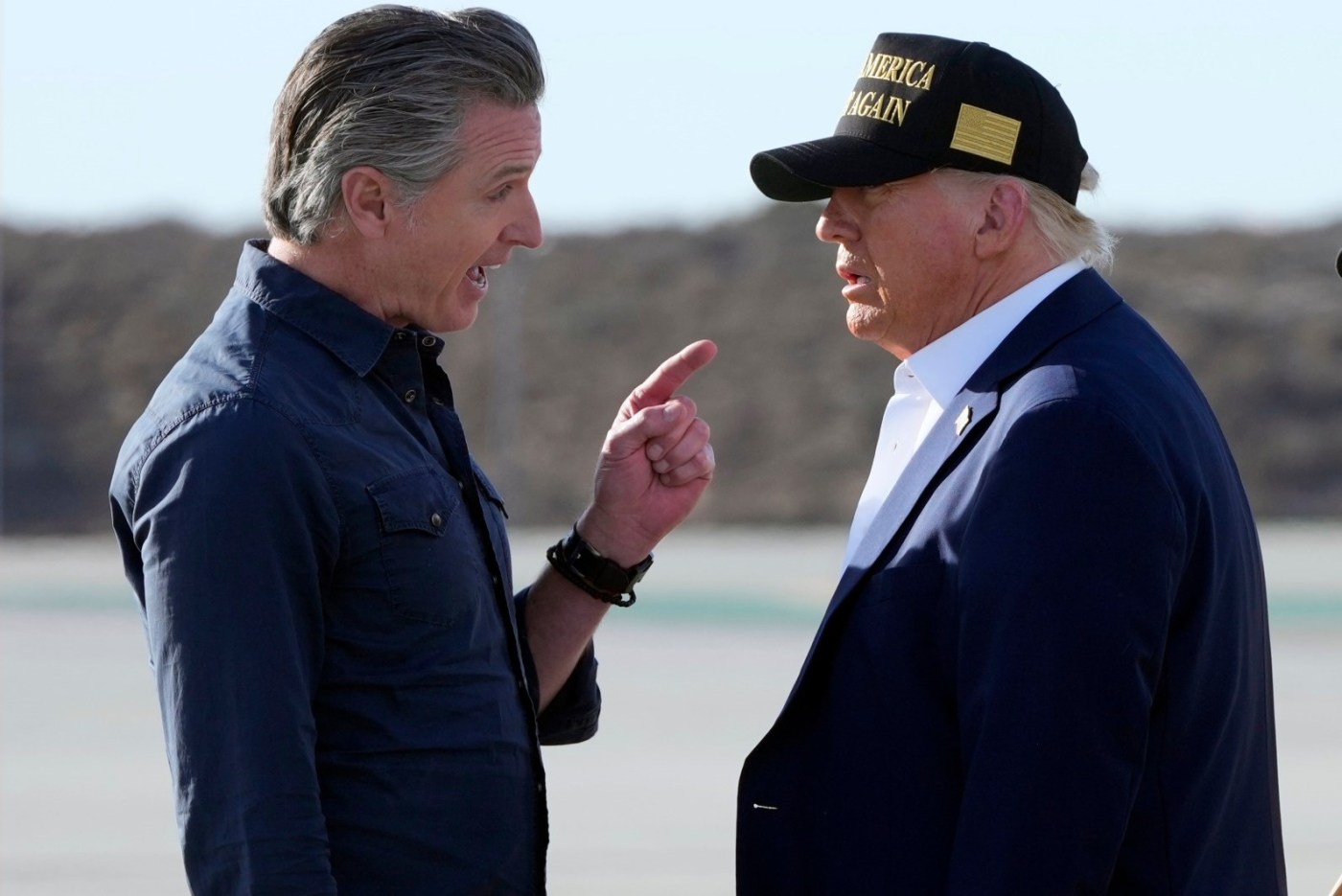
Former President Donald Trump recently visited Georgia, where he focused heavily on his claims of voter fraud during a tour in the district of former Republican Representative Marjorie Taylor Greene. While promoting local economic initiatives, Trump diverted attention to the FBI’s raid on the Fulton County election offices and reiterated his controversial voter identification plans. This appearance exemplifies his persistent refusal to acknowledge his defeat in the 2020 presidential election, a stance that has left a significant mark on American political discourse.
Trump’s insistence on revisiting the electoral process and his allegations concerning its integrity is not a novel phenomenon. The rhetoric around voter fraud has long been embedded in conservative politics, predating Trump by several decades. Historically, these claims have served as a pretext for efforts to suppress voter turnout, particularly among marginalized communities.
The Historical Context of Voter Fraud Claims
The roots of the voter fraud narrative can be traced back to the Jim Crow era, where discriminatory practices were justified under the guise of preventing fraud. Historian Alexander Keyssar, in his book “The Right to Vote: The Contested History of Democracy in the United States,” argues that accusations of fraud were often wielded to disenfranchise groups deemed undesirable by those in power. Poll taxes and literacy tests were employed to limit voting access for Black Americans and poor individuals, reflecting a broader strategy to maintain the status quo.
As the Civil Rights Movement gained momentum, the shift in voting patterns among Black voters led to the Republican Party’s Southern Strategy, which capitalized on racial tensions to galvanize support among white constituents. Paul Weyrich, a prominent conservative activist, famously stated, “I don’t want everybody to vote,” underscoring a fundamental belief that lower voter turnout could enhance electoral leverage for the party.
Modern-Day Implications and Strategies
The narrative of widespread voter fraud has evolved but remains central to Republican strategies. Following the contentious election of George W. Bush in 2000, which was decided by a mere 537 votes in Florida, the party intensified its focus on claims of voter impersonation. Despite investigations led by then-Attorney General John Ashcroft yielding minimal evidence, the rhetoric surrounding voter fraud gained traction, serving to mobilize the Republican base.
Trump’s entrance into this ongoing dialogue further amplified these themes. In the lead-up to the 2016 election, he asserted that the electoral process was rigged, a narrative he maintained throughout his presidency. This culminated in the establishment of a voter fraud commission, aimed at substantiating his claims of electoral misconduct, which ultimately failed to produce verifiable evidence.
As the political landscape continues to shift, with challenges to voting rights becoming increasingly pronounced, the upcoming Supreme Court case, Louisiana v. Callais, holds significant implications. A ruling in favor of Louisiana could undermine the Voting Rights Act, a long-standing legal safeguard against voter suppression.
Trump’s tenure has spotlighted a longstanding conservative strategy that predates him, revealing a complex interplay between electoral integrity narratives and broader efforts to limit access to the ballot box. His actions and rhetoric have solidified a legacy of doubt surrounding the electoral process, one that has been meticulously cultivated over generations by the conservative movement.
In conclusion, while Trump may be the most visible proponent of these claims, the groundwork for the voter fraud narrative has been laid by decades of conservative political strategy. As the nation grapples with the implications of these tactics, it remains essential to recognize the historical context that informs current debates on voting rights and election integrity.