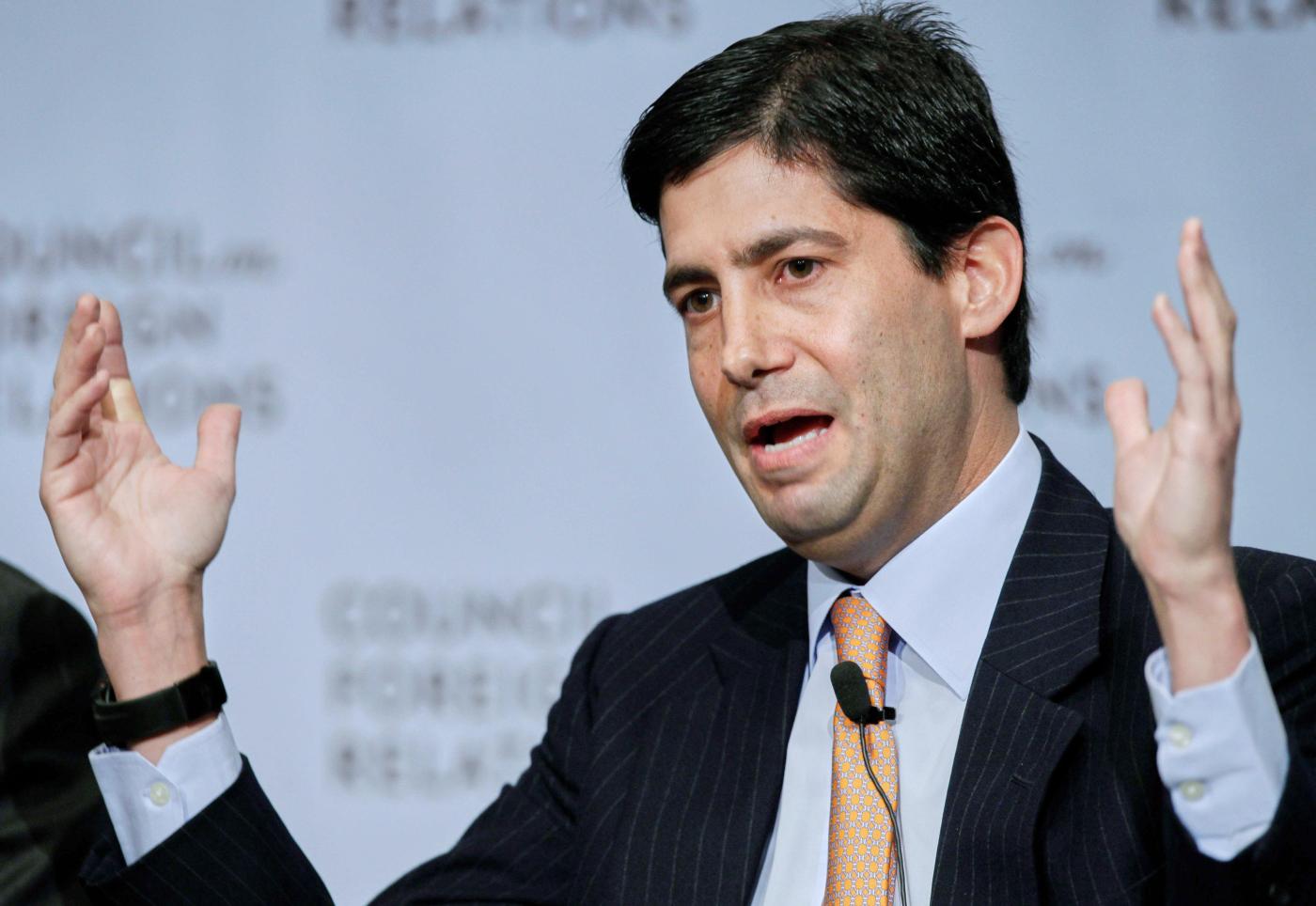
President Donald Trump has nominated former Federal Reserve governor Kevin Warsh to replace Jerome Powell as Federal Reserve Chair when Powell’s term concludes in May 2024. Warsh’s appointment comes at a time of economic uncertainty, presenting him with a complex landscape of monetary policy challenges while navigating the expectations of both the White House and financial markets.
As Warsh transitions into this pivotal role, he will need to establish trust among Federal Reserve officials. Their votes are crucial for shaping monetary policy, particularly as the pressure mounts from Trump, who has been vocal about his desire for aggressive rate cuts. Trump argues that reducing rates will stimulate economic growth and make homeownership more accessible through lower mortgage rates. He has openly criticized Powell for not delivering the rate reductions he deems necessary.
During a recent statement, Trump noted, “I want to keep it nice and pure,” expressing his expectations for Warsh to pursue rate cuts, although he acknowledged that Warsh had not made a firm commitment. This expectation is compounded by the fact that Warsh is perceived as one of the more hawkish candidates among the finalists, with a history of prioritizing inflation control during his previous tenure at the Fed.
Warsh’s Monetary Policy Approach
Despite his hawkish background, Warsh has recently advocated for rate cuts, citing advancements in artificial intelligence and productivity as key drivers for potential economic growth without triggering inflation. He has also suggested that the Fed should significantly reduce its balance sheet to create more room for rate adjustments.
Should Warsh gain confirmation from the Senate, he will lead a Federal Open Market Committee (FOMC) that currently exhibits caution regarding further rate cuts, primarily due to inflation concerns. The FOMC recently maintained rates within a range of 3.5% to 3.75% after its latest meeting, with only one additional cut anticipated this year, despite forecasts suggesting the possibility of two.
Officials within the Fed have stated that their policy stance is nearing neutrality, where changes to interest rates neither stimulate nor restrict economic activity. This conservative approach reflects the ongoing economic growth and inflation rates hovering around 3%, which complicates the path to achieving Trump’s desired rate of 1%.
The evolving economic landscape could shift before Warsh potentially presides over his first Fed meeting in June. Current forecasts indicate continued growth and stabilization in the labor market, alongside slow progress towards the Fed’s inflation target of 2%. This environment does not align with the aggressive rate cuts Trump has called for.
Market Reactions and Fed Independence Concerns
The announcement of Warsh’s nomination has already influenced market perceptions, with initial trading suggesting expectations of higher rates in the long term. Traders may react negatively if they perceive the Fed’s decisions as politically motivated, particularly if they feel that rate cuts are implemented too quickly or aggressively. This could lead to a sell-off in Treasury bonds, which would subsequently increase longer-term interest rates.
Mark Williams, a finance lecturer at Boston University, commented on the current inflation climate, stating, “Inflation numbers themselves are still 2.7%, well over the target, so I don’t see him totally ignoring inflation with a focus on just reducing rates.” He emphasized that markets would likely respond unfavorably to rate cuts under these conditions.
Even as Warsh may advocate for lower rates, there is no assurance that he will garner the necessary support from the other twelve committee members. The chair’s vote counts as one among many, and gaining consensus has been a long-standing goal for Fed chairs to communicate policy effectively.
The dynamics surrounding the Federal Reserve have become increasingly complex, especially with ongoing investigations into Powell regarding renovations at the Fed’s headquarters and legal proceedings concerning the potential dismissal of Governor Lisa Cook. These issues raise significant questions about the independence of the central bank.
As Warsh prepares to assume his role, he faces the formidable task of balancing the expectations of the White House with the operational autonomy of the Federal Reserve. His ability to navigate these challenges will be essential in shaping the future of U.S. monetary policy.