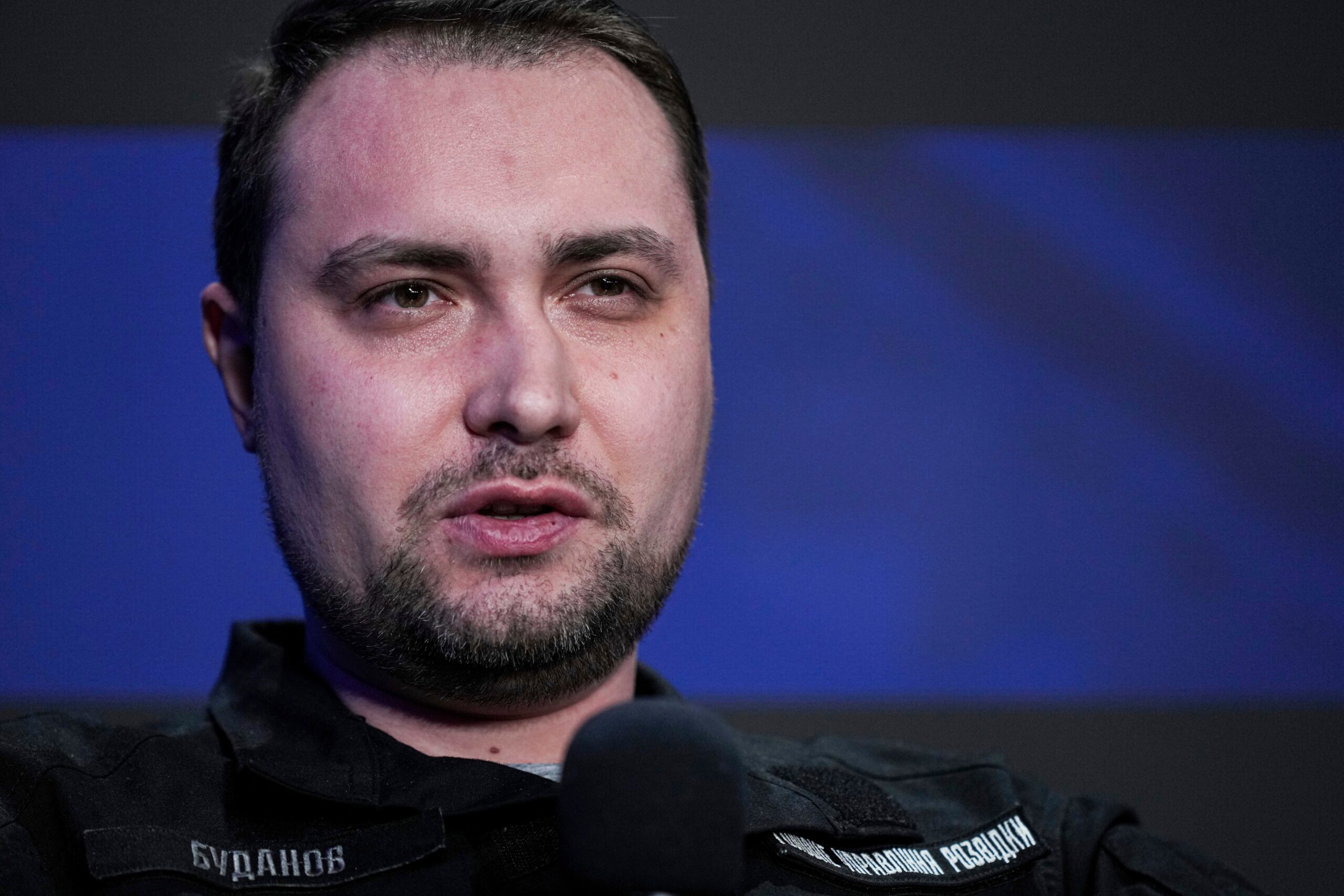
Ukrainian President Volodymyr Zelenskyy has appointed Kyrylo Budanov, the head of Ukraine’s military intelligence agency, as his new chief of staff. This decision, announced on March 15, 2024, coincides with ongoing diplomatic efforts led by the United States to resolve Russia’s prolonged invasion of Ukraine, which has persisted for nearly four years.
Zelenskyy emphasized the necessity for a strengthened focus on security and defense matters, stating that these issues are critical for the nation’s future. In his announcement, he noted that Budanov’s expertise in military operations and intelligence would support Ukraine’s objectives in defense and peace negotiations. The president had recently dismissed his former chief of staff, Andrii Yermak, following allegations of corruption in the energy sector.
Budanov, 39, expressed his commitment to addressing Ukraine’s strategic security challenges. In a statement on Telegram, he described his new role as a significant honor and responsibility, highlighting the historical context of the ongoing conflict. Zelenskyy has also appointed Oleh Ivashchenko, head of the Foreign Intelligence Service, to succeed Budanov at the military intelligence agency, known as GUR.
Budanov’s Rise and Impact
Budanov has emerged as one of Ukraine’s most prominent figures during the ongoing conflict with Russia. Having led GUR since 2020, he has a distinguished military background, gaining recognition for his efforts following Russia’s annexation of Crimea in 2014. His experience includes participation in various special operations against pro-Russian separatists before the full-scale invasion that began in February 2022.
Under Budanov’s leadership, GUR has expanded its operational capabilities, coordinating intelligence and special operations that have targeted Russian military assets far beyond the front lines. Ukrainian officials credit military intelligence with executing effective operations against Russian command structures and logistical networks, including strikes deep within occupied territories.
Political analyst Ihor Reiterovych noted that Budanov’s experience in military intelligence will enhance Ukraine’s position in ongoing negotiations, suggesting that he will fit more seamlessly into discussions with international partners compared to his predecessor. Reiterovych highlighted Budanov’s involvement in past talks with the United States, where he established contacts that could facilitate communications with Russia on issues such as prisoner exchanges.
Escalating Tensions in Ukraine
As political developments unfold, tensions on the ground remain high. Russian authorities reported an increase in casualties from a recent drone strike in the Kherson region, claiming that 28 people were killed, including minors. This incident has been met with strong denial from Ukrainian officials, who maintain that their military actions adhere to international humanitarian law, targeting only Russian military installations and not civilian areas.
Ukrainian General Staff spokesperson Dmytro Lykhovii emphasized that the Ukrainian forces focus on legitimate military targets, countering Russian claims of indiscriminate attacks. He also accused Russia of spreading disinformation to disrupt peace negotiations.
In a related development, U.S. President Donald Trump’s special envoy, Steve Witkoff, reported progress in diplomatic discussions involving national security advisers from the United States, United Kingdom, France, Germany, and Ukraine. This follows a period of heightened tension after Russia’s claims of a drone attack targeting President Vladimir Putin’s residence, which Ukraine denied, labeling it a tactic to obstruct negotiations.
In his New Year’s address, Zelenskyy remarked that a peace agreement was “90% ready,” but cautioned that unresolved issues would be crucial in determining Ukraine’s future and stability in Europe.
As military operations continue, Russia has launched significant attacks in various regions. Recent strikes in Kharkiv injured at least 19 individuals, including a six-month-old child. Local authorities reported that Russian forces conducted one of the largest drone attacks in Zaporizhzhia, targeting civilian infrastructure but resulting in no casualties.
The conflict’s toll continues to mount as Ukraine’s military remains vigilant amidst the ongoing diplomatic efforts aimed at achieving lasting peace.