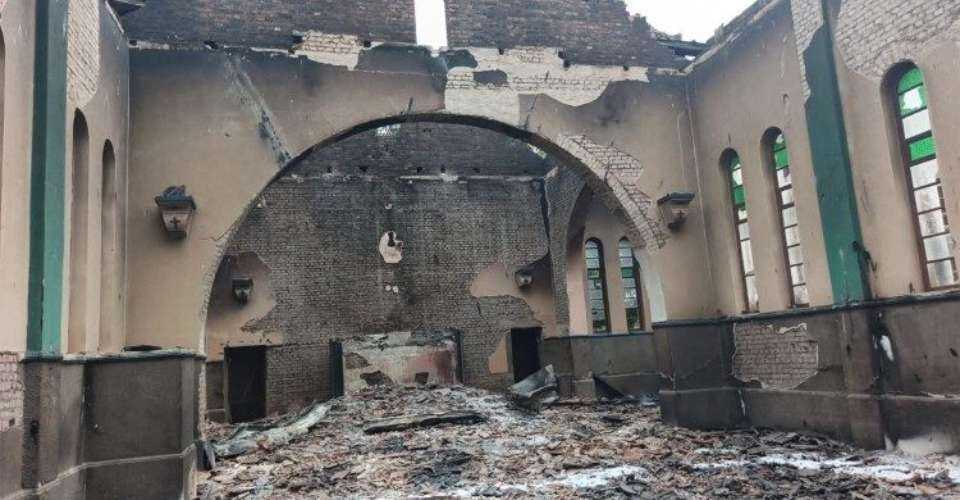
Islamic State-linked extremists launched a brutal attack that reduced the historic St. Louis de Montfort Church in Meza, northern Mozambique, to rubble on April 30, according to reports from the pontifical charity Aid to the Church in Need (ACN). The militants not only destroyed the church but also targeted the adjoining offices, the residence of the Piarist missionaries, and vandalized a church-run kindergarten school in a militant assault designed to terrorize the local community.
The extremists, associated with the Islamic State-Mozambique faction, have been waging violent campaigns against both Christians and Muslims since 2017. This latest strike shocked defenders of religious freedom and human rights worldwide. Bishop António Juliasse Ferreira Sandramo of the nearby Diocese of Pemba described the attack as “a scene of terror,” where civilians were captured and forced to watch speeches of hate before the assault demolished key religious and community infrastructure.
Attack Signals Escalated Extremist Violence in Cabo Delgado
The attack is strikingly unusual in its focus on a Christian church, as documented by the Armed Conflict Location & Event Data Project (ACLED). ACLED highlights that church attacks account for less than 6% of all violent incidents in the region. Their analysis suggests the assault was a deliberate attempt by Islamic State-Mozambique militants to attract international attention to their campaign of terror.
Since 2017, the extremist group has systematically targeted communities in the Muslim-majority Cabo Delgado province, increasingly focusing on Christian-majority areas. Recent months have seen a spike in violence, including the burning of 18 churches in villages of the Chiuré district and the beheading of six Christians in Ancuabe district, where Meza is located. Such attacks have devastated entire Catholic parishes, forcing mass displacement.
Local Church Leaders Urge Global Solidarity Amid Ongoing Threats
Bishop Juliasse confirmed the Piarist missionaries who served at the St. Louis de Montfort parish survived the attack unharmed but described the community’s profound shock and trauma. He made an urgent call for solidarity from Catholics and the global community.
“For nine years, we have watched the insurgents burn chapels and churches in the Diocese of Pemba. But the faith of God’s people will never burn. Every day, it is rebuilt,” Bishop Juliasse said to ACN.
The destruction of this historic church, founded in 1946, marks a grave escalation in the attackers’ sustained campaign against religious infrastructure in northern Mozambique. The U.S. Commission on International Religious Freedom recently emphasized the group’s relentless violence against both Christian and Muslim communities, underlining the dire threat to religious freedom and regional stability.
What’s Next: Continued Violence and Global Watchfulness
The international community is closely monitoring the unfolding situation as Islamic State-Mozambique’s attacks threaten to destabilize the region further. Analysts warn that such destructive acts are part of a broader extremist strategy to provoke attention and disrupt fragile peace efforts.
For U.S. and South Carolina readers invested in stories of global religious freedom and anti-terrorism, Mozambique’s spiraling crisis highlights the ongoing challenges in confronting militant extremism worldwide. The destruction of cultural and religious sites poses a significant human toll and raises urgent calls for international action and support.
As the Diocese of Pemba and local communities begin to rebuild from the rubble, the fight against extremism remains ongoing. The world’s eyes are now on Mozambique to see how it responds to this humanitarian and spiritual crisis.