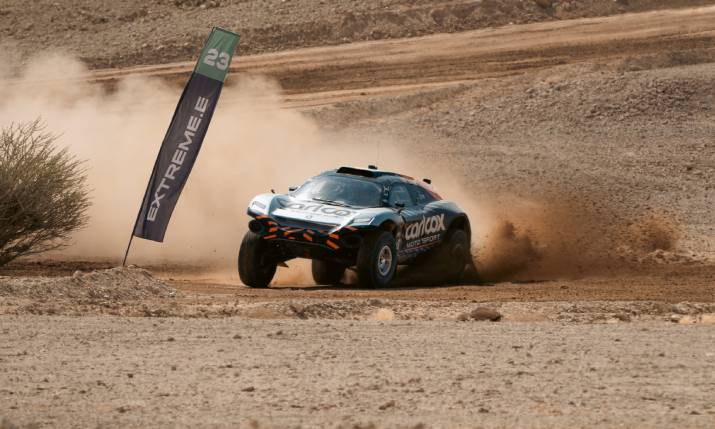
The transition to hydrogen-fuelled motorsport has taken a significant step forward with the collaboration between Aurora Media Worldwide and the FIA Extreme H crew. This partnership aims to enhance the production and broadcasting of the new racing series, which follows the conclusion of the electric series, Extreme E. The inaugural FIA Extreme H event is scheduled to take place from October 9 to 11, 2025, immediately following the last Extreme E race on October 4-5, 2025, in Qiddiya, Saudi Arabia.
A major focus of this collaboration has been the integration of different departments to optimize production strategies. Matthew Beal, Chief Broadcast Officer at Aurora Media, emphasized the importance of teamwork among all contributors, stating that the success of the event hinges on a coordinated effort across all areas, from track design to camera placement.
“From day one, we work closely with sporting officials like Guy Nicholls, the head of sporting at FIA Extreme H, and drivers such as Timo Scheider,” Beal explained. “This collaborative approach ensures that we design the course effectively while considering the broadcast perspective.”
As the team worked on the course layout, initial plans favored an anticlockwise direction for the cars. However, after discussions about the best visual outcomes for the broadcast, it was determined that a clockwise route would offer more dramatic shots during the races. Beal noted, “We can get these views at these times of day, with this light behind, and we can aesthetically adjust the track to enhance the viewing experience.”
This meticulous planning extends to the technological side of the event as well. Aurora Media has adopted advanced methods to capture the action, using both a first-person view (FPV) drone and a wider overview drone to provide diverse perspectives during the races. Beal remarked, “We pivot between these different types of drones to capture the essence of the race without losing the context of the environment.”
The transition from electric to hydrogen-powered vehicles has also necessitated a deeper understanding of the new car designs. Beal explained that the new vehicles have evolved to be more robust, incorporating learnings from Extreme E while also accommodating gender parity in design features, such as adjustable control systems for different drivers.
Enhancements in connectivity have been a priority as well. The team transitioned from a radio frequency (RF) network to a fibre-based system, which improved reliability and efficiency during the event. Beal highlighted the importance of pre-installing cable runs to facilitate swift transitions between different tracks, allowing for seamless broadcasts despite the quick changes in settings.
On race days, Aurora Media faces the challenge of managing multiple broadcasts from different locations, underscoring the need for precise planning and execution. Beal stated, “We knew we would be pivoting between these different tracks very quickly, so we had to be prepared to switch rapidly from one setup to another.”
In addition to the technical and logistical advancements, Aurora Media aims to enhance the educational aspect of the broadcasts. The team intends to highlight themes of sustainability and technological innovation related to hydrogen fuel. Beal noted, “We want to showcase how hydrogen technology is not only a propulsion system for vehicles but also how it powers our paddock and the microgrid on site.”
As the FIA Extreme H series prepares to launch, the collaboration between Aurora Media and FIA promises to redefine motorsport broadcasting through innovative production strategies and a commitment to sustainability. The integration of technology and teamwork will not only enhance the viewing experience but also contribute to the broader conversation about the future of clean energy in motorsport.