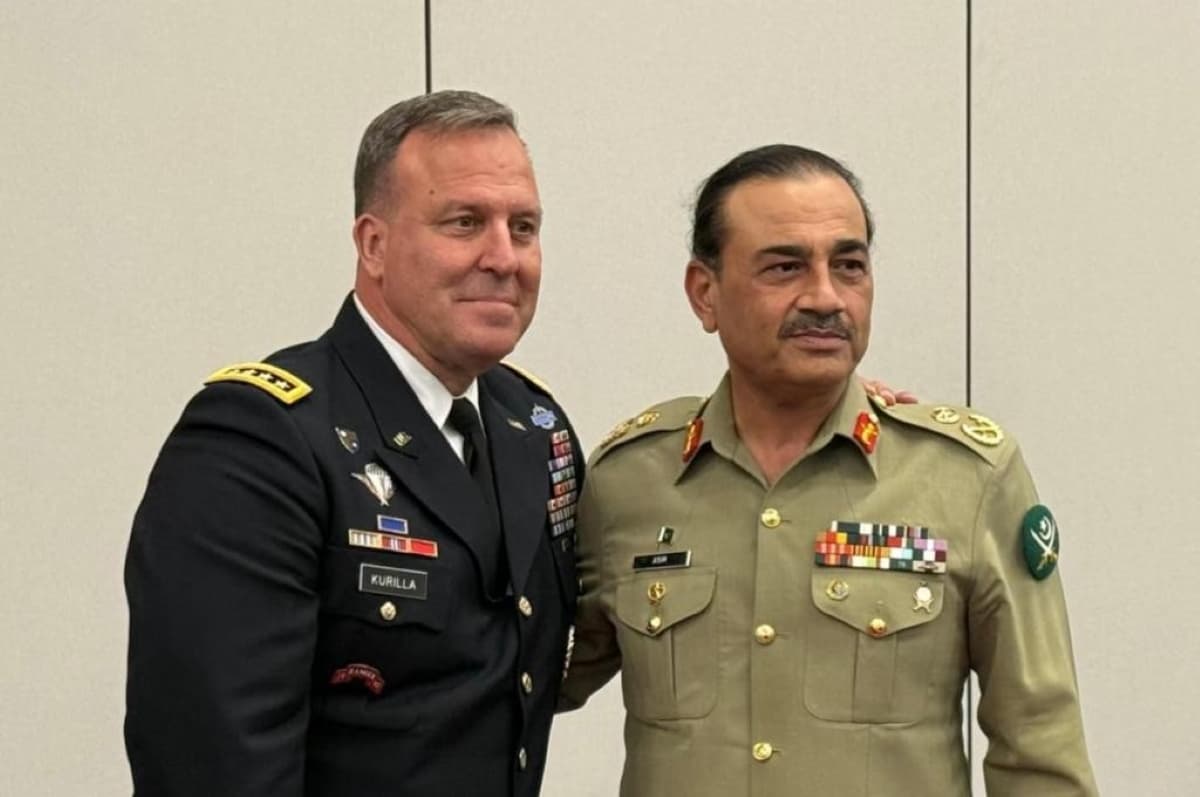
UPDATE: In a striking shift in global dynamics, the United States is strengthening ties with Pakistan just as Field Marshal Asim Munir tightens his grip on power. New reports confirm that a sweeping constitutional amendment has been passed, granting Munir lifetime immunity from arrest and expanding his authority over the military and political landscape.
This urgent development follows a series of high-profile visits by Munir to the White House in recent months, signaling a renewed commitment from Washington despite fears surrounding Pakistan’s support for terrorism. The implications are monumental, as the U.S. appears to be sidelining its relationship with India, potentially jeopardizing regional stability.
The new law, signed on October 5, 2023, further entrenches military influence, raising alarms about a return to full military control in Pakistan. Officials warn this consolidation of power could exacerbate the country’s involvement in supporting terrorist groups, particularly amid ongoing tensions with India.
Reports indicate that since India’s Operation Sindoor—aimed at dismantling terror bases in Pakistan—Islamabad has allegedly bolstered Pakistan-based terror groups. Sources claim the notorious Jaish-e-Mohammed has been relocated to more defensible areas, and recruitment efforts have intensified under police protection in Khyber Pakhtunkhwa.
In a chilling turn, a recruitment rally hosted by Jaish-e-Mohammed on September 14, 2023, drew significant attention when it was addressed by Maulana Mufti Masood Ilyas Kashmiri, who purportedly claimed that Munir ordered military support for terrorists killed in recent conflicts. Such actions not only underline the military’s role in Pakistan’s governance but also raise pressing questions about U.S. strategy in the region.
Pakistan’s historical reliance on the Taliban as a proxy ally is now crumbling, with rising nationalism within the extremist group leading to a shift in dynamics. On October 9, 2023, Pakistani aircraft targeted positions of the Tehreek-e-Taliban Pakistan in Kabul, coinciding with significant diplomatic moves by India, including the reopening of its embassy in Afghanistan. This underscores Islamabad’s increasingly precarious position as the Taliban seeks independence from Pakistani influence.
As the U.S. pursues a more transactional relationship with Pakistan, many analysts argue that this could lead to strategic miscalculations. The diminishing power of Pakistan, coupled with its deepening authoritarianism, poses a risk not only to its own stability but also to broader regional security.
The consolidation of power by Field Marshal Munir, amid rising tensions with India, suggests an insecure regime that may resort to increased aggression. Observers note that Pakistan’s longstanding doctrine of strategic depth is failing, leading to fears of potential fragmentation along ethnic lines, especially among the Pashtun and Baloch populations.
For the United States, recalibrating its approach to South Asia is crucial. Prioritizing ties with Pakistan over India, a rising power poised to become a major technological superpower by 2035, could be a grave error. As India continues to assert its influence through economic and diplomatic avenues, Pakistan risks being relegated to a regional dwarf with diminishing impacts on global affairs.
The unfolding situation is critical and requires immediate attention. As Field Marshal Munir consolidates power and Pakistan’s military influence expands, the ramifications for U.S. foreign policy and regional security could be profound.
Stay tuned for more updates as this story develops, and monitor the impacts on international relations in South Asia.