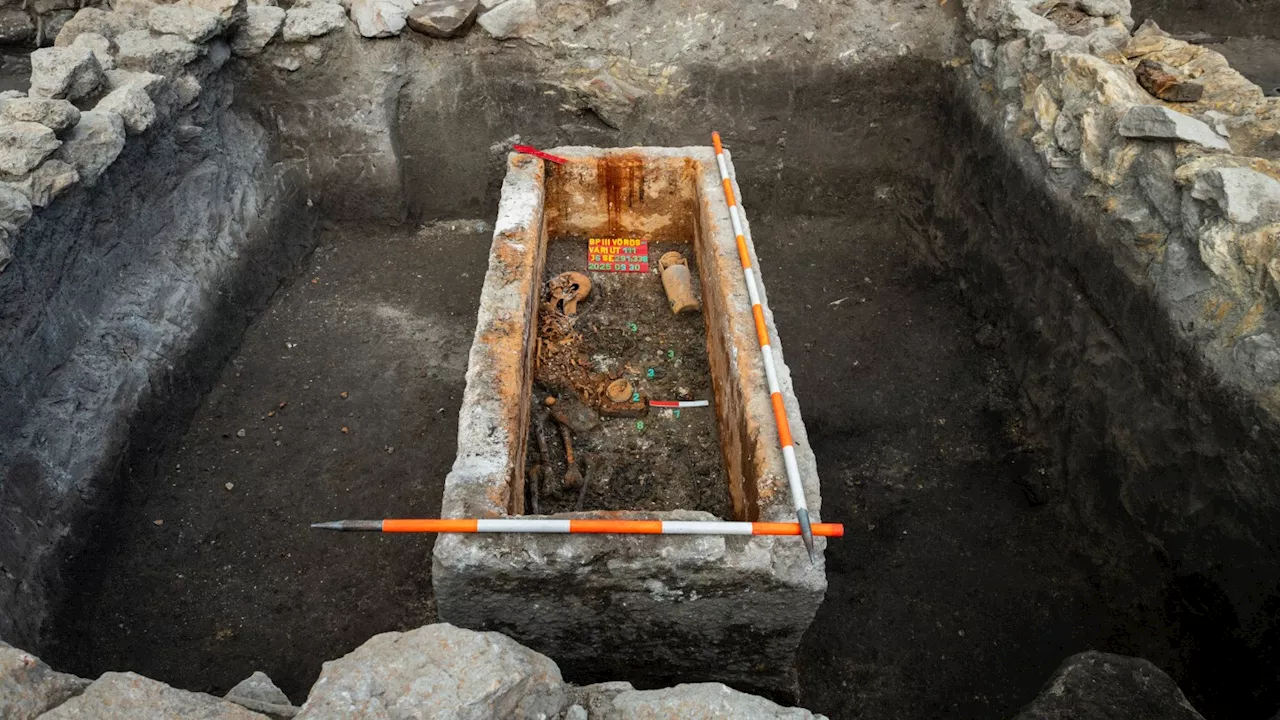
URGENT UPDATE: A spectacular discovery in Budapest has just revealed a 1,700-year-old Roman sarcophagus, offering a compelling glimpse into ancient life. Unearthed in the Óbuda district, this limestone coffin was remarkably preserved and sealed for centuries, making it a rare find in archaeological history.
The sarcophagus was uncovered during a significant excavation led by the Budapest History Museum. Archaeologists discovered it still intact, its stone lid secured with metal clamps and molten lead, ensuring its preservation over the centuries. When researchers lifted the lid, they found a complete skeleton of a young woman surrounded by an array of artifacts, shedding light on her life and the customs of the time.
“This finding is exceptional because it was hermetically sealed and untouched by looters,” said Gabriella Fenyes, the lead archaeologist on the project. The sarcophagus was located among the ruins of houses in a former area of Aquincum, a bustling Roman settlement along the Danube River.
The artifacts found within include two intact glass vessels, bronze figures, and an astonishing 140 coins. Additionally, a bone hairpin, pieces of amber jewelry, and traces of gold-threaded fabric suggest the grave belongs to a young woman of possibly high social status. “The items were likely left by her relatives for her eternal journey,” Fenyes explained, highlighting the emotional significance of the burial.
The excavation site also revealed remnants of a Roman aqueduct and several other graves, though none matched the richness of this sealed tomb. The care shown in the burial practices points to the love and devotion her family had for her. “Even now, I shudder to think how painful it must have been for the people at that time to bury this young lady,” Fenyes added.
Anthropologists will now examine the young woman’s remains to gather more information about her age, health, and origins. This ongoing research is expected to provide deeper insights into the life of individuals during the Roman era in the region.
“This sarcophagus stands out as an incredible find,” said Gergely Kostyál, a Roman-period specialist and coleader of the excavation. “It is quite rare to find a sarcophagus that has never been reused, especially during a time when it was common to repurpose earlier ones.”
Excavators are also sifting through a layer of mud found inside the coffin, which could potentially yield even more artifacts. “I suspect we could find jewelry or other items,” Fenyes mentioned, expressing hope for further discoveries.
This extraordinary find not only adds to our understanding of Roman history but also serves as a poignant reminder of the emotional ties that existed between the deceased and their loved ones. The excavation continues to draw significant attention, with further updates anticipated as research progresses.
Stay tuned for more developments on this remarkable archaeological discovery in Budapest.