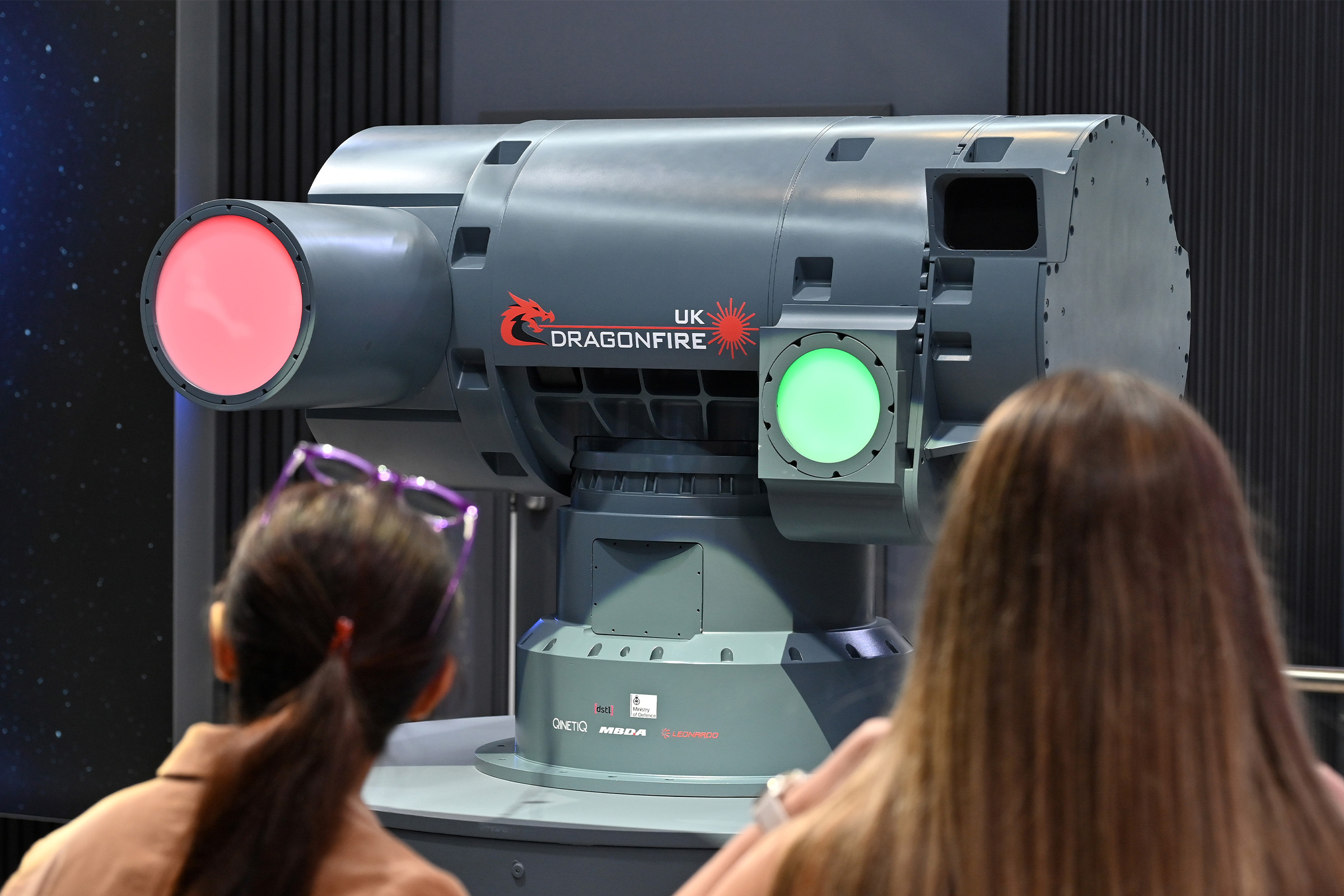
The British Armed Forces have successfully tested a powerful laser system designed to neutralize high-speed drones, marking a significant advancement in anti-drone technology. The Ministry of Defense conducted trials of the DragonFire laser at a facility in Scotland, showcasing its capability to shoot down drones traveling at speeds of up to 650 km/h (approximately 404 mph). This speed is double that of a Formula 1 car, highlighting the system’s effectiveness in countering modern aerial threats.
During the trials, the DragonFire laser demonstrated above-the-horizon tracking and pinpoint accuracy, capable of hitting a target as small as a £1 coin from a distance of one kilometer. A video released by the UK Defense Journal illustrates the technology being deployed aboard Royal Navy ships, emphasizing its potential to protect against drone attacks from adversaries. The operational cost of the system is notably low, with each laser shot costing around $13, a stark contrast to conventional missiles that can exceed $2.1 million per launch.
The British Ministry of Defense has recognized the potential of this technology, awarding MDBA a contract worth £316 million to develop and deliver the DragonFire laser for use on Royal Navy vessels by 2027. This decision comes in the wake of challenges faced by other military forces, including the United States Navy, which has spent significant resources combating drone threats in the Red Sea, primarily from Houthi rebels in Yemen.
Advancements in Laser Technology
Historically, combat lasers have struggled with reliability and complexity. However, recent advancements have made these systems more robust and operationally viable. The ongoing conflict in Ukraine has underscored the growing prominence of drones in military operations, complicating defense strategies globally. Drones are not only inexpensive and easy to acquire, but they also offer versatile combat capabilities, including targeted strikes and reconnaissance missions.
In response to increasing drone threats, military personnel have relied on various tools, including net guns, to neutralize these airborne challenges. The introduction of a powerful laser system like DragonFire could potentially revolutionize aerial defense, providing a more effective solution against the rising tide of drone usage in warfare.
The successful trials of the DragonFire laser demonstrate the United Kingdom’s commitment to advancing its military capabilities in the face of evolving threats. As drone technology continues to proliferate, systems like DragonFire may play a crucial role in ensuring national security and safeguarding against airborne attacks.