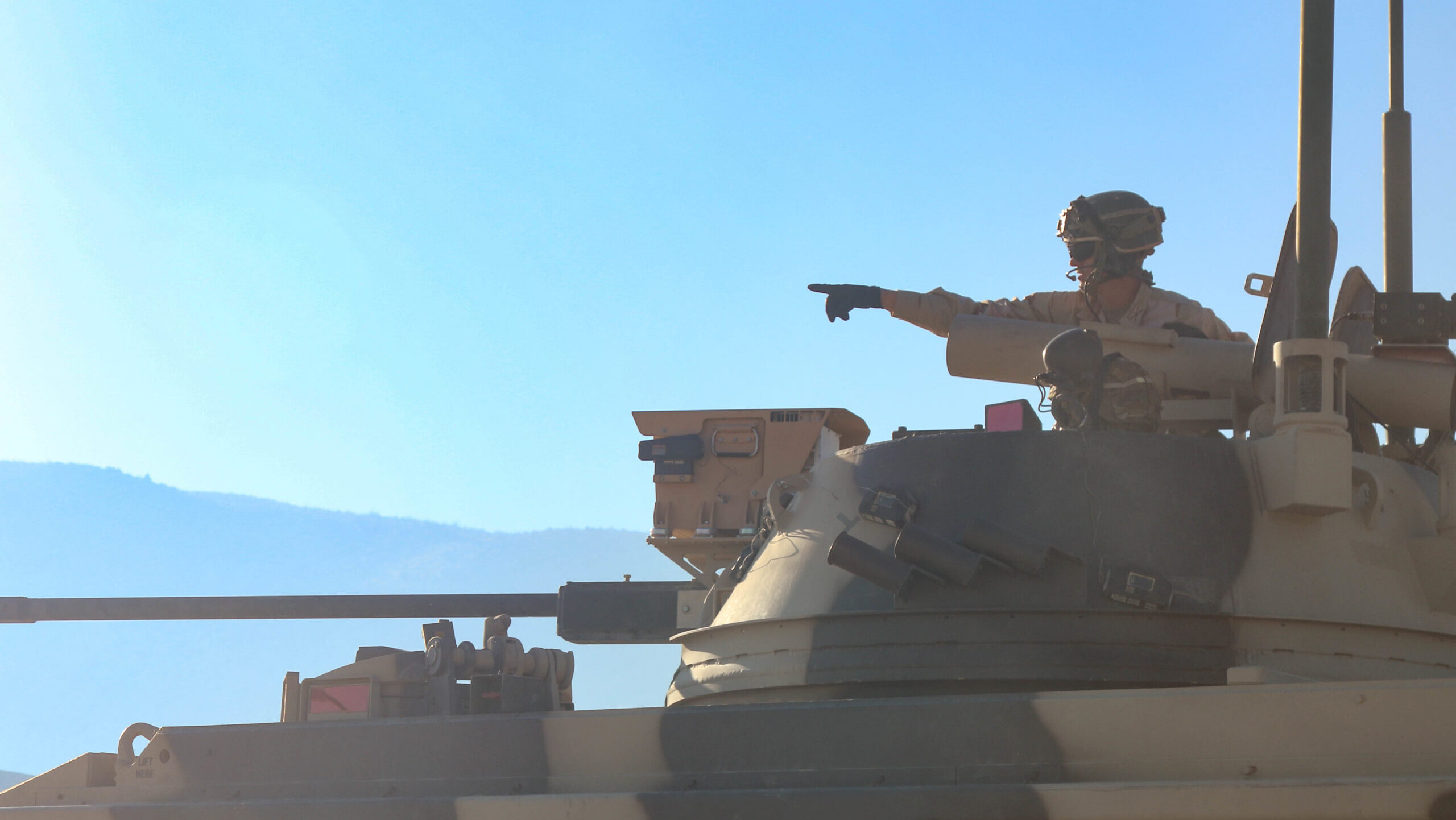
The 11th Armored Cavalry Regiment (ACR) has adopted a distinctive approach to warfare, prioritizing simplicity in the face of rapidly advancing technology on modern battlefields. As conflicts unfold in regions like Ukraine and Iran, the regiment emphasizes the need for straightforward strategies that can withstand the chaos of combat, according to officers who spoke with Breaking Defense.
While acknowledging the value of drones, electronic warfare, and artificial intelligence, the regiment’s leaders warned against overwhelming soldiers with complex systems. Capt. Jake Thomas, responsible for the regiment’s electronic and information warfare assets, highlighted the risks of inundating troops with excessive information. “One thing that we absolutely have to do,” he stated, “is take those systems, those processes, and strip them down.”
Emphasizing Effective Training and Planning
The 11th ACR conducts 8 to 10 simulated battles each year as the Opposing Force (OPFOR) at the National Training Center in Fort Irwin, California. These exercises take place across 1,200 square miles of the Mojave Desert, where the unit has gained a reputation for defeating larger brigades that may have superior numbers but lack effective drone and electronic warfare capabilities.
Col. Kevin Black, the regiment’s commander, stated, “Today, the battlefield is much deeper, much longer, much more lethal, and you have to respect that.” He emphasized the importance of combining various technologies with a streamlined operational approach, which he describes as “simple plans, violently executed, that retain agility.” A key resource for his tactical philosophy is the Army pamphlet titled Decision Point Tactics, published in 1997. This guide stresses the importance of intense wargaming and rehearsal to ensure that commanders and their teams can respond effectively to emerging threats.
The regiment’s strategy empowers subunits to act independently, allowing them to launch munitions against high-priority targets identified during training without waiting for permission. “If a subunit spots a target identified as high priority, they have the authority to launch the munition to destroy that target, because we’ve already thought through that plan,” Col. Black explained. This approach fosters quick reactions to new information, enabling troops to maintain the initiative and keep adversaries unsettled.
Centralizing Technology for Effective Combat
While the OPFOR seeks to empower junior officers, it also recognizes the need to avoid overwhelming them with complex technologies. Capt. Joshua Ratta, commander of the OPFOR’s headquarters company, pointed out that pushing advanced capabilities down to lower ranks often introduces additional complexity. The challenge lies not just in operating various systems but also in accurately interpreting the diverse sensor data they generate, such as video, infrared, and radio signals.
“What we don’t want to have happen is 10 sensors looking at one platoon on a battlefield, and that gets recorded as 10 platoons,” Capt. Ratta noted, emphasizing the intricacies of integrating various intelligence sources into a coherent battlefield picture. To mitigate this issue, the regiment has centralized its high-tech resources and the personnel trained to operate them.
A key component of this strategy is the Centaur Squadron, which often includes an array of long-range surveillance and strike drones, as well as traditional scouting vehicles. Col. Black described this centralization as “some of our secret sauce,” allowing the regiment to effectively deploy its technological assets rather than spreading them thinly across various units.
This specialized concentration enables Centaur to engage enemy forces from a distance, disrupting their movements before they reach the regiment’s main defensive line. By utilizing jamming, drone strikes, and long-range artillery, the unit can weaken its opponents, granting an advantage to the infantry and armored troops when the engagement occurs.
The regiment’s unique mission and budget constraints encourage a culture of improvisation and resourcefulness. Much of the equipment used for training and wargames comes from government laboratories or private companies eager to test their innovations in real-world conditions. “We’re not able to buy a lot of exquisite, expensive equipment, but we can use it for a rotation or two,” Col. Black explained, noting how each visiting brigade faces a distinct threat during their training rotations.
As the operational environment of military engagements evolves rapidly, the regiment remains cautious about relying on any single technology or weapon system. “The shelf life is much shorter,” Capt. Ratta stated. He acknowledged the need for adaptability, pointing out that advancements in software can enable changes in equipment performance within hours.
The lessons learned by the 11th ACR illustrate the importance of balancing cutting-edge technology with simplicity in operational planning. In a landscape where the dynamics of conflict change rapidly, the regiment’s approach may serve as a model for other military units striving to maintain effectiveness in the face of high-tech chaos.