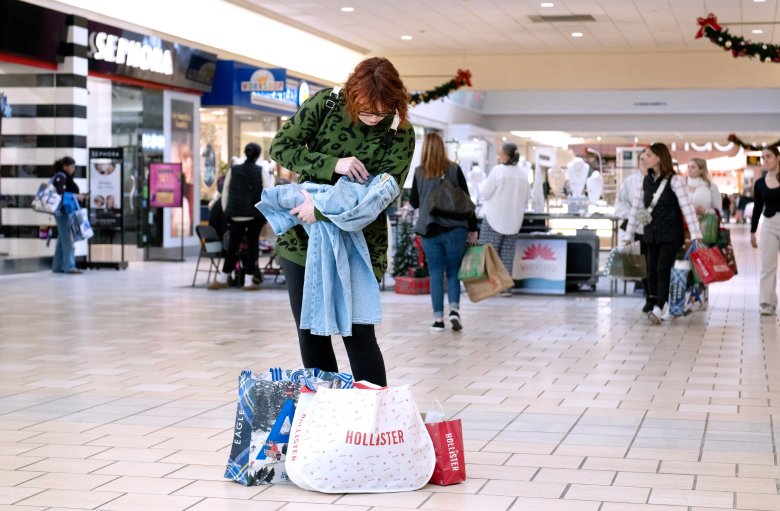
Shoppers in Maine welcomed Black Friday with a mix of tradition and changing shopping habits. The Maine Mall in South Portland opened its doors at 8 a.m. on November 24, 2023, attracting early-morning deal-seekers. Although foot traffic was steady, many shoppers noted a decline in crowd size compared to previous years, indicating a shift towards online shopping.
Among those navigating the aisles was Barbie Smart from Naples, accompanied by her 13-year-old daughter, Lennon Smart, and mother, Vicki Smart. “I feel like there’s way less people actually going out to shop,” Lennon observed, echoing a sentiment shared by many. Despite this, Barbie cited “tradition” as their reason for shopping in-store, highlighting the importance of the Black Friday experience.
Retail Insights on Shifting Consumer Behavior
Curtis Picard, president of the Retail Association of Maine, emphasized the traditional allure of Black Friday. “There’s the tradition of it: it’s Black Friday, you hear about all the sales,” he explained. While promotional deals have become more prevalent in the weeks leading up to the holiday, the in-store experience remains distinctive for many consumers.
This year’s holiday shopping season arrives against a backdrop of economic uncertainty. According to the Conference Board, consumer confidence has dipped to its lowest level since April 2023, as inflation and tariffs on imports weigh on individuals’ spending capabilities. Analysts predict that average spending will decline compared to last year, although the National Retail Federation forecasts that overall holiday spending could surpass $1 trillion for the first time.
Erin P. Carter, a professor at the University of Maine who specializes in consumer behavior, noted that economic anxiety often influences shopping habits. “When people feel uncertain, they tend to behave in ways that are more easily influenced by marketing practices,” she stated. The scarcity of certain products can drive consumers to stores, as seen with shoppers like Kyle Kalbhenn from Kennebunk.
Shoppers Seek Exclusive Deals and Local Savings
Kalbhenn, typically an online shopper, ventured to the South Portland Target for a limited-edition set of Pokémon cards not available online. “I know these are hot and hard to get for the kids,” he said, highlighting how exclusivity can draw customers into physical stores.
For others, Black Friday represents an opportunity for savings. Amanda Seely traveled from New Brunswick with friends, eager to take advantage of the sales and favorable currency exchange rates. Their carts were filled with toys, clothing, and snacks, demonstrating the meticulous planning involved in their shopping trips. “We have lists. We plan them all year long,” Seely shared.
Despite the excitement, some shoppers noted that this year’s deals felt less enticing than in previous years. Laura Marr, also from New Brunswick, indicated that she now frequently compares in-store prices with online retailers to ensure she is getting the best value. Carter explained that this type of cross-referencing is becoming increasingly common as consumers seek to maximize their savings.
“If you don’t know what a good price is for that particular thing, then all retailers have to do is increase their prices in the weeks leading up to that and then present it on Black Friday as 40% off,” Carter warned. This complexity can leave shoppers struggling to navigate pricing without assistance or extensive research.
This year’s Black Friday reflects a blend of tradition and adaptation as consumers navigate changing shopping landscapes. While some continue to embrace in-store experiences, others are turning to online platforms, illustrating the evolving nature of holiday shopping.