MTA launches phone and card scanning to crackdown on bus fare evasion
MTA Chair and CEO Janno Lieber defended the agency’s new “European-model” fare enforcement system that scans riders’ phones and credit cards to verify payment on buses, acknowledging some rider pushback is possible but emphasizing the urgent need to curb massive revenue losses.
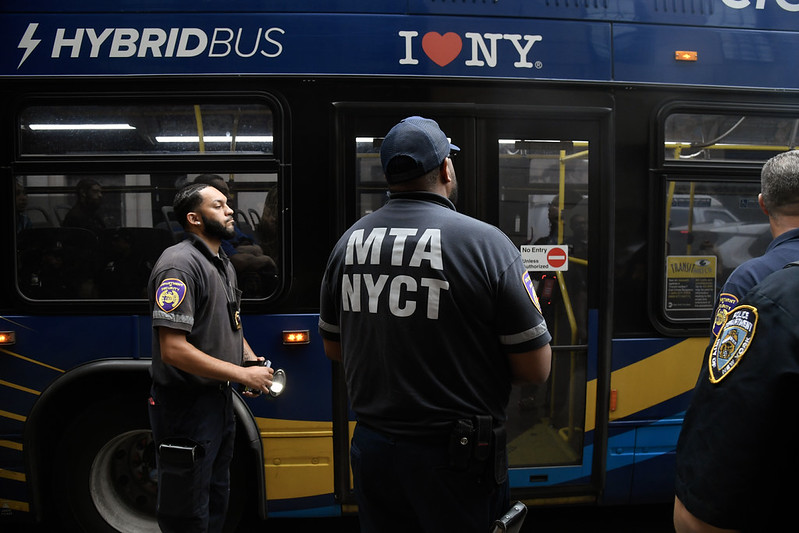
At a news conference following the April 29 MTA board meeting, Lieber revealed that civilian fare agents armed with handheld scanning devices have been deployed aboard local buses after successful pilot tests on Select Bus Service routes.
“We’ve been testing it out, as Demetrius has described, and it’s working fine,” Lieber said. “There is a very high rate of customer compliance.”
Lieber acknowledged some riders may hesitate to show phone screens or payment cards on demand but insisted this 21st-century system is crucial to the agency’s survival. By adopting technology common in Europe, the MTA aims to validate fares more reliably amid rising fare evasion.
“We haven’t gotten a lot of pushback. It may happen, but this is the right way to validate fares in the 21st Century in the Western world.” — Janno Lieber, MTA Chair and CEO
Fare evasion costs MTA $568 million this year amid transition to OMNY
The move comes as the MTA phases out MetroCards and coin payments, fully embracing the OMNY contactless payment system. Revenue lost from fare evasion on MTA buses has reached a staggering $568 million in 2026, according to a report by the Citizens Budget Commission.
NYC Transit President Demetrius Crichlow said the civilian EAGLE teams—Evasion And Graffiti Lawlessness Eradication squads—are now fully equipped and trained to deal with riders who refuse to show proof of payment, aiming to handle such interactions professionally and calmly.
“Employees are being trained how to deal with customers, what to say in instances where they encounter a customer that may not necessarily be readily willing to present their information,” Crichlow explained.
The MTA is also proactively educating riders. Teams have been distributing leaflets, updating bus signage, and installing customer information screens announcing the policy change to prevent surprises and improve compliance.
“We are adding signage and information so that people know this change is coming and it is not a surprise to the public.” — Demetrius Crichlow, NYC Transit President
New enforcement system unlocks all-door boarding benefits
Lieber stressed that the fare-scanning rollout will finally enable all-door boarding on local buses—something previously hindered by the dormant back-door OMNY readers. This upgrade is expected to speed up boarding times and reduce bus delays, increasing efficiency across the system.
Crichlow also reassured riders that the scanning devices only check for proof of payment and do not store any personal data, addressing privacy concerns.
The MTA’s swift adoption of this method positions it at the forefront of transit agencies tackling fare evasion with technology, setting a precedent that could influence fare enforcement strategies nationwide, including in South Carolina’s growing transit systems looking for similar solutions.
What to watch next
As the new fare enforcement system expands across all MTA buses in New York City, transit authorities nationwide will be closely watching the impact on fare compliance and customer reactions. Initial data on enforcement effectiveness and rider pushback will shape future policies for urban transit agencies combating significant fare revenue losses.
For now, the MTA commits to transparency, rider education, and customer service training, aiming to balance enforcement with a positive transit experience amid rising pressure from mounting fare evasion and system modernization demands.