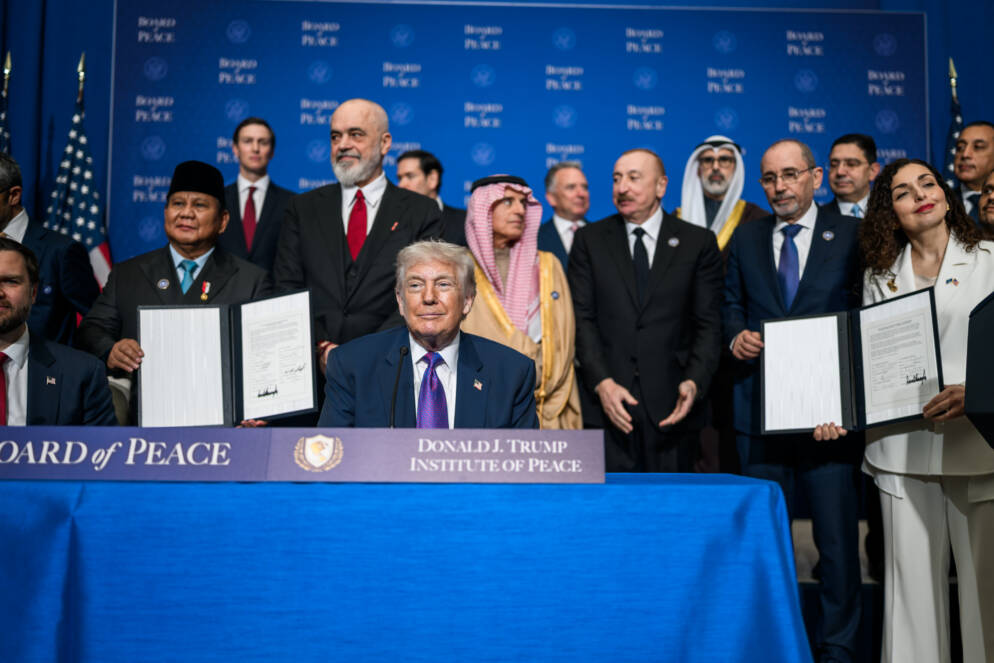
UPDATE: President Donald Trump has officially launched the Board of Peace, pledging an ambitious $10 billion for the reconstruction of Gaza during a crucial meeting in Washington, D.C. on February 19, 2026. This unprecedented initiative aims to reshape the landscape of international aid, linking financial support directly to political outcomes.
Nearly 50 countries attended the inaugural meeting, with 26 nations signing the charter aimed at providing a structured approach to peace. The United States’ commitment of $10 billion for Gaza’s recovery was announced alongside additional promises from other nations, but critical details remain unresolved.
The proposed Gaza Reconstruction and Development Fund will be managed through the World Bank, designed to ensure accountability and oversight. However, significant challenges loom as the U.S. pledge requires congressional authorization, leaving the funding’s future uncertain until legislative action is taken. Experts estimate that Gaza’s total reconstruction costs could exceed $50 billion, indicating that current commitments fall far short of what is necessary.
The board’s approach is starkly transactional—financial aid will only flow if Hamas disarms and a new non-Hamas Palestinian governing body is established. This strategy raises both hopes and concerns, as it ties vital aid to compliance with political conditions. Israeli officials have warned that Hamas faces a limited time frame to surrender its weapons or risk renewed military action.
The conditionality of aid marks a significant departure from previous donor conferences, where similar pledges were made without strict enforcement mechanisms. Critics argue that this model risks alienating Palestinian leadership, as their involvement was minimal during the board’s formation, raising questions about the legitimacy of external management over local governance.
Trump envisions the board’s model extending beyond Gaza, potentially challenging traditional multilateral frameworks like the United Nations. The message is clear: conventional diplomacy is too slow, and a coalition of willing nations can act more decisively.
As the board prepares to navigate these uncharted waters, the focus will be on whether it can transform its concentrated authority into lasting legitimacy and enforceable peace. The stakes are high, and the world watches closely as this bold initiative unfolds.
Officials have reiterated that success hinges not only on announced pledges but on the board’s ability to foster cooperation and build trust among all parties involved. The coming weeks will be critical in determining if this innovative approach to peace can yield tangible results in a region long marked by turmoil.
Stay tuned for further updates as this developing story unfolds.