South Korean Court Cuts Former Prime Minister Han Duck-soo’s Sentence to 15 Years
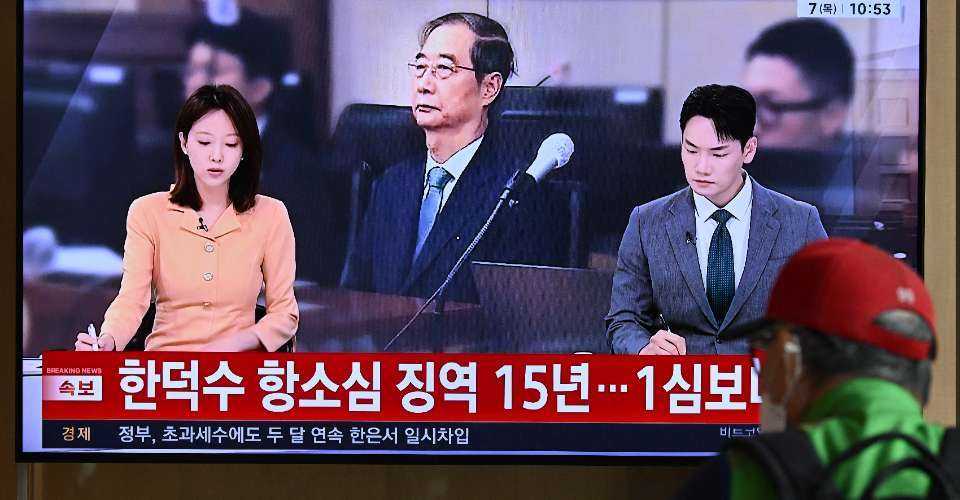
A South Korean appeals court sharply reduced the prison sentence of former prime minister Han Duck-soo from 23 years to 15 years for his involvement in the controversial martial law declaration under former President Yoon Suk Yeol. The ruling came on May 7 in Seoul, cutting eight years from an earlier harsh verdict handed down in January.
The heavy martial law decree, enacted by Yoon in December 2024, suspended civilian government for about six hours amid political turmoil, triggering nationwide chaos. Opposition lawmakers quickly overturned the decree, but the legal fallout continues as authorities hold top officials accountable.
Han Held Responsible but Sentence Reduced Over Long Public Service
The appeals court kept most of Han’s convictions but acknowledged his more than 50 years of government service before the martial law crisis. The presiding judge said there was no clear evidence Han “conspired in advance” or systematically led the operation but condemned him for abandoning duty and siding with those behind the insurrection.
“He had experienced unconstitutional and unlawful martial law measures himself and was therefore well aware of the extensive damage such events could cause,” the judge stated.
Han, 76, who previously served as South Korea’s finance minister and received multiple state awards, attended the verdict wearing a dark suit and showed little emotion. After lawmakers repealed the martial law, Han presided over a cabinet meeting to formally rescind it on Yoon’s behalf, the court confirmed.
Broader Legal Crackdown on Yoon and Associates Continues
This decision marks the latest development in a series of appeals involving Yoon’s inner circle. Recently, Yoon’s prison sentence for obstructing justice increased from five to seven years. The former president is already serving a lifetime sentence for leading the insurrection that sparked the martial law decree.
Further intensifying legal troubles, Yoon’s wife, former first lady Kim Keon Hee, had her corruption sentence raised from 20 months to four years following an appeals court ruling. Her convictions cover bribery and stock manipulation unrelated to the martial law.
Why This Matters to Global Audiences
The South Korean political crisis exposes deep challenges to democratic governance in one of Asia’s most advanced economies. The sentencing of top leaders like Han and Yoon reveals judicial efforts to hold power accountable amidst unprecedented political instability. These developments could impact global markets and diplomatic ties, particularly as South Korea is a crucial U.S. ally in the Indo-Pacific region.
What’s Next?
Han remains in custody following this verdict, but further appeals are expected as his legal team analyzes the new sentence. The government and judiciary continue to navigate a turbulent political landscape filled with public distrust and international scrutiny. Observers worldwide watch closely for South Korea’s next moves to restore democratic order.
The South Korean crisis reminds U.S. audiences how fragile democracies can be under severe internal strain and underscores the importance of judicial independence and political accountability—lessons resonating far beyond East Asia.