Taiwan President Defies China, Visits Eswatini After Flight Permit Delays
Taiwan President Lai Ching-te returned from a high-stakes trip to Africa this week, affirming the island’s right to maintain global ties despite China’s intense diplomatic pressure to derail the visit. Lai landed in Taiwan on May 5 after flying on the private plane of Eswatini’s King Mswati III, who is celebrating his 40th anniversary on the throne and 58th birthday.
The visit had originally been planned for April 22 to 26 but was postponed after China pressured Seychelles, Mauritius, and Madagascar to revoke overflight permissions, disrupting Lai’s route to Eswatini — currently Taiwan’s only African ally. Taiwan accused Beijing of launching an “intimidation campaign” to block presidential engagement, with threats reportedly including the revocation of debt relief, halting financing, and possible economic sanctions.
Lai: Taiwan Has Right to Engage Globally Despite Pressures
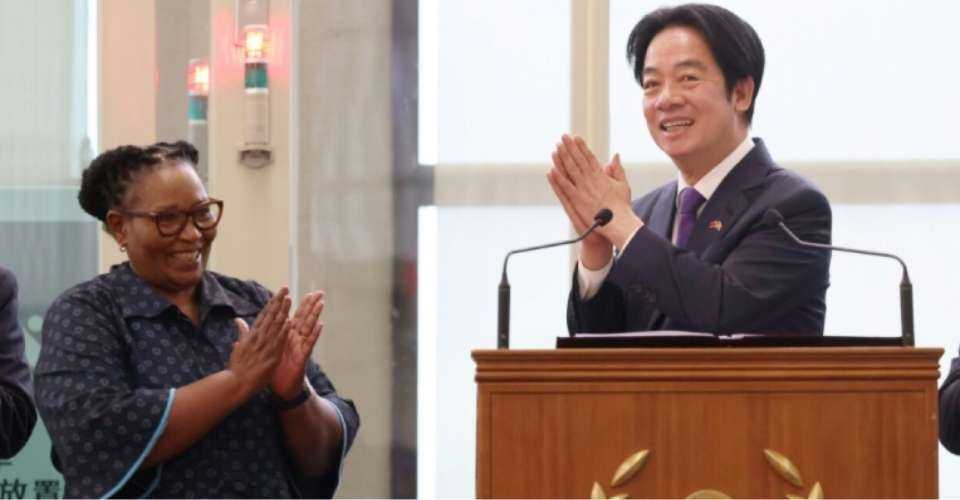
Taiwanese people are people of the world; Taiwanese people have the right to engage with the world, Lai told reporters at Taipei’s Taoyuan International Airport after his arrival.
Flanked by Eswatini Deputy Prime Minister Thulisile Dladla, who accompanied him on the trip, Lai insisted that state-to-state visits “should be the most ordinary thing” and criticized China’s attempts to control Taiwan’s international interactions as unjustifiable suppression.
China’s foreign ministry fired back on May 2 calling Lai’s visit a “stowaway-style escape farce” and claiming it made him “an international laughing stock.” Beijing claims Taiwan as its territory and aggressively opposes its participation in international diplomacy and organizations.
United States Reacts Amid Rising Diplomatic Tensions
The United States government condemned China’s maneuvering as an “intimidation campaign” aimed at isolating Taiwan, highlighting the global stakes involved in cross-strait relations.
On the ground, the saga underscores Taiwan’s diplomatic struggle: out of 195 countries, only a dozen still officially recognize the island, with Eswatini one of the few left willing to maintain formal ties in the face of Beijing’s pressure.
New Chapter in Taiwan’s Overseas Engagement
Lai last traveled overseas officially in November 2024, visiting Pacific allies and transiting through the US territory of Guam. Past attempts to expand Taiwan’s diplomatic reach have faced obstacles, including a reportedly denied transit through New York as part of a Latin America trip, a claim Taiwan denies.
This recent African trip marks a significant moment in Taiwan’s ongoing efforts to assert its diplomatic space and resist China’s tightening diplomatic noose.
What’s Next
Observers will closely watch Taiwan’s next steps as Beijing intensifies its efforts to isolate the island, and how the US and other democratic allies respond amid rising tensions in international diplomacy. Taiwan’s moves in Africa and beyond signal a firm refusal to yield on its global engagement rights despite mounting pressure.
For readers in South Carolina and across the United States, the struggle between Taiwan and China reflects broader geopolitical shifts that could affect global stability, US foreign policy, and supply chains linked to technology sectors where Taiwan plays a crucial role.