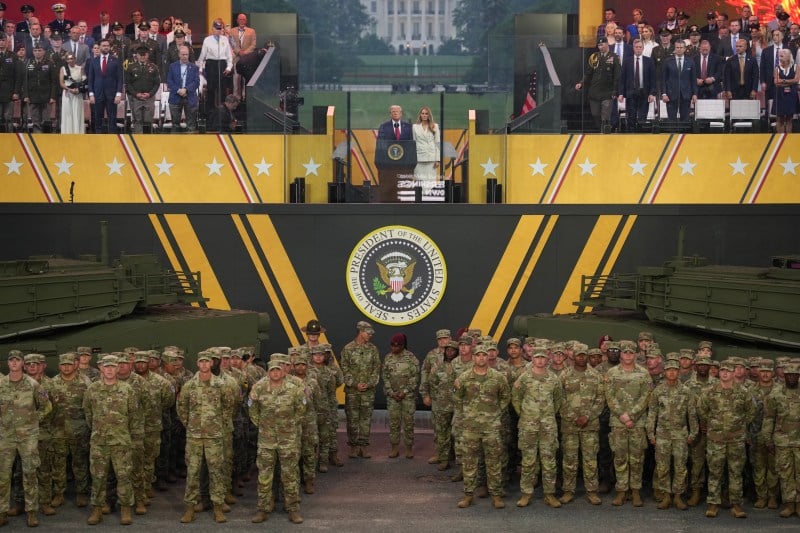
UPDATE: On this Veterans Day, urgent concerns are mounting regarding the Trump administration’s controversial policies threatening military integrity. Reports indicate that Secretary of Defense Pete Hegseth is executing a systematic purge of senior military ranks, undermining the foundational principle of political neutrality in the armed forces.
Recent analyses, including a detailed article from the New York Times, reveal troubling patterns in Hegseth’s actions. He is reportedly removing senior officers not for performance issues but based on personal biases against women, Black service members, and those who have shown independence or loyalty to former Joint Chiefs Chair Mark Milley. This alarming trend raises questions about the future readiness and professionalism of the U.S. military.
With the military’s role evolving, the implications are profound. Experts warn that prioritizing loyalty over competence could lead to a less effective fighting force. Hegseth’s motivations appear politically charged, potentially aiming to reshape the military into an organization that aligns with Trump’s vision of governance, especially in light of the January 6, 2021, Capitol riots.
As this situation develops, the impact on American democracy becomes increasingly significant. The military, once a bastion of neutrality, may be morphing into a tool for political ends. The ramifications of such a shift could endanger the very fabric of American freedoms.
Veterans Day serves as a poignant reminder of the sacrifices made for democracy. With over 1.3 million active-duty personnel in the U.S. military, the potential for a politicized military raises alarms among former officials and analysts alike. They warn that undermining military professionalism could create divisions and diminish operational effectiveness.
Hegseth’s approach mirrors tactics seen in authoritarian regimes, as outlined in Caitlin Talmadge’s pivotal study, The Dictator’s Army. The book highlights how such militaries falter when leadership prioritizes loyalty over skill, a pattern that could jeopardize U.S. military readiness in global conflicts.
The stakes are high. As Hegseth continues to reshuffle the ranks, many capable leaders may feel compelled to leave the service, exacerbating a crisis of competence within the military. This could lead to a further tilt toward a partisan officer corps, making the military less effective against genuine threats.
As we honor our veterans today, the urgency to protect the military’s integrity has never been greater. Should these trends continue unabated, the U.S. risks transforming its armed forces into a shadow of their former selves—less a defender of democracy and more a potential instrument of political control.
Moving forward, it is crucial for all Americans to remain vigilant. The implications of a politicized military affect not just service members but all citizens. As debates intensify around military engagement and domestic duties, addressing these challenges head-on is essential for preserving the values of freedom and democracy this Veterans Day commemorates.
As the situation unfolds, stakeholders from military leaders to lawmakers must prioritize the U.S. military’s role as a nonpartisan protector of the nation. A failure to do so could lead to consequences that echo long after this Veterans Day has passed.