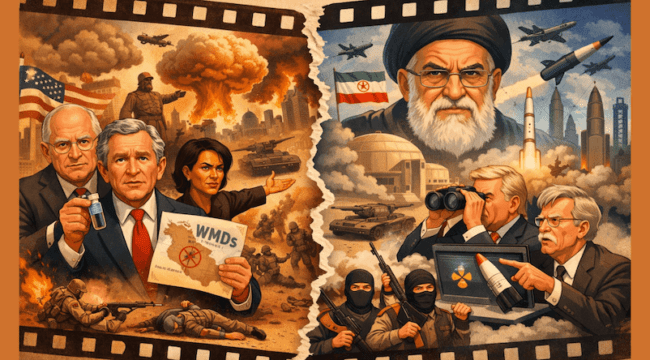
URGENT UPDATE: U.S. officials have just announced that Iran is reportedly “a week away” from developing a nuclear bomb. This alarming claim echoes the pre-Iraq war rhetoric from October 2002, where fears of weapons of mass destruction (WMD) led to a devastating conflict. The stakes are high as tensions escalate, and the ramifications could be catastrophic.
New reports indicate that Iran possesses enough material for 11 nuclear weapons and has long-range missiles capable of striking the U.S. mainland. Yet, officials also claim that Iranian facilities have been “decimated.” This contradiction raises serious questions: If Iran’s nuclear capabilities have been significantly weakened, how are they still close to achieving a bomb?
Just like the narrative surrounding Saddam Hussein, the current situation with Iran is increasingly murky. The public is being fed a complex story that lacks clarity, making it difficult for citizens to grasp the true nature of the threat.
The political landscape in Washington is fraught with urgency. Officials are reportedly debating how far the U.S. should go in its military actions, while also considering the optics for upcoming elections. This is a remarkable scenario, as discussions about military strategy unfold amidst ongoing hostilities.
Critics highlight a troubling pattern: the systematic inflation of threats for political gain. The need to present a clear and imminent danger often overshadows the realities of the situation. Just as with Iraq, where the intelligence community’s warnings led to a misguided war, today’s narrative around Iran is filled with uncertainties that are being spun into a case for military action.
Officials are using social media platforms to disseminate messages, often altering the narrative as circumstances evolve. This strategy creates a fog of information that obscures the truth. The Trump Administration’s recent military actions have sparked fears of mission creep, where initial objectives expand beyond their original scope.
It is crucial to remember that skepticism regarding military engagements is not a sign of weakness. Many Americans are wary due to the lessons learned from the Iraq War, which resulted in the loss of 4,500 American soldiers and countless Iraqi lives. The post-war investigations revealed that the WMD claims were unfounded, leading to what officials described as a “colossal failure.”
As the situation develops, it is imperative for the public to demand transparency and clarity from their leaders. The consequences of rushed decisions in international conflict can lead to devastating outcomes. Political motivations should not overshadow the reality of war—a reality that has profound human costs.
In this critical moment, as the U.S. navigates its approach to Iran, the call for a thorough and honest dialogue has never been more urgent. The past has shown us that trusting ambiguous assurances can lead to catastrophic consequences.
Stay tuned as this story develops, and ensure you are informed about the potential implications of these military strategies on global stability. The stakes are high, and the world will be watching closely.